Cenote Zacil-Ha And Carwash: Budget Cenote Guide
Two of Tulum's cheapest cenotes sit on the same road within a few minutes of each other, and together they cost less than one adult ticket at the flagship sites.
Short answer
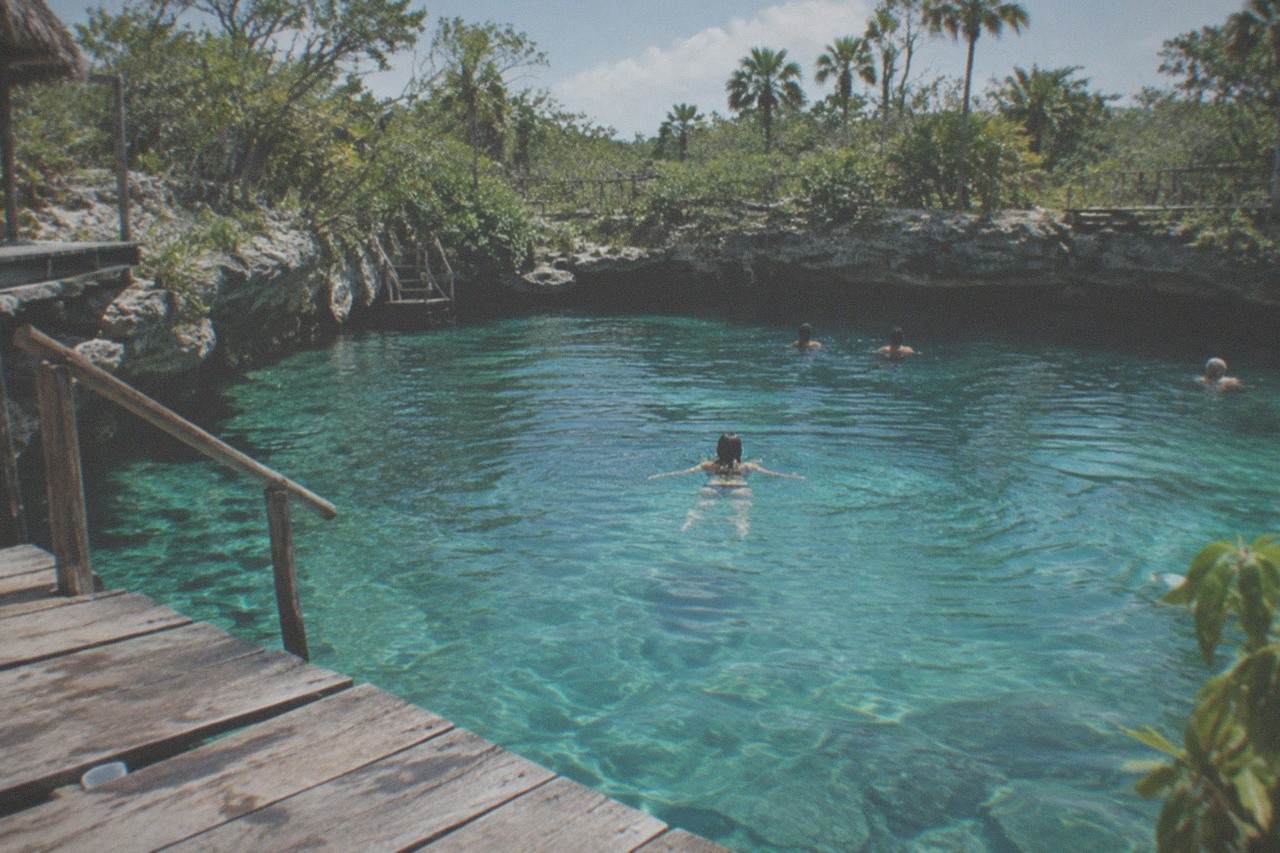
Zacil-Ha charges roughly 200 MXN per adult (about $11) with an optional 200 MXN waterslide, and Car Wash, also called Aktun Ha, charges about 100 MXN (about $5), the lowest entrance fee among popular Tulum-area cenotes. Both sit roughly 8 km from Tulum town, and both are open, family-friendly swim sites rather than deep cave systems.
The cheapest adult ticket among Tulum's well-known cenotes belongs to Car Wash, also called Aktun Ha, at roughly 100 MXN, about five dollars. Its neighbor on the same Coba road corridor, Zacil-Ha, charges around 200 MXN with a 200 MXN optional waterslide add-on. Compare that with Gran Cenote at roughly 500 MXN per adult, or the snorkel rate at Dos Ojos at 350 to 400 MXN, and the appeal of the pair becomes obvious. For a family of four, the difference between these two smaller sites and one flagship cenote can amount to more than the price of a guided tour.
That price gap is the whole reason this guide exists. Zacil-Ha and Car Wash are not the cenotes on the postcards, and they do not try to be. They are open, sunlit, easy swim spots that local families have used for years, sitting roughly 8 to 8.5 km from Tulum town center along the same stretch of road. A reader deciding between them and the big names needs honest answers on three things: what the water is actually like, what the fees really total, and whether a tour such as the Cenote Trail Bike Tour, from $119, beats going independently. This guide covers all three, with the fee caveats stated plainly.
One framing note before the fees. Every individual cenote entrance figure in this guide comes from current secondary sources, and ejidos and operators reset their prices without notice. Fees are set by the site or operator and can change, so confirm on arrival and carry cash in pesos, since card readers are unreliable or absent at smaller sites like these.
Why Zacil-Ha And Carwash Cost So Much Less
The two cenotes charge a fraction of the flagship price because they are smaller, simpler operations run as local swim parks rather than polished attractions. Zacil-Ha runs about 200 MXN per adult with an optional 200 MXN unlimited waterslide, Car Wash about 100 MXN, and neither carries the cavern infrastructure, guided-dive logistics or marketing overhead that pushes Gran Cenote to roughly 500 MXN and Dos Ojos snorkel entry to 350-400 MXN.
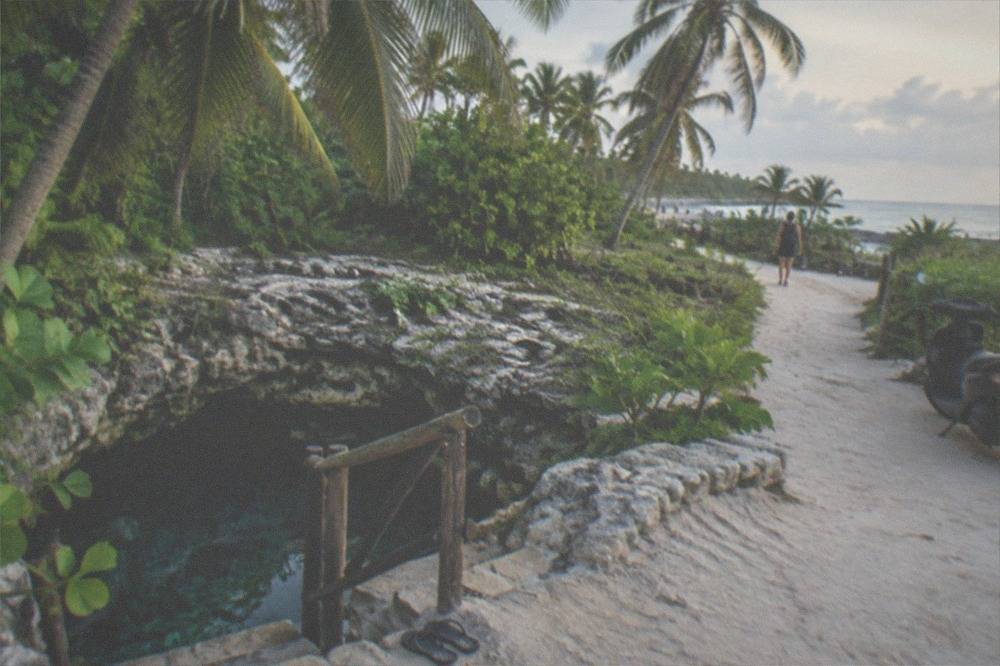
That is not a knock on either site. Car Wash, whose formal name is Aktun Ha, is an open cenote with cave sections and shallow areas around 3 m deep, plus deeper pockets where the cave begins. It earned its odd English name decades ago when taxi drivers used its pool as a car wash, a detail local guides still repeat because it explains the setting: a spring-fed sinkhole beside the road, plain, green and uncommercial. Zacil-Ha is even more of a straightforward swim park: an open, circular cenote with decks, a rope swing, facilities, and its headline waterslide as a paid extra.
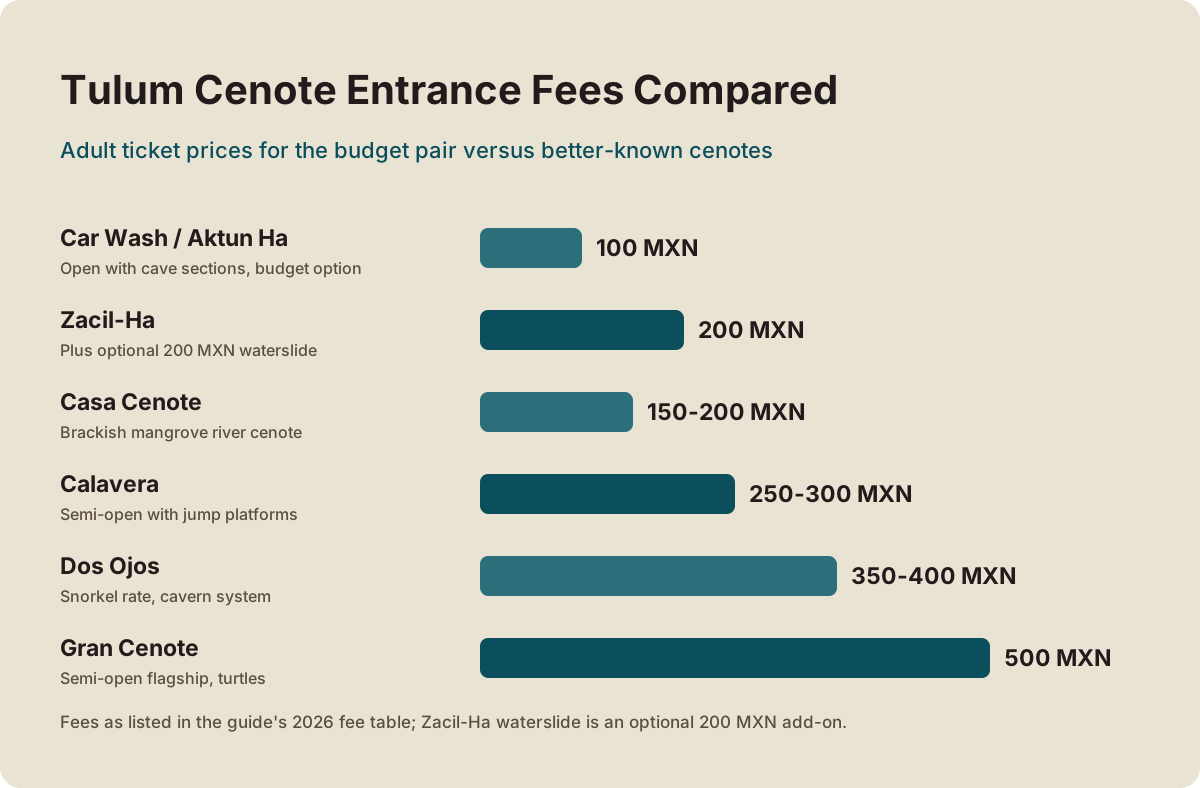
The fee spread across the Tulum corridor is wide enough to be worth a table, and the table below places the budget pair against the sites readers usually compare them to. All figures are current reasonable values from secondary sources; fees are set by each site or ejido and can change, confirm on arrival.
| Cenote | Entrance fee (2026) | Approx. USD | Character |
|---|---|---|---|
| Car Wash / Aktun Ha | 100 MXN | ~$5 | Open with cave sections, budget option |
| Zacil-Ha | 200 MXN (+200 MXN waterslide) | ~$11 (+$11) | Open, family swim park |
| Casa Cenote | 150-200 MXN | ~$8-12 | Brackish mangrove river cenote |
| Calavera | 250-300 MXN | ~$13-16 | Semi-open with jump platforms |
| Dos Ojos | 350-400 MXN snorkel | ~$19-24 | Cavern system, diving focus |
| Gran Cenote | 500 MXN | ~$27 | Semi-open flagship, turtles |
For a fuller breakdown of what every cenote near Tulum charges, including the locker fees of roughly 50 MXN at larger sites, the Tulum cenote entrance fees guide carries the complete fee table. The short version for this pair: budget a day of swimming at both sites for less than the single-ticket cost of one flagship, before counting food or transport.
If the plan is to visit several cenotes rather than drive to one, a tour can beat self-driving on cost once you add taxis. The three options below are the strongest value plays in this category on this site's roster.
How Much Does It Cost To Visit A Cenote In Tulum When You Pick The Budget Pair?
A solo adult visiting both Zacil-Ha and Car Wash pays roughly 300 MXN in entrances, about $16, or 500 MXN with the Zacil-Ha waterslide. A family of two adults and two children typically lands between roughly 700 and 1,100 MXN for the day's swimming, before transport and food, assuming child tickets run cheaper at the gate as most local sites practice.
Notice how that question, how much does it cost to visit a cenote in tulum, has two honest answers depending on which cenote is meant. The flagship answer, built around Gran Cenote or Dos Ojos, starts near 350 to 500 MXN per adult. The budget answer, built around the sites in this guide, is less than a third of that. Neither answer is wrong; they describe different products. The pair here is the honest reply for a price-sensitive reader who still wants clear, swimmable water.
Beyond the gate, the small extra costs are predictable. Cash in pesos is required or strongly preferred at both sites, since reliable card payment is mostly a feature of Gran Cenote and Dos Ojos. Lockers, roughly 50 MXN, exist at larger sites but smaller community-run cenotes often have none, so travel light or keep valuables with a non-swimmer. Life jackets for children under 12 are commonly provided free or for a small fee at major sites; assume the same expectation here and check at the entrance. A quick-dry towel, water shoes with a heel strap and a rash guard cover the practical kit, and the what to bring on a cenote tour guide lists the rest.
One state-level item that is often confused with cenote fees: the Quintana Roo Visitax, roughly 283 MXN per foreign visitor, is an airport-collected state tax, not something paid at any cenote or ruin. It belongs in a trip budget, never on a cenote price line.
Which Cenote Is Best For Toddlers And Families Between The Two?
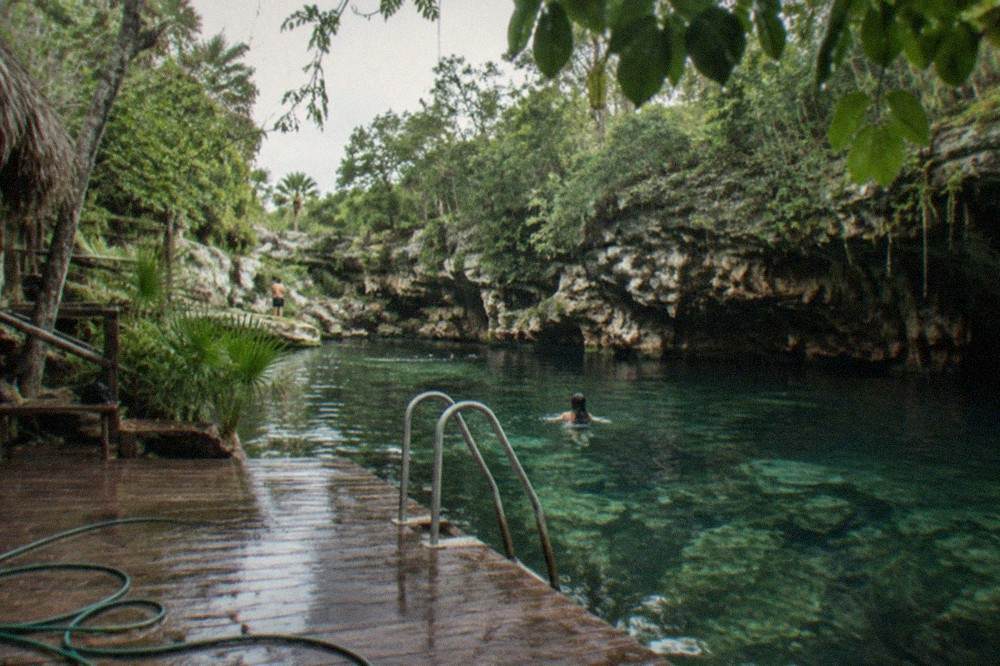
Zacil-Ha is the family pick of the pair: an open cenote with a designated swimming area, facilities, and its paid waterslide, roughly 200 MXN entry plus 200 MXN for unlimited slide rides. Car Wash suits confident swimmers and snorkelers more, since its open pool shelves into cave sections and its charm is the natural, uncluttered setting rather than kid infrastructure.
The question which cenote is best for toddlers gets asked constantly, and the honest answer for this corridor is the open, shallow, facility-equipped sites, which is Zacil-Ha's exact profile. Its circular open basin means full sunlight, no enclosed darkness to startle a small child, and easy exits onto decks. The slide is the hook for older kids, and the 200 MXN unlimited-ride pricing means a slide-happy eight-year-old does not become a metering exercise. Children under 12 should wear life jackets, commonly provided free or for a small fee at major sites, and that expectation applies here.
Car Wash plays a different role. Its shallow open areas run around 3 m, fine for relaxed swimming and floating, while its cave sections attract casual snorkelers who want to look into the dark without diving gear. It is the more natural, less developed setting of the two, which is precisely what some families want and others do not. A useful rule: pick Zacil-Ha when the day is about the kids playing in water, pick Car Wash when the day is about the adults actually swimming in a cenote.
| Factor | Zacil-Ha | Car Wash / Aktun Ha |
|---|---|---|
| Entry fee (approx.) | 200 MXN (~$11) | 100 MXN (~$5) |
| Style | Open swim park with decks | Open with cave sections |
| Best for | Families, kids, slide riders | Snorkelers, budget swimmers |
| Depth feel | Shallow, contained | Shallow open, deeper cave pockets |
| Facilities | Facilities and slide add-on | Basic, natural setting |
| Extra costs | 200 MXN unlimited waterslide | None standard |
The crocodile question sometimes reaches this corridor, so it deserves one clean sentence: crocodile sightings in Tulum-area cenotes are an occasional, specific feature of Casa Cenote, whose brackish mangrove water connects toward the ocean, and most corridor cenotes including these two are closed freshwater sinkholes with no crocodile habitat. The Casa Cenote guide covers that site's specifics.
For families who would rather hand the logistics to a tour, the snorkel category on this site has a strong budget entry point.
What Swimming At Zacil-Ha And Carwash Is Actually Like
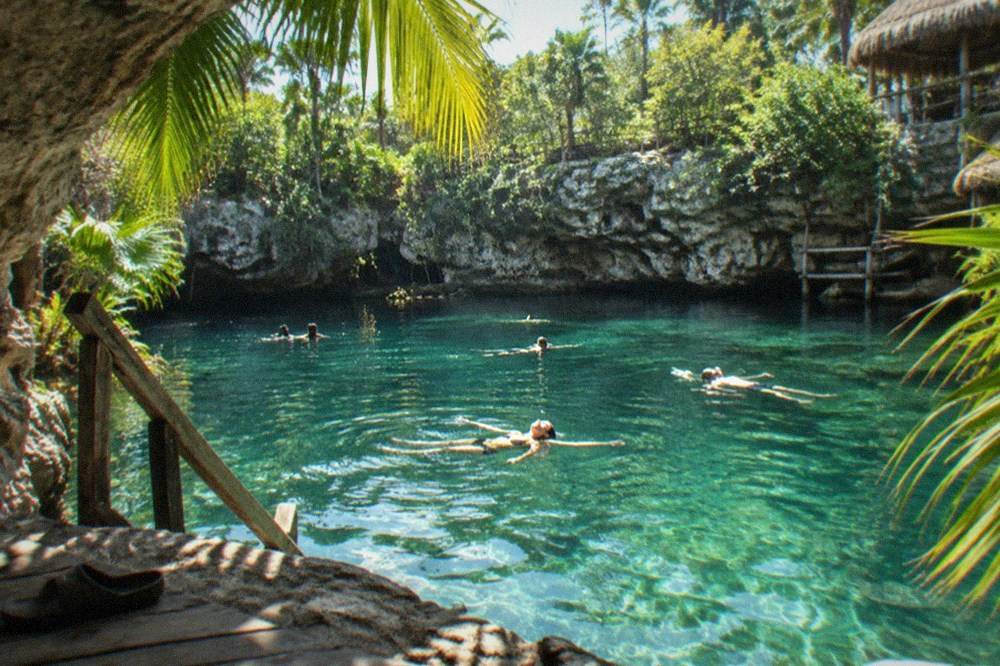
Zacil-Ha delivers a bright, social, easy swim: full sun on an open basin, warm 24-27 degree water held steady year round by the aquifer, decks for lounging, and a slide for momentum. Car Wash is quieter and greener, a spring pool with fish, hanging roots and cave mouths at the edges, best enjoyed floating slowly with a mask on rather than racing around it.
The water temperature point matters more than it sounds. Cenote water stays 24-27 degrees C year round regardless of surface weather or season, so a December morning and a June afternoon feel roughly the same in the water, and neither site gets cold in winter or warm in summer. What changes is the crowd. Both sites fill with tour groups and local families midday, commonly between 10 or 11 AM and 2 PM, and thin after 2:30 PM. Arriving at opening, typically 8 or 9 AM, buys the quiet version of both.
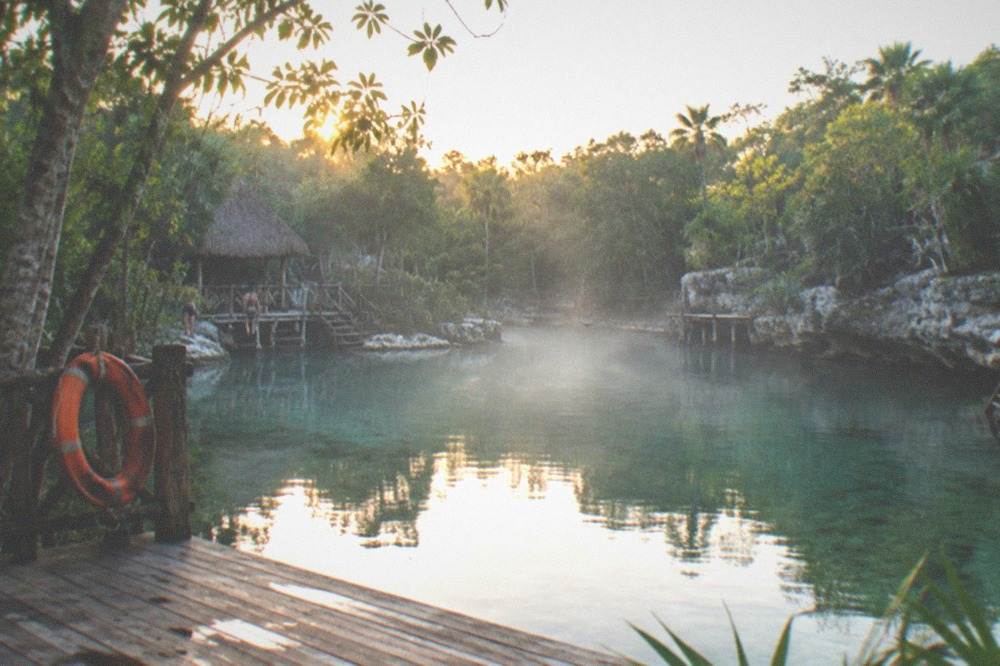
At Zacil-Ha the swim is contained and sociable. The basin is small enough to cross in a few minutes of easy swimming, which is exactly why it works for children and nervous swimmers. The slide drops riders into the open water, the rope swing does the same job the old-fashioned way, and the decks around the edge hold the towels and the parents. Snorkelers see fish and the limestone edges but no caverns; this is an open site, not a cave.
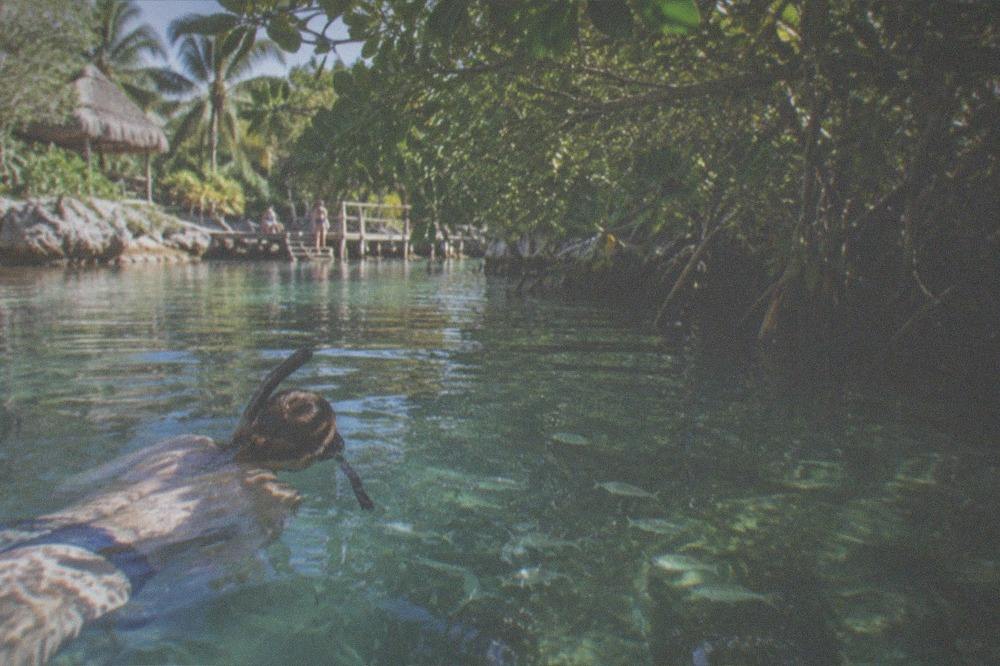
Car Wash rewards a slower approach. The open section has fish, turtles occasionally, and the green-tinted clarity of a spring pool under trees. The cave sections start where the light fades, and swimming a few meters in to look back at the daylight is the site's signature moment. Divers pay a higher reported fee there, which reflects the cave access snorkelers only glimpse. Snorkeling as a guided activity across Tulum generally runs from about $110 to $159 per person with transport and gear, and the cenote snorkeling in Tulum guide breaks that category down fully.
Two honest limits. Neither site offers the postcard cavern architecture of Dos Ojos or the turtle density of Gran Cenote; a visitor expecting those scenes will be disappointed. And neither site is large, so on a peak December weekend the quiet versions described above simply do not exist midday. Weekdays, May, late September and early October are the lower-crowd windows reported across the corridor.
Getting To Zacil-Ha And Carwash From Tulum
Both cenotes sit roughly 8 to 8.5 km from Tulum town on the road toward the Coba direction, about 10-15 minutes by taxi, car or bike. Cycling is the natural fit: the distance is short, the route is flat along a settled corridor, and a bike-based tour such as the Cenote Trail Bike Tour, from $119 with urban bikes and helmets included, strings two or three cenotes together without paying for taxis between them.
The practical transport math favors bikes for exactly this corridor. A taxi out to one cenote and back to town costs a meaningful share of the 300 MXN combined entrance fees, and doing that twice for two sites doubles it. A bike, rented in town or included in a tour, turns the whole day into one loop. The Cenote Trail Bike Tour meets at Av. Tulum 88 in Tulum town, carries a 4.9 rating from 143 reviews, and visits two or three cenotes depending on the option chosen, which its listing does not name in advance; the sites in this guide are the category of small, close-in stops that format serves.
Driving independently is equally simple. Both sites are signed on the same corridor, parking is informal and cheap or free, and the 8 km distance means a rental car day can cover these plus Gran Cenote, about 4 km out on the same road system, in one loop. The Gran Cenote guide covers that site's pricing and turtle snorkeling for anyone pairing the flagship with the budget stops. What independent visitors should not skip is the cash preparation, since neither smaller site reliably takes cards.
For travelers staying in Cancun or Playa del Carmen rather than Tulum, note that this bike tour departs from Tulum town itself, so it fits a Tulum-based day rather than a Cancun pickup. The ruins-combo category on this site covers the Cancun-departing options separately.
Rules, Sunscreen And The Fines That Actually Apply
Every Tulum-area cenote enforces a biodegradable or reef-safe mineral sunscreen-only policy, and conventional chemical sunscreen can mean refused entry or a fine of up to 1,200 MXN. A mandatory rinse-off shower before entering applies everywhere, some sites ban all sunscreen including biodegradable versions, and the rule at these two smaller sites is checked the same way as at the flagships: rinse first, swim with nothing on your skin.
The sunscreen rule is the one regulation with real teeth. Approved products are mineral-filter, zinc oxide or titanium dioxide based, and small biodegradable tubes sell at entrances and nearby shops for roughly 150 to 350 MXN if yours does not qualify. The cleaner strategy is to skip sunscreen entirely until all water activity is finished for the day, wear a rash guard for sun protection, and apply products only after leaving the water. The same logic bans bug spray, lotion and makeup before swimming; apply everything afterward.
The rest of the rulebook is standard across the corridor. No food, alcohol or glass near the water. No unmarked jumping or diving. Life jackets for children under 12 and for non-swimmers, commonly free at major sites. Cameras are usually fine, though some cenotes charge a small on-site fee of roughly 100 to 300 MXN for professional cameras or GoPros, so check the posted policy on arrival rather than assuming. Drones are prohibited or heavily restricted at cenotes generally.
| Rule | What applies at Zacil-Ha and Car Wash |
|---|---|
| Sunscreen | Biodegradable mineral only; some sites ban all sunscreen |
| Rinse shower | Mandatory before entering the water |
| Fine risk | Up to 1,200 MXN for non-compliant products |
| Life jackets | Expected for under-12s and non-swimmers |
| Food, alcohol, glass | Not permitted near the water |
| Cash | Pesos required; card readers unreliable at smaller sites |
Best Time Of Day And Season For The Budget Pair
Arrive at opening, typically 8-9 AM, for the quietest water at both sites; midday between roughly 10 AM and 2 PM brings tour-group peaks and possible waits, and conditions ease after 2:30 PM. For seasons, May, late September and early October are the lower-crowd sweet spots, while December through March and peak summer are the busiest windows at every popular site including these.
Seasonality around Tulum is often explained badly, so the clean version: sargassum seaweed affects ocean beaches and never cenotes, which are inland freshwater sinkholes with no ocean connection. During the peak sargassum months, roughly May through October, cenotes are the reliable clear-water plan and crowds shift toward them, which paradoxically makes the shoulder months the smart booking window for smaller sites. Rainy season runs June through October with afternoon showers, and hurricane season runs June 1 to November 30 with the highest statistical risk in September and October; neither meaningfully impairs cenote swimming, though open-air sites can see short, temporary visibility dips after heavy rain from surface runoff.
For this pair specifically, the timing logic is doubled because the sites are small. A midday Zacil-Ha in late December is a full pool; the same site at 8:30 AM on a weekday in May can feel semi-private. Photography-minded visitors should note the trade-off: dry season, roughly November to April, offers the best light effects in open cenotes, and Zacil-Ha's full-sun basin is at its most photogenic then.
Going Independently Versus Taking A Tour
Going independently at roughly 300 MXN combined entry plus transport is the cheapest route to these two cenotes and suits confident travelers with bikes or a car. A tour costs more per person but bundles transport, gear and site selection, and for this corridor the bike-format tour is the standout: the Cenote Trail Bike Tour at from $119 visits two or three cenotes with bikes and helmets included, rated 4.9 from 143 reviews.
The honest comparison is not purely price. Independent visitors control their own clock, arrive at opening and leave when the buses arrive, but they also carry the sunscreen-rule risk, the cash logistics and the navigation themselves. Tour travelers pay roughly three to four times the bare entrance cost and receive the decisions made for them. On this site's roster, the tours that pair naturally with this budget corridor are the bike tour above, the multi-stop snorkel format, and the cheapest standalone snorkel product.
The Cenote Triple Adventure Tour in Tulum is the multi-stop format: from $129.88, four hours, visiting three cenotes with snacks and water included and lunch as a paid $15 add-on, rated 5.0 from 467 reviews, meeting in Tulum Centro. It is the pick for a visitor who wants the budget-cenote experience, several swims in one morning, without renting anything.
The Magical Cenote and Paradise Lagoon Snorkeling Adventure is the price-contrast option: from $79, the roster's cheapest standalone snorkel product, 3.5 hours, rated 4.9 from 886 reviews, with Cancun and Riviera Maya hotel pickup available. It trades the three-stop format for a single cenote plus lagoon combination at the lowest guided price on the site.
Neither tour's listing names its specific cenote stops, so treat any pairing between a named tour and a named cenote as category-level: tours in this format typically include small corridor stops, check the specific listing before booking. A traveler whose priority is provably these exact two sites should go independently or take the bike format, whose close-in range makes this corridor its natural territory. Tulum Cenote Tours exists precisely to make that kind of call easier, with every tour on the roster priced and rated in one place.
| Option | Cost basis | What you trade |
|---|---|---|
| Independent, both sites | ~300 MXN entries + transport | Full control, all logistics on you |
| Cenote Trail Bike Tour | From $119 | 2-3 cenotes, bikes and helmets included |
| Cenote Triple Adventure | From $129.88 | 3 cenotes, snacks, $15 lunch add-on |
| Magical Cenote and Lagoon | From $79 | Cheapest guided snorkel, lagoon combo |
The Verdict For A Price-Sensitive Visitor
For the price of one Gran Cenote ticket, a visitor can swim at both Zacil-Ha and Car Wash, ride the slide, and still have change left over, provided they arrive at opening, carry pesos, and rinse off before entering. The pair is the honest budget recommendation in this corridor: real cenote water, real cave mouths at Car Wash, real family infrastructure at Zacil-Ha, at a third of the flagship cost.
The trade being made is scale and scenery. Dos Ojos offers cavern visibility that regularly exceeds 30 m and a mapped cave system; Gran Cenote offers turtles, stalactites and the region's most polished semi-open basin. Neither budget site competes on those axes. What they offer instead is the version of cenote-going that locals actually practice on a Sunday: a short bike or drive out of town, a cheap ticket, clear water, an hour or two of swimming, and home. For a second or third cenote day in a Tulum trip, after the flagship has been done, that version is often the better one.
Plan it in one line: bikes from town, Zacil-Ha at opening for the slide and the sun, Car Wash an hour later for the quiet green pool and the cave mouths, pesos in pocket, rash guard instead of sunscreen, and out before the midday buses. For a fuller map of the corridor's other budget and mid-range sites, the cenotes near Tulum guide lays out the whole fee-and-fit landscape.
If a guided day fits better than self-organizing, these are the three best-value picks for this corridor again.
Common Questions About Cenote Zacil-Ha And Carwash
How Much Does It Cost To Visit A Cenote In Tulum?
It depends on the cenote. Car Wash charges roughly 100 MXN (about $5), Zacil-Ha about 200 MXN (about $11) plus 200 MXN for the optional waterslide, while flagship sites run 350-500 MXN. A budget-pair day at both sites in this guide totals roughly 300 MXN per adult in entrances, and fees are set by each site and can change, so confirm on arrival.
Which Cenote Is Best For Toddlers?
Among this pair, Zacil-Ha: it is open and fully sunlit, has contained shallow swimming, decks, facilities and its paid waterslide, at about 200 MXN entry. Life jackets for children under 12 are commonly provided free or for a small fee at major sites; expect the same here and check at the gate.
Are Cenotes Affected By Sargassum In Tulum?
No. Sargassum is a coastal phenomenon that affects ocean beaches; cenotes are inland freshwater sinkholes with no connection to the ocean, so they stay completely unaffected year round. This is why cenotes are the reliable clear-water plan during the May-October sargassum window.
Can You Visit Cenotes Without A Tour?
Yes. Both sites in this guide are straightforward independent visits: roughly 8-8.5 km from Tulum town, about 10-15 minutes by taxi, car or bike, with informal parking and cash entry. A tour such as the Cenote Trail Bike Tour, from $119 with bikes and helmets included, mainly buys convenience and multi-stop routing.
Is The Water Cold At These Cenotes In Winter?
No. Cenote water holds at roughly 24-27 degrees C year round, fed by the underground aquifer, independent of surface weather or season. Winter and summer swims feel about the same in the water; what changes seasonally is crowd level, not temperature.
Do I Need Biodegradable Sunscreen At Zacil-Ha And Car Wash?
Yes, and rinse first. Every Tulum-area cenote enforces a biodegradable or mineral sunscreen-only policy, with fines up to 1,200 MXN reported at enforcing sites, and a mandatory rinse-off shower before entering. The simpler route is a rash guard and no sunscreen at all until you finish swimming; some sites ban all sunscreen, even biodegradable versions.