Cenote Snorkeling In Tulum: What To Expect
Snorkeling is the easiest way into a cenote: no certification, no training, and a guide who knows where the light falls and where the turtles rest. Here is what a guided cenote snorkel in Tulum actually involves, what the six bookable snorkel-format tours cost, and how to choose between them.
Short answer
A guided cenote snorkel tour in Tulum runs from $79 to $199 per person for 3.5 to 6.5 hours, with mask, snorkel, fins and usually transport included. No certification is needed, the water holds at 24 to 27 degrees C year round, and the roster's cheapest standalone snorkel product starts at $79.
What Is Cenote Snorkeling In Tulum?
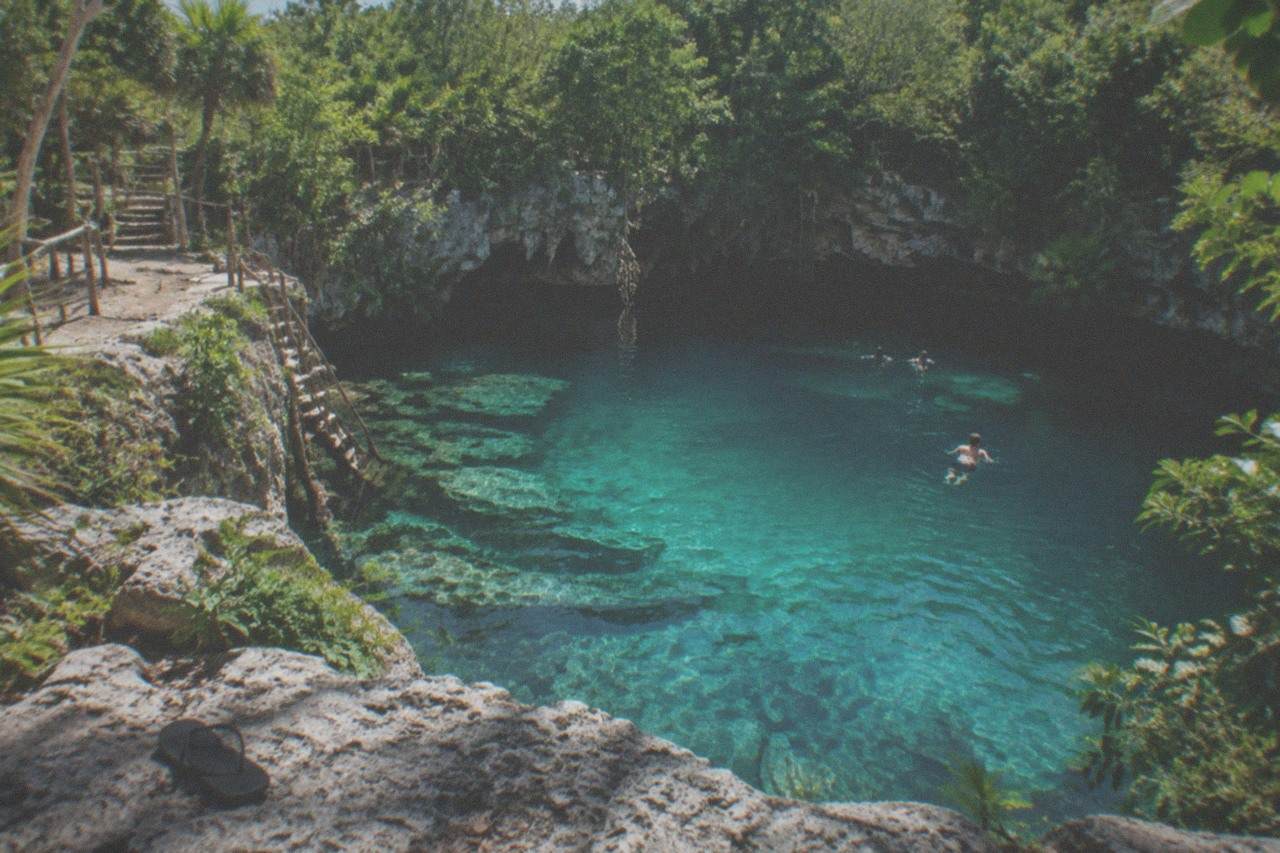
Cenote snorkeling is floating on the surface of a flooded limestone sinkhole with a mask, snorkel and fins, looking down into the flooded cave system below. It requires no certification, no prior experience and no special fitness, and the water stays at 24 to 27 degrees C in every month of the year. Six bookable snorkel-format tours cover the format on this roster.
A cenote is a window into the Yucatan's underground aquifer. The peninsula has almost no surface rivers; rain filters straight through the limestone and collects in flooded cave networks, and where a cave ceiling has collapsed you get an open pool. Snorkeling is the simplest way in. You stay at the surface, breathing through a snorkel, while the visibility below can run 30 meters or more in the cavern sites. It is the format most first-time visitors choose, and the one most families end up on.
What separates a guided snorkel from walking up to a cenote gate alone is the layer around the swim. A guided tour bundles entrance fees, gear, transport between Tulum and the sites, and someone who knows which cenote suits which swimmer, into one price. The Tulum Cenote Tours roster lists six products in the snorkel format, from a 3.5-hour cenote-and-lagoon pairing at $79 to a five-hour private underground-river exploration at $199. That spread is the real decision, and the rest of this guide walks through it.
One honest note before the detail: most snorkel tours on the roster do not name their exact cenote stops on the listing, and this guide never claims a specific tour visits a specific named cenote unless the operator states it. Only one product on the roster, Discovering Breathtaking Cenotes in Tulum, names its stops on the listing: Dos Ojos and Casa Cenote. Everything else is a category-level pairing, so read each listing's itinerary before booking. For a fuller run through the sites themselves, the cenotes near Tulum overview covers the gates, fees and character of each one.
What Does A Guided Cenote Snorkel Tour Actually Include?
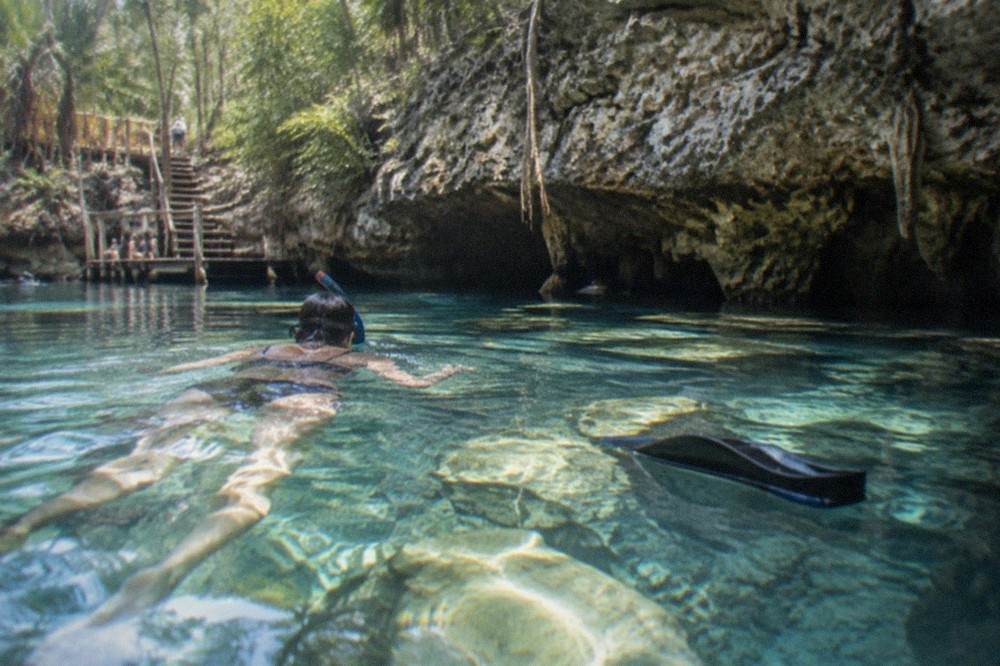
Nearly every guided snorkel product includes mask, snorkel and fins, a life vest, round-trip transport from a stated meeting point, and a guide. Prices run from $79 to $199 per person for 3.5 to 6.5 hours. What varies is lunch, the number of cenotes, and whether extra swim stops, like a lagoon, are part of the package or an add-on.
The core inclusions are consistent across the format. Gear is provided: mask, snorkel, fins and a life vest are standard on every snorkel tour on this roster, and fresh water and snacks appear on several. Transport is the second constant. Most tours meet at a stated point in Tulum Centro, a few offer hotel pickup from Cancun and the Riviera Maya, and the listing always states which. The Magical Cenote and Paradise Lagoon Snorkeling Adventure, the roster's cheapest standalone snorkel product at from $79 for 3.5 hours, is one of the products that departs with Cancun and Riviera Maya hotel pickup, which matters if you are not staying in Tulum town.
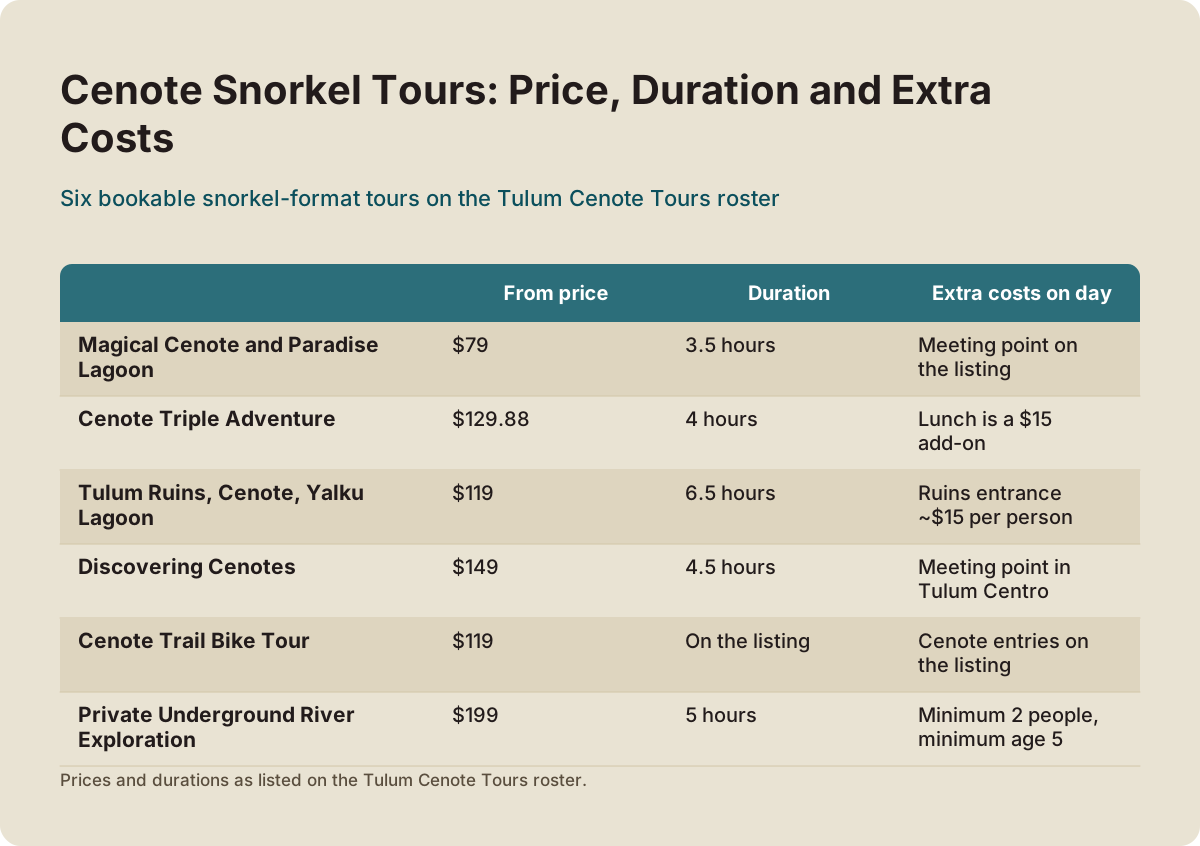
Where the products differ is the extras. The Cenote Triple Adventure Tour in Tulum, 5.0 from 467 reviews and from $129.88 for four hours, includes snacks and water but makes lunch a paid $15 add-on, so budget that on top if you want it. The Tulum Guided Tour with Magical Cenote, Lagoon Snorkeling and Beachside Lunch, 4.9 from 1,975 reviews and the most-reviewed product on the whole roster at from $119 for 6.5 hours, folds a beachside lunch into the day but leaves the Tulum ruins entrance fee, roughly $15 per person, as an extra paid on site. The private option, Private Guided Cenotes and Underground River Exploration at from $199 for five hours, is built around a small group of at least two, minimum age 5, swimming rather than diving.
The three-card selection below is the shortlist for most readers: the value pick, the multi-cenote alternative, and the ruins-plus-water full day.
A table keeps the inclusion lines straight, because it is exactly here that travelers assume things were covered that were not.
| Product | From price | Duration | Gear included | Food | Extra costs on the day |
|---|---|---|---|---|---|
| Magical Cenote and Paradise Lagoon | $79 | 3.5 hours | Mask, snorkel, fins, vest | On the listing | Meeting point on the listing |
| Cenote Triple Adventure | $129.88 | 4 hours | Snorkel gear | Snacks and water; lunch is a $15 add-on | None beyond lunch |
| Tulum Ruins, Cenote, Yalku Lagoon | $119 | 6.5 hours | Snorkel gear | Beachside lunch included | Ruins entrance ~$15 per person |
| Discovering Breathtaking Cenotes | $149 | 4.5 hours | Snorkel gear | On the listing | Meeting point in Tulum Centro |
| Cenote Trail Bike Tour | $119 | On the listing | Urban bikes, helmets, swim gear | On the listing | Cenote entries on the listing |
| Private Underground River Exploration | $199 | 5 hours | Snorkel gear | On the listing | Minimum 2 people, minimum age 5 |
How Much Does Cenote Snorkeling In Tulum Cost?
Bookable snorkel tours run from $79 to $199 per person, with the half-day multi-stop products clustered at $119 to $149. On top of the tour price, plan for entrance fees where the listing does not bundle them, typically 100 to 500 MXN per site, and lunch where it is an add-on. Cash in pesos covers the gaps.
The tour price is the headline, but gate fees are the detail people miss. Individual cenote entrance fees near Tulum currently run roughly 100 MXN at the low end (Car Wash, also called Aktun Ha), 200 MXN at Casa Cenote and Zacil-Ha, 250 to 300 MXN at Calavera, 350 to 400 MXN for snorkel access at Dos Ojos, and 500 MXN at Gran Cenote, roughly $5 to $27 per site. Fees are set by the site or ejido operator and can change, so confirm on arrival. Guided tours almost always bundle the entrances into the tour price, which is one of the format's quieter advantages, but the listing states the inclusions and you should read the fine print for each product.
For context on what the wider market charges, dedicated guided cenote snorkel tours in the area commonly list between $110 and $159 per person including transport, gear and entrances, per a current cenote diving and snorkeling cost guide. The roster here sits inside that band, from $79 to $199, and the cheapest standalone product is genuinely at the low end of it. If your question is not which tour but which format, the snorkeling versus cenote diving comparison is covered in the diving guide, and snorkeling is the one that needs no certification.
The Magical Cenote and Paradise Lagoon product deserves its own line here because it anchors the value end: 4.9 from 886 reviews, from $79, and a 3.5-hour format that pairs a cenote swim with a lagoon snorkel. For many travelers on a first Tulum trip it is the answer to "cheapest real guided snorkel day", and the review pool behind its rating is one of the larger ones in the snorkel category.
Which Cenote Snorkel Tour Fits Your Trip?
Pick by budget and by how much of the day you want to give it: the $79 lagoon product for a short first swim, the $129.88 triple-cenote tour for maximum stops, the $119 ruins-and-lunch day if you want the archaeological site too, and the $199 private option for families who want the water to themselves. The $119 bike tour suits travelers staying in Tulum town who enjoy the ride as much as the swim.
The comparison that matters is not star ratings, it is the shape of the day. The Cenote Triple Adventure Tour packs three cenote stops into four hours from a meeting point at 85xciento La Vera Pizza al Taglio in Tulum Centro, snacks and water included, lunch a $15 add-on. With 5.0 from 467 reviews it has one of the cleanest rating profiles on the roster, and a pool large enough that the number means something. If your priority is swimming as many cenotes as one morning allows, it is the pick.
The Tulum Guided Tour with Magical Cenote, Lagoon Snorkeling and Beachside Lunch is the full-day answer. At 6.5 hours, 4.9 from 1,975 reviews and from $119, it adds the Tulum ruins, a cenote, the Yalku lagoon and a beachside lunch, with the ruins entrance fee at roughly $15 per person paid on the day. It is the most-reviewed product on the entire roster, and its hotel pickup covers Cancun and the Riviera Maya, so it works from outside Tulum. That reach is why it appears in the end-of-guide selection band alongside the value and multi-stop picks.
The Discovering Breathtaking Cenotes tour at from $149 for 4.5 hours is the only snorkel product whose listing names its cenote stops, Dos Ojos and Casa Cenote, meeting at iTour Mexico Riviera Maya Tulum Eco Tours in Tulum Centro. It carries a 5.0 rating, but from 7 reviews: a real 5.0 from a small operator with a small pool, worth knowing and not a reason to call it anything louder. The Tulum Cenote Trail Bike Tour, 4.9 from 143 reviews and from $119, swaps the van for urban bikes and helmets, visiting two or three unnamed cenotes depending on the option, meeting at Av. Tulum 88 in Tulum town. The Private Guided Cenotes and Underground River Exploration, 5.0 from 171 reviews and from $199 for five hours, is the private option: minimum two people, minimum age 5, a swim-and-explore format with no scuba.
Here is the full six-way comparison on the numbers that actually decide the purchase.
| Product | Rating and reviews | Best for | Meeting or pickup | Kids |
|---|---|---|---|---|
| Magical Cenote and Paradise Lagoon | 4.9 from 886 | Cheapest guided day | Cancun and Riviera Maya pickup | Family format |
| Cenote Triple Adventure | 5.0 from 467 | Most cenote stops | Tulum Centro meeting point | Family format |
| Tulum Ruins, Cenote, Yalku Lagoon | 4.9 from 1,975 | Full day with ruins | Cancun and Riviera Maya pickup | Family format |
| Discovering Breathtaking Cenotes | 5.0 from 7 | Named stops, small operator | Tulum Centro meeting point | Check the listing |
| Cenote Trail Bike Tour | 4.9 from 143 | Active travelers in town | Av. Tulum 88, Tulum town | Check the listing |
| Private Underground River | 5.0 from 171 | Private family groups | Meeting point on the listing | Minimum age 5, minimum 2 people |
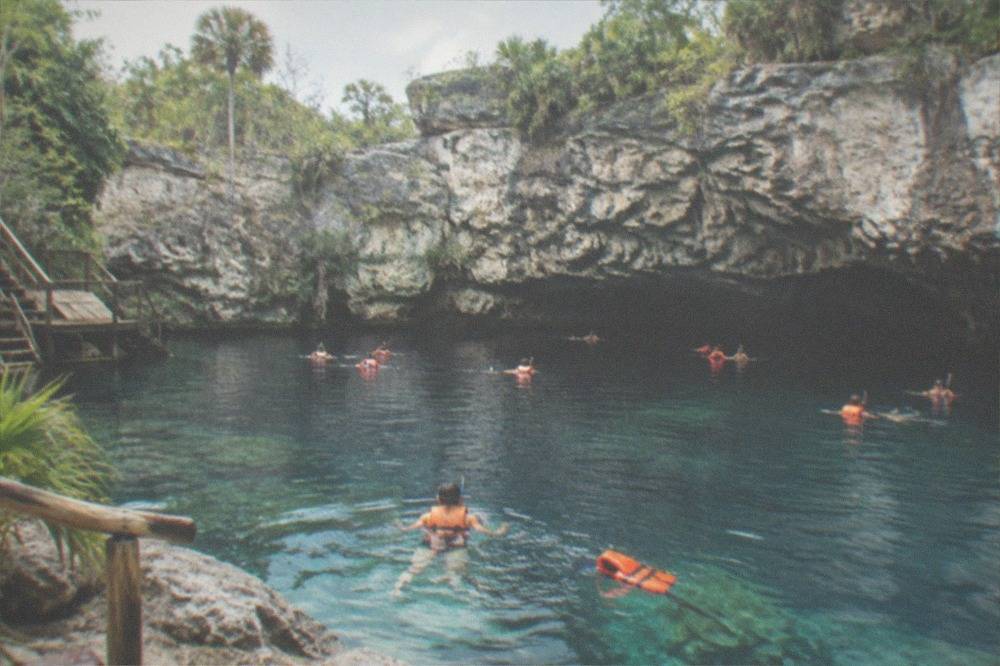
Where Do Snorkel Tours Actually Take You?
The Tulum snorkel corridor runs on two axes: the Coba road west of town, where Gran Cenote, Calavera, Car Wash and Zacil-Ha sit roughly 3 to 8 km out, and Highway 307 north toward Casa Cenote and the Dos Ojos section of the Sac Actun system, about 8 to 22 km away. Tours draw from these pools, and most listings do not name the exact cenote, so read the itinerary before booking.
The geography is worth holding in your head even when a tour keeps its stops unnamed. West of Tulum Pueblo on the Coba road you reach Gran Cenote in roughly 7 to 10 minutes, about 4 km out, with Calavera at around 3 km and the Car Wash and Zacil-Ha cluster near 8 km. North on Highway 307, Casa Cenote sits about 8 km out, and the Dos Ojos section of the Sac Actun system, one of the longest mapped underwater cave networks in the world, lies 20 to 22 km from town, roughly 25 minutes by car. A tour visiting two or three stops usually draws from one cluster rather than crossing between them, which is why four hours can cover three cenotes comfortably.
Water character changes with the geology, and it changes what you see through the mask. Semi-open sites like Gran Cenote, 500 MXN entrance (roughly $27), blend open pools with shallow cave passages and are known for resident turtles. Cavern sites like Dos Ojos, 350 to 400 MXN for snorkel access, offer visibility that divers report at 30 meters and beyond in places, with detailed site reporting on Dos Ojos noting visibility often exceeding 30 to 100 meters. Casa Cenote is different again: brackish mangrove water with fish among the roots, and it is specifically this site, not cenotes in general, where an occasional crocodile sighting is noted, a point covered in full in the crocodiles in Mexican cenotes article. Closed cavern sites with no ocean connection, which is most of the Tulum corridor, have no crocodile habitat at all.
Only one roster product names its stops: Discovering Breathtaking Cenotes lists Dos Ojos and Casa Cenote, which between them give you the cavern visibility and the mangrove river in one 4.5-hour morning. For every other product, honest pairing is the rule: a snorkel tour in this category typically includes stops like the ones above, and the specific listing states the day's itinerary. Operators do swap stops for weather or crowd reasons, and the person who booked a "Dos Ojos morning" sometimes swims somewhere else instead. Treat the itinerary as the plan, not a contract.
For depth on the two anchor sites, the Gran Cenote visitor guide and the Dos Ojos guide each break down the layout, the fee and what the water looks like from the surface.
What Gear Do You Need Versus What Is Provided?
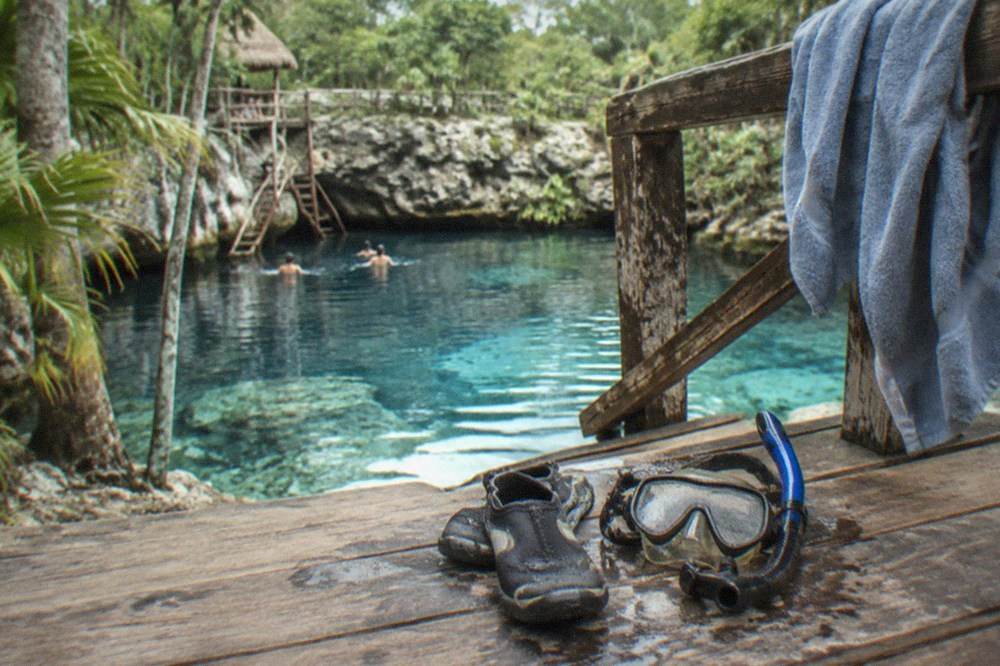
Tours provide the in-water kit: mask, snorkel, fins and a life vest on every snorkel product on the roster. You bring the human kit: swimwear already on, a quick-dry towel, water shoes or grippy sandals, cash in pesos, and reef-safe sunscreen only, applied after the swim rather than before, because a mandatory rinse at the gate comes before every entry.
The provided side is simple. Masks, snorkels, fins and vests come with the tour, and on the bike tour the urban bikes and helmets are included too. If you own a mask that fits your face, bring it; a well-fitted personal mask beats a rental on comfort, but the tour gear is designed to work and most people use it without issue.
The bring side has rules attached. Every cenote in the area enforces a biodegradable or reef-safe, mineral-filter sunscreen policy; conventional chemical sunscreen can mean refused entry and fines reported up to 1,200 MXN, roughly $65, at enforcing sites. Some sites go further and ban all sunscreen, even the compliant kind, so never state one blanket rule for every gate. On top of that, a freshwater rinse at the site's shower station is mandatory before you get in, which means any lotion, deodorant or product on your skin comes off first. The practical sequence: shower, swim, then sunscreen after you are done in the water for the day. Water shoes matter on the limestone, which is sharp and slick at entries, and cash matters because most gates are cash-only in pesos, with card readers reliable mainly at the biggest sites. For the full packing breakdown, the what to bring on a cenote tour guide lists it item by item.
| Item | Provided by the tour | You bring | Rule to know |
|---|---|---|---|
| Mask, snorkel, fins | Yes, on all products | Optional personal mask | Fit matters most |
| Life vest | Yes, standard | Nothing | Often free or required for under-12s |
| Wetsuit | Not on snorkel products | Rash guard recommended | Water holds 24-27 C year round |
| Sunscreen | No | Reef-safe mineral only | Rinse before entry; some sites ban all |
| Towel | Usually not | Quick-dry towel | Lockers ~50 MXN at major sites only |
| Footwear | No | Water shoes or strap sandals | Limestone is sharp and slick |
| Cash | No | Pesos for fees, lunch, lockers | Most gates are cash-only |
Is Cenote Snorkeling Safe For Beginners And Kids?
Yes, surface snorkeling in a guided cenote is a beginner-friendly activity: no certification, swimming in designated areas, life vests available at every major site, and water that holds at 24 to 27 degrees C with no currents or waves. The real risks are slipping on limestone and breaking the sunscreen rules, both managed with water shoes and the mandatory gate rinse.
The format itself is forgiving. There is no surf, no current and no depth requirement, because you stay at the surface by design. Visibility is often exceptional, which removes the disorientation that spooks new snorkelers in murky ocean water. Life jackets are commonly free or mandatory for children under 12 at the major sites, and tour guides are in the water with the group. The system-level detail worth knowing: cenote dive guides working the cavern sites must hold full cave certification and Divemaster-level credentials under updated local requirements, so the professionals around you, even on a snorkel day, are credentialed well beyond the format's needs.
The honest caution list is short. Limestone steps and decks are slick; footwear and slow walking handle it. Free swimming without a vest is restricted at some sites and for some ages, and posted rules differ site by site, so read the signs. Drones are generally prohibited at cenotes and are not permitted at the Tulum archaeological zone under standard rules. A professional camera or GoPro can incur a small on-site fee at some cenotes, roughly 100 to 300 MXN, cash only, so check the camera policy on arrival. And the sunlight question has a real answer: closed cavern sites keep the light dim and even, while open cenotes mean direct sun on your back for an hour, which is the actual reason a rash guard earns its place.
For the broader safety picture, the is it safe to swim in cenotes article covers the question in full. If a stronger swimmer in your group is eyeing the next format up, the no-certification-needed discover scuba product on the diving side of the roster starts at from $179.
When Should You Go, And What Rules Apply At The Gate?
Any month works: the water is season-proof, so timing is about crowds, not conditions. Arrive at opening for the quiet water, before the 11 AM to 2 PM tour-bus peak, and note that May, late September and early October are the documented lower-crowd windows. At the gate, expect cash pesos, a mandatory rinse, reef-safe sunscreen rules with fines up to 1,200 MXN, and last entries in the late afternoon.
Seasonality in Tulum mostly affects the beach, and this is where cenotes quietly win the year. Sargassum, the seaweed that shapes ocean conditions, is an ocean-beach phenomenon carried by sea currents; cenotes are inland freshwater sinkholes with no connection to those currents, so they are unaffected in every season and often become the main plan precisely when the beaches are impacted. Rain matters less than you would guess, too: the aquifer keeps clarity stable, and only heavy rain at fully open sites causes short, temporary dips in visibility. Dry season, roughly November to April, brings the best photography light; the wet shoulder months bring thinner crowds.
Within a day, the pattern is consistent: gates open around 8 or 9 AM, the midday block from roughly 11 AM to 2 PM is the busy window when tour buses converge, and conditions thin out again after about 2:30 PM at many sites. Cenotes close in the late afternoon, generally around 5 PM, with last entries earlier, and the reasons are operational rather than a quirk, a topic unpacked in the why do cenotes close at 5 piece. Booking a morning-departure tour effectively buys you the quiet water without needing your own early alarm.
The gate rules compress into a short list. Cash in pesos for entrance fees, lockers at roughly 50 MXN where they exist, and any lunch add-ons. The mandatory rinse before entry, every site, no exceptions. Reef-safe mineral sunscreen only, applied after swimming, with fines up to 1,200 MXN reported at enforcing sites and some gates banning all sunscreen. No food, alcohol or glass near the water, no unmarked jumping. If you are weighing the independent option against the guided one, the trade-offs are laid out in the visiting cenotes without a tour article, and the fee-by-fee detail sits in the cenote entrance fees guide.
Putting It Together: Booking The Right Snorkel Day
Work through three questions in order: how many hours you want to give it, whether the ruins are part of the day, and what your per-person ceiling is. Under $80 buys the short cenote-plus-lagoon morning, $119 to $129.88 buys either three cenotes or the ruins-and-lunch full day, and $199 buys a private five-hour exploration. Free cancellation applies on most listings here, so the decision is reversible.
The first question is hours. A 3.5-hour product like the Magical Cenote and Paradise Lagoon tour leaves half a day free for the beach, the ruins on your own, or nothing at all. The 6.5-hour ruins, cenote, Yalku lagoon and lunch day is the opposite trade: one booking covers the two headline Tulum experiences and you come back in the afternoon full and finished. Neither is better; they are different days, and the price gap between them is only $40.
The second question is who is swimming. Families with young children lean toward the private underground-river product for its controlled pacing, minimum age 5 and two-person minimum, or toward the standard group products, which are all family-format. The bike tour suits confident older kids and adults who want the ride as part of the fun. Strong swimmers who want the biggest visual payoff in the water should read the named-stops itinerary of the Discovering Breathtaking Cenotes product, whose listing pairs Dos Ojos and Casa Cenote in one morning.
The third is the cancellation question, and it has one sharp edge on this roster. Most products here carry free cancellation on the live listing, which is why booking ahead is low-risk. One adventure-format product on the roster does not, and while it is not a snorkel tour, it is worth knowing the pattern exists: always check the policy on each product's own listing before you commit, because terms live there, not in any summary.
Whichever shape of day you choose, the planning constants stay the same: morning departure beats midday, pesos in cash cover every gate, and the rinse-and-reef-safe-sunscreen rules apply at every site on the corridor. The final selection below restates the three products that fit the widest range of trips.
Common Questions About Cenote Snorkeling In Tulum
Is It Safe To Swim In Cenotes?
Yes, surface swimming and snorkeling in a guided cenote is beginner-friendly: no currents, no waves, stable 24 to 27 degree C water and life vests available at major sites. The main risks are slippery limestone and sunscreen-rule violations, both avoided with water shoes and the mandatory gate rinse. The full breakdown is in the site's dedicated safety article.
Do I Need To Know How To Dive To Snorkel A Cenote?
No. Snorkeling is a surface activity, no certification required, and every snorkel product on the roster is an entry-level format. Diving is a separate category that starts with a $179 no-certification discover-scuba product if you ever want to go below the surface.
How Much Does It Cost To Visit A Cenote In Tulum?
Bookable guided snorkel tours run from $79 to $199 per person for 3.5 to 6.5 hours, gear and transport included. Individual cenote entrances where not bundled run roughly 100 to 500 MXN, about $5 to $27 per site, and lunch is either included or a $15 add-on depending on the product.
Can You Visit Cenotes Without A Tour?
Yes, most cenotes sell entrance directly at the gate, cash in pesos. A tour bundles entrances, gear, transport and a guide into one price; going solo is cheaper per site but leaves the fee-hopping, gear rental and timing to you. The trade-offs are compared in the site's dedicated article.
Which Cenote Is Best For Toddlers?
Open, shallow sites with facilities and vest rules suit toddlers best; Zacil-Ha is the family-oriented example on the corridor, with a 200 MXN entrance and a separate 200 MXN optional waterslide. Among tours, the private underground-river product sets a minimum age of 5, so for younger children check each listing's age policy before booking.
Are Cenotes Affected By Sargassum?
No. Sargassum is an ocean-beach phenomenon carried by sea currents; cenotes are inland freshwater sinkholes with no ocean connection, so they stay clear in every season. When beaches are impacted, cenotes are the reliable clear-water alternative, which is why water plans shift toward them in the seaweed months.