Cenote Diving In Tulum: Cavern Vs Cave, Explained
Cenote diving in Tulum splits into two very different sports that share the same water: guided cavern diving inside the daylight zone, open to any certified Open Water diver, and full cave diving, a technical discipline that demands years of training. This guide separates them, then sorts every dive product on the Tulum roster by what you need to hold before you book.
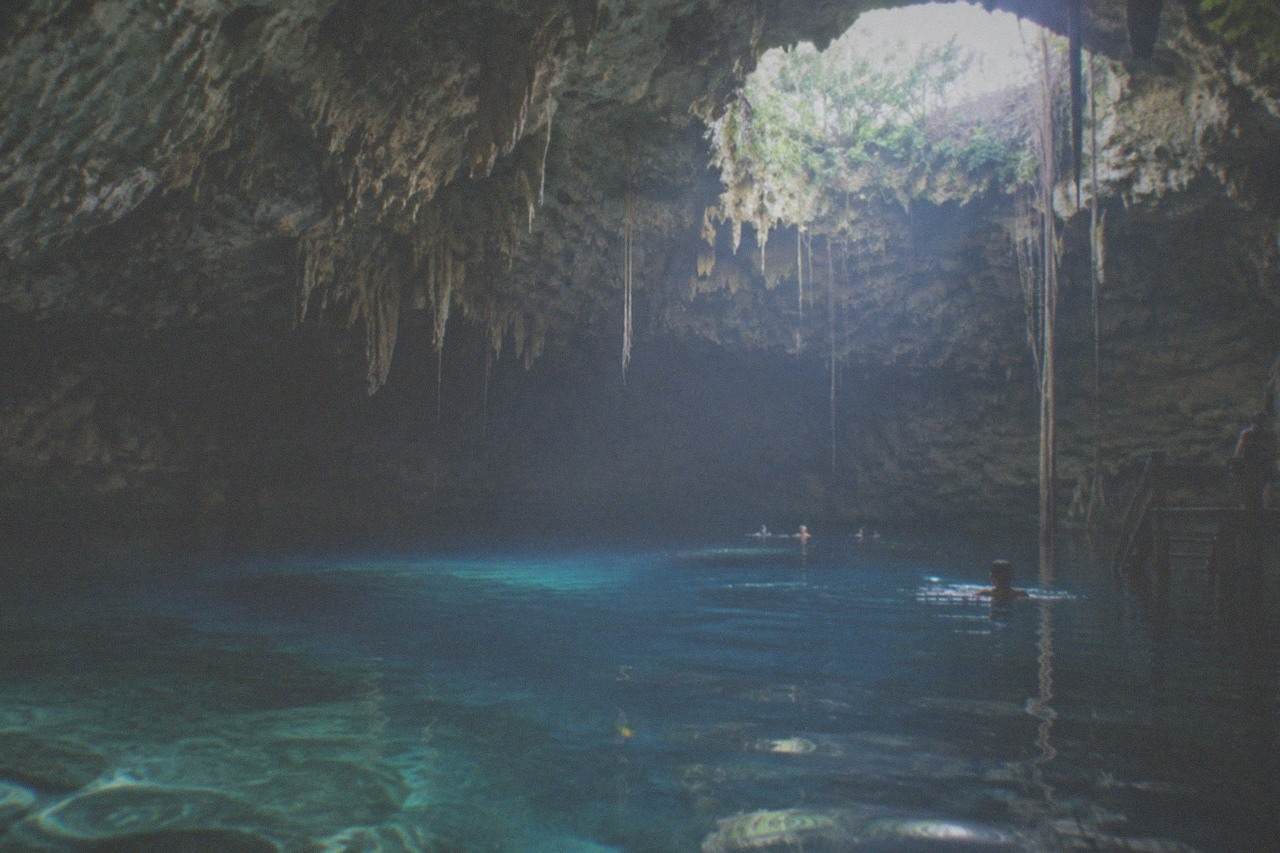
Short answer
Cenote diving in Tulum means guided dives in the daylight zone of flooded limestone caves, requiring Open Water certification, while full cave diving requires Intro-to-Cave or Full Cave training. Four products cover it: a no-certification discover-scuba dive from $179, two certified cavern products from $190, and an advanced Pit and Dos Ojos combo at $230.
The water in a Tulum cenote holds at roughly 24 to 27 degrees Celsius all year, fed by an underground aquifer that neither the December wind nor the August sun can reach. Visibility in the cavern zones often runs past 50 meters and, in the most transparent sites, past 100. Those two numbers explain why a small stretch of the Yucatan jungle between Tulum and Playa del Carmen has become one of the most recognizable freshwater diving destinations anywhere: the conditions are stable when the ocean is not, and the scenery is rock that took millennia to form rather than anything alive.
Cenote diving in Tulum is also a place where a single word changes what you are legally and practically allowed to do. A guided cavern dive stays inside the natural light zone of a flooded cave and needs nothing more than an Open Water certification. A cave dive leaves that light behind, and the training gap between the two is measured in years, not weekends. This guide walks the line between them, then sorts the four dive products bookable from Tulum by what each one requires.
What Is Cenote Diving In Tulum?
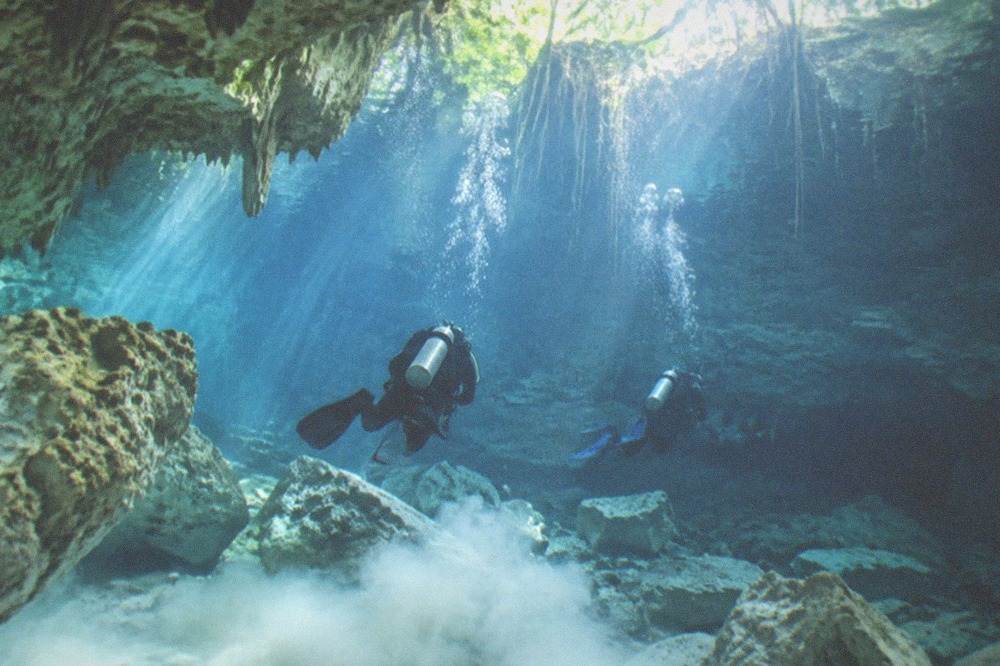
Cenote diving is scuba diving in the flooded limestone caves of the Yucatan aquifer, where rainwater filtered through rock fills sinkholes and passages with clear, still, mineral-fresh water. Around Tulum, operators run guided dives in the daylight-lit cavern zones of systems like Sac Actun, of which Gran Cenote and Dos Ojos are part, one of the longest mapped underwater cave networks in the world.
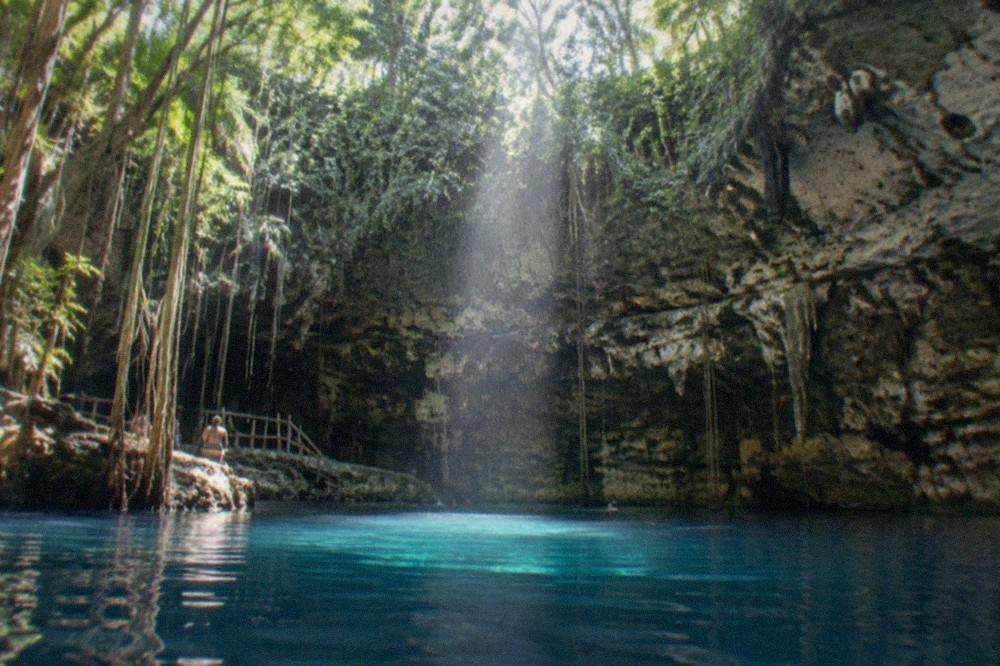
The setting is unusual enough that it reshapes ordinary dive expectations. There is no swell, no current worth the name, no thermocline jumping five degrees mid-dive. What there is, in abundance, is geology: stalactites and stalagmites formed over tens of thousands of years when the passages were dry, flowstone walls, and halocline shimmer where fresh water meets deeper salt water in some systems, bending light into a blurry mirror band that divers pass through like a doorway.
The tour economy around this is built on a simple split. Recreational divers, meaning anyone from a nervous first-timer to a salty divemaster, dive the cavern zone with a guide who holds full cave certification. That guide swims the line, watches the group, and carries the contingency planning. Technical divers who have earned cave certifications dive past the daylight on their own lines, and that population is small, local, and largely separate from the tourist market.
For visitors, the practical takeaway is that a cenote dive is closer to a guided drift dive than to solo exploration. You show up, meet a shop, get matched with a guide, and swim a route that has been dived thousands of times. If you are weighing whether the whole idea justifies the cost and travel, the diving worth-it question gets its own treatment elsewhere on this site.
Cavern Diving Vs Cave Diving: Where The Line Falls
Cavern diving stays within the daylight zone, within roughly 40 meters of a surface opening and 60 meters of linear penetration, guided by a full-cave-certified professional, and requires only Open Water certification from the diver. Cave diving leaves the light zone entirely and requires Intro-to-Cave minimum, typically Full Cave in practice, plus technical gear and line protocols the recreational card never covers.
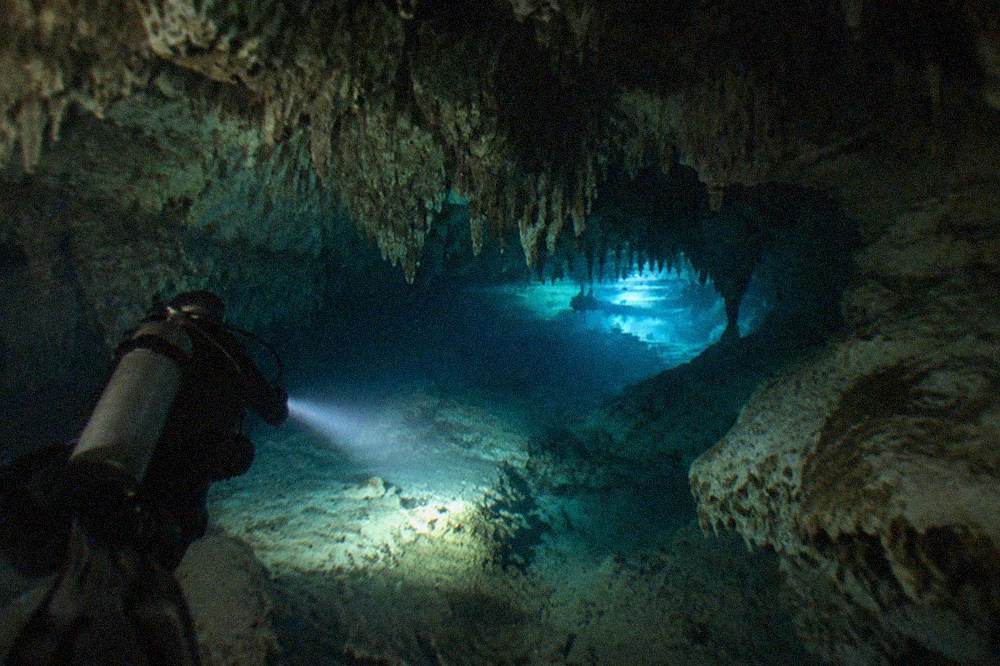
The line is not a vibe, it is a definition with numbers behind it, and it exists because of how people die underwater. Publicly reported cenote fatalities near Tulum have overwhelmingly involved divers who entered cave zones without the training for it, either uncertified divers or certified divers following a passage beyond the light. Guided cavern diving within the daylight zone with a qualified guide is described by the region's own diving community as low risk when the rules are followed. The certification structure is the rules, made portable.
Here is the progression in plain terms. An Open Water card, the entry-level certification most travelers hold or can earn in a few days, qualifies you to dive a cavern with a guide, at sites such as Dos Ojos where the cavern is wide, bright, and shallow. Go deeper into the discipline and the next rungs are cavern diver, then Intro to Cave, then Full Cave, each a formal course with its own gear configuration and line-laying drills. Sites like The Pit, with depths beyond 30 meters, sit above that recreational ceiling too and generally call for Advanced Open Water at minimum for the depth alone, before anyone discusses the overhead environment.
| Level | What it allows in a cenote | Typical card | Gear |
|---|---|---|---|
| First-time diver | Guided discover-scuba experience, shallow cenote, instructor-led | None, training on the day | Full rental set provided |
| Recreational certified | Guided cavern dives in the daylight zone | Open Water minimum | Full rental set provided |
| Advanced recreational | Deeper cavern sites, guided | Advanced Open Water, guide-dependent | Rental plus computer recommended |
| Technical | Cave zones, penetration beyond daylight | Intro-to-Cave minimum, Full Cave typical | Own technical configuration, sidemount common |
One correction to that table: the fourth row reads Intro-to-Cave, the certification family used across agencies. The authority on the certification ladder, and the reason guides themselves must hold full cave credentials, is covered in a detailed cavern versus cave progression breakdown worth reading if the technical path tempts you.
The gear story is friendlier than the certification story. Almost every guided cavern package supplies the full set: tanks, BCD, regulator, weights, a 3 to 5mm wetsuit, and the dive lights that a cavern, even a bright one, legally requires. The mask and the comfort in the water are what you bring.
The Four Diving Products In Tulum By Certification Requirement
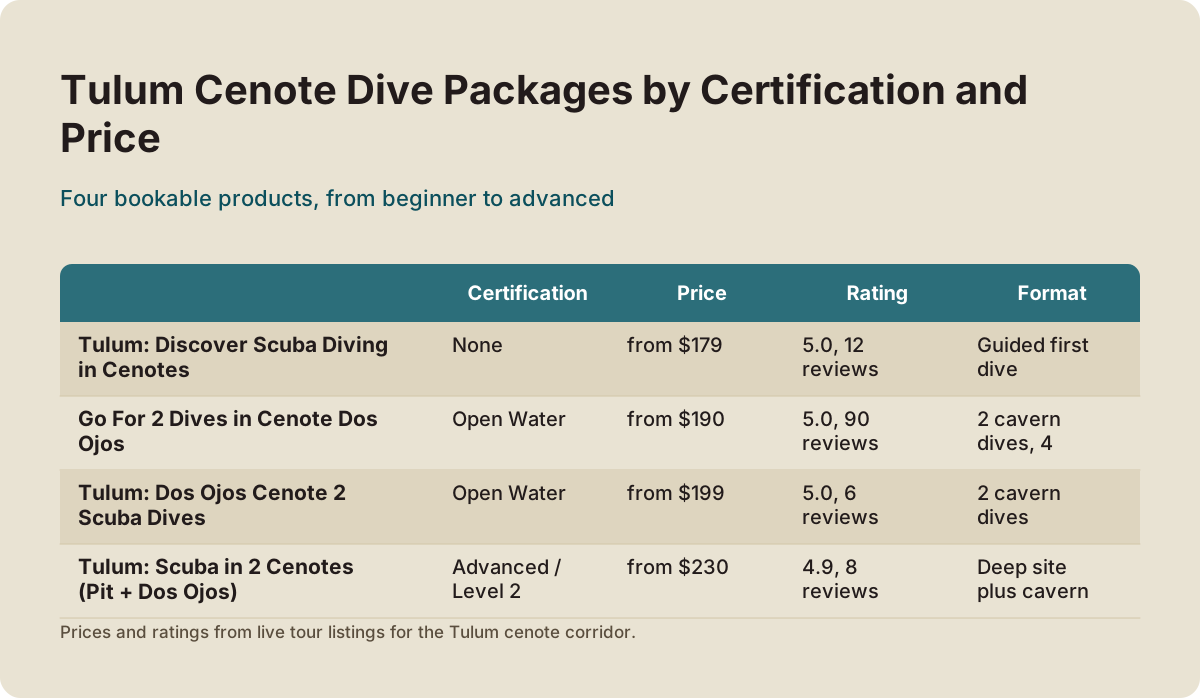
Four bookable products cover the whole ladder. The discover-scuba experience needs no certification at $179. Two Dos Ojos cavern products for certified divers run $190 and $199. The Pit plus Dos Ojos combo, the roster's highest dive price, demands advanced-level diving and costs $230, including transport, gear and a cave-certified instructor.
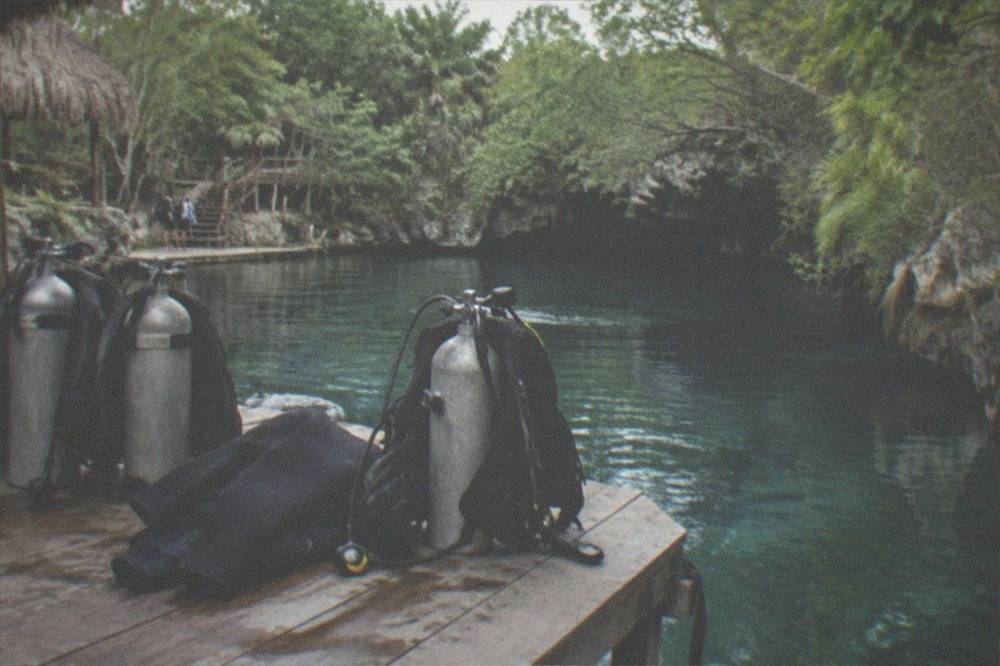
The lowest rung is the most useful for the most people. Tulum Discover Scuba Diving in Cenotes meets at Agua Clara Diving Tulum, in front of Hotel Zamas, and runs the beginner format in which an instructor teaches the basics and then takes you into the water with no certification earned or required. It carries a 5.0 rating from 12 reviews on the live listing, from $179, and it is the natural first dive most travelers on this roster should book, the subject of the closing recommendation in this guide.
The certified tier belongs mostly to La Calypso Dive Center on Calle Sagitario. Go For 2 Dives in Cenote Dos Ojos, from $190, 5.0 from 90 reviews, is a four-hour two-tank cavern dive at the most famous site on the corridor, capped at four travelers, supplied by La Calypso, with no lunch included. Its sibling, Tulum Dos Ojos Cenote 2 Scuba Dives, from $199, 5.0 from 6 reviews, covers the same site for certified open-water divers, and the listing is candid about the 15 steps you carry tanks down at the site, a detail worth knowing before you pack a bad knee.
The top rung is Tulum Scuba in 2 Cenotes Including a Deep One (Pit + Dos Ojos), from $230, 4.9 from 8 reviews, meeting at La Calypso Dive Center and reserved for advanced or Level 2 divers only. It pairs the deep, otherworldly Pit with Dos Ojos on one day, and the price includes roundtrip transport, full gear and a cave-certified instructor. The small review pool is real; 8 reviews is 8 reviews, so treat the rating as a signal about a small shop rather than a crowd verdict.
Read as a ladder, the four products make a coherent pathway: discover-scuba to confirm you like it, open-water certification at home or in Playa del Carmen, a Dos Ojos cavern dive as your first overhead-environment experience, and the Pit combo once depth training is behind you. A fuller site-by-site treatment of the most famous of these is in the Dos Ojos cenote guide.
| Product | Certification needed | Price | Rating and reviews | Format |
|---|---|---|---|---|
| Tulum: Discover Scuba Diving in Cenotes | None | from $179 | 5.0, 12 reviews | Instructor-led first dive, meets Agua Clara Diving Tulum |
| Go For 2 Dives in Cenote Dos Ojos | Open Water | from $190 | 5.0, 90 reviews | 2 cavern dives, 4 hours, max 4 travelers |
| Tulum: Dos Ojos Cenote 2 Scuba Dives | Open Water | from $199 | 5.0, 6 reviews | 2 cavern dives, 15 steps with tanks |
| Tulum: Scuba in 2 Cenotes (Pit + Dos Ojos) | Advanced / Level 2 | from $230 | 4.9, 8 reviews | Deep site plus cavern, transport and gear included |
Two honest caveats on that table. Ratings from single-digit review pools, the 6 and the 12, should not be read as broad reputations; they are small shops with happy customers so far. And no product on this roster will take a recreational diver past the light zone, because that is not a tourist product anywhere in the region.
How Much Does Cenote Diving In Tulum Cost?
Bookable dive packages run from $179 to $230 per person, gear and guide included, with the $230 Pit combo the ceiling on this roster. On top of the package, plan cash for cenote access, roughly 350 MXN to swim or snorkel at Dos Ojos and around 1,600 MXN for its guided cavern dive access, plus incidentals like lockers at about 50 MXN at larger sites.
The clean way to think about the money is two layers. The first layer is the package price, the $179 to $230 above, which covers the guide, the tanks, the gear and, on the Pit combo, the transport. Most guided cavern packages across the region cluster in the same band, roughly $160 for one site to $230 for two or deeper sites, so this roster's pricing is unremarkable, which is exactly what you want from honest pricing.
The second layer is site access, and this is where cash matters. Individual cenote fees near Tulum range from about 100 MXN at the smallest community-run sites to 500 MXN at Gran Cenote, and most require Mexican pesos in cash, with card readers reliable mainly at the biggest sites. Diving products generally bundle site access into the package price rather than making you pay a separate gate fee, which is why every Sac Actun-area dive on the market is sold as a shop package with access folded in.
| Item | Cost | Notes |
|---|---|---|
| Dos Ojos swim/snorkel access | 350-400 MXN (roughly $19-22) | Secondary-sourced; fees are set by the site and can change, confirm on arrival |
| Dos Ojos guided cavern dive access | about 1,600 MXN (roughly $87) | Usually bundled by dive shops into package pricing |
| Gran Cenote adult entry | 500 MXN (roughly $27) | Cash preferred on site |
| Lockers at larger sites | about 50 MXN | Smaller community sites often have none |
| Approved biodegradable sunscreen tube | 150-350 MXN | Some sites ban all sunscreen, even biodegradable |
Two rules protect both your wallet and the water. Every cenote in the area enforces a biodegradable, mineral-filter sunscreen policy with a mandatory pre-entry rinse at the shower station, and conventional sunscreen can draw a fine up to 1,200 MXN at enforcing sites, while some sites prohibit all sunscreen outright, so check the posted rules rather than assuming one blanket rule. And keep the state's Visitax, roughly 283 MXN per foreign visitor, in your airport-and-airline planning; it is an arrival tax, never a cenote or dive fee, and belongs nowhere near a tour price line.
For a wider picture of what entry fees look like across every site in the corridor, the cenote entrance fees guide holds the full table, and for the snorkeling alternative at a gentler price, the cenote snorkeling guide covers the six snorkel-format tours from $79 up.
Minimum Ages, Gear And What The Rules Require
The common minimum age for cenote cavern diving is 15, set by operators rather than one regulator, with parental consent sometimes required under 18. Gear is almost always supplied, tanks, BCD, regulator, weights, wetsuit and lights, on guided packages. Discover-scuba formats accept adults with no certification at all, and children too young to dive can usually snorkel above.
The age number surprises people expecting the 10-year-old minimum of tropical resort open-water courses. Cavern environments are treated more conservatively, and shops around Tulum commonly set 15 as the floor for guided cenote cavern tours, sometimes with consent paperwork for 15 to 17-year-olds. Younger certified divers are generally steered toward open, no-overhead cenotes instead, which is a sensible rule to build a family trip around rather than argue with on a dock.
What the guide must hold is the other half of the safety system. Under the CREER requirements that govern active cenote dive guides in the region, a guide needs Divemaster or higher plus full cave certification, six months or more of local residency and experience, current first aid, CPR and oxygen-provider training, medical insurance, and a signed endorsement from an evaluating instructor. You do not need to audit any of this; a reputable shop cannot legally put an unqualified guide in the water with you. But it explains why the guide ratio feels different from a cattle-boat dive, and why the max-four-travelers cap on the $190 Dos Ojos product is typical rather than a premium flourish.
| Requirement | Who it applies to | Typical standard |
|---|---|---|
| Minimum age, cavern tour | Divers | 15, operator-set, consent sometimes under 18 |
| Certification, cavern | Divers | Open Water minimum |
| Certification, deep sites | Divers | Advanced Open Water or equivalent |
| Full cave cert | Guides | Mandatory for active cenote dive guides |
| Sunscreen and rinse | Everyone entering water | Biodegradable only, mandatory pre-entry shower |
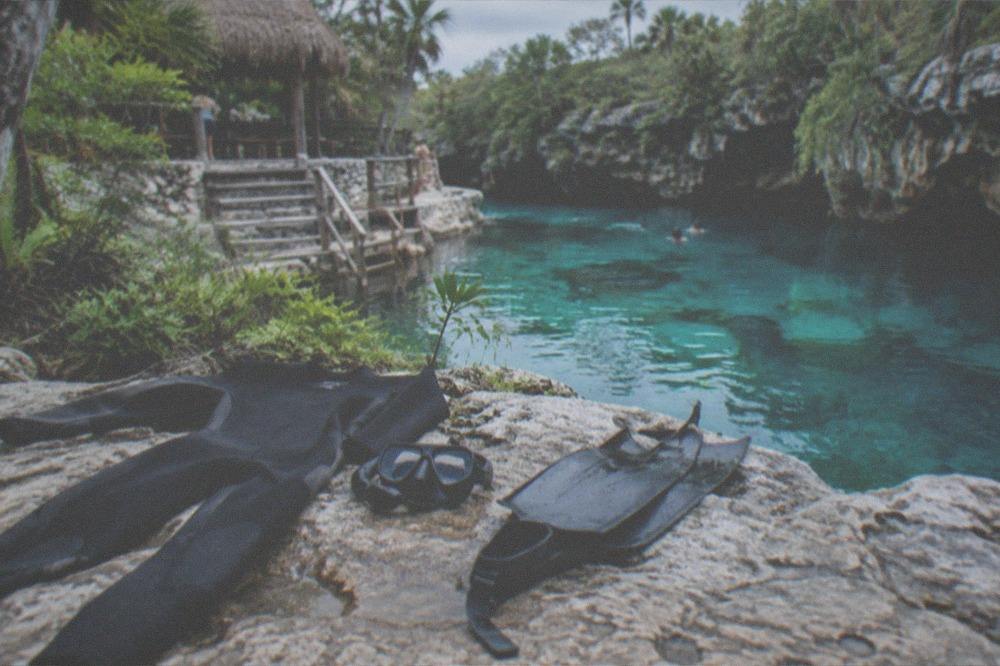
Practical packing is short. Water shoes or grippy strapped sandals for the limestone edges, where bare feet are often required in the water itself; a quick-dry towel; cash in pesos; and nothing on your skin, no lotion, no spray, no conventional sunscreen, until after you are done in the water for the day. The full checklist, including what to leave in the hotel, is in the what to bring guide.
Is Cenote Diving In Tulum Safe?
Guided cavern diving in the daylight zone, with a full-cave-certified guide, is described by the region's diving community as low risk, and reported fatalities near Tulum have overwhelmingly involved divers in cave zones without the training or the guide. The certification structure exists precisely to prevent that. The main real risks for a compliant diver are the ordinary ones: depth, buoyancy, and honest self-assessment on the booking form.
The honest version of the safety answer is statistical rather than reassuring. No single public fatality tally exists for cenotes, and the cases that surface in reporting through recent years share a pattern: people went past the light without the training. That pattern is why the discover-scuba product caps depth and skills to instructor-controlled levels, why certified products still run with guides, and why no tourist product on this roster sells penetration past the cavern zone. The regional guide to certification, cost and safety practice, including what a full cave course involves, is documented in a complete cenote diving guide used by shops themselves.
The question is common enough, and literal enough in search, that the is it safe to dive in a cenote piece on this site takes it apart in full, and the more general swimming safety question covers the snorkeler's version. The one-line summary for divers: the environment is unusually stable, the water is clear and still, and the risk lives almost entirely in the choice of zone.
One environmental note worth making here rather than scattering through the article: sargassum, the seaweed that can affect Tulum's ocean beaches in season, never reaches cenotes. They are inland freshwater sinkholes with no connection to ocean currents, so a bad sargassum month on the coast changes nothing about the water you will dive, and dive shops see the shift in demand when the beaches suffer.
How To Pick Your First Cenote Dive
If you hold no certification, book the discover-scuba product, $179, instructor-led, no card needed. If you hold Open Water, book the $190 Dos Ojos two-dive cavern day as your first overhead-environment dive. Choose the $230 Pit combo only with advanced or Level 2 training, and choose the $199 sibling if you want the same site with a smaller-shop feel.
The decision really is that narrow, which is a feature of a small, honest roster rather than a limitation. Four products, one ladder, and your current card decides your rung. For most readers the answer to "which one" is the discover-scuba day: it is the only product that accepts you exactly as you arrive, uncertified, and it converts a vague curiosity about diving under rock into a supervised first dive in the best possible water for it.
Beyond your own card, two practical filters finish the choice. Time of day matters everywhere in the corridor: arrive at opening, typically 8 to 9 AM, for the quietest water, with tour-bus crowds peaking from late morning to mid afternoon. And weather matters less than you would guess, since the water temperature and clarity barely move with the season; if you are planning the whole trip around conditions, the best time to visit guide maps the quiet months against the busy ones.
For depth of research, the site-by-site detail on the corridor's most dived location is in the Dos Ojos guide, and the broader corridor context is in Tulum Cenote Tours coverage across the rest of this site, including the fee tables and snorkel alternatives linked above.
If the question you are actually asking is whether the whole thing is worth the money, the worth-it verdict answers it directly, and the answer is more conditional than the Instagram shots suggest.
Common Questions About Cenote Diving In Tulum
Is Diving In Cenotes Worth It?
For most certified divers, yes: the water is unusually clear and still, the geology is the attraction rather than marine life, and guided cavern packages from $190 to $230 compare fairly with two ocean dives once boat fees are counted elsewhere. It is worth it most for divers who have done the Caribbean reefs already and want a completely different environment.
Is It Safe To Dive In A Cenote?
Guided cavern diving in the daylight zone is described as low risk when protocols are followed, and reported fatalities near Tulum have involved divers entering cave zones untrained or unguided. The certification rules, the mandatory full-cave-certified guides and the daylight-zone limit are the safety system working.
Do You Need Certification To Dive In Cenotes In Tulum?
Not for the discover-scuba product, from $179, which is instructor-led and designed for people with no certification at all. For guided cavern dives at sites like Dos Ojos you need Open Water, and for the Pit plus Dos Ojos combo you need advanced or Level 2 training.
How Old Do You Have To Be To Dive A Cenote?
Operators commonly set 15 as the minimum for guided cenote cavern tours, sometimes with parental consent required for divers under 18. Younger children can usually snorkel at open sites instead, and life jackets are commonly required or provided free for children under 12 at major cenotes.
What Is The Difference Between Cavern And Cave Diving?
Cavern diving stays in the daylight zone, close to a surface opening, guided, and needs only Open Water certification. Cave diving leaves the light zone on laid line and requires Intro-to-Cave or Full Cave technical training plus specialized gear; it is a technical discipline, not a bookable tourist tour.
How Cold Is Cenote Diving Water?
The water holds at roughly 24 to 27 degrees Celsius year-round regardless of season, which is why packages include a 3 to 5mm wetsuit rather than a thick one. Cenotes do not get cold in winter or warm up in summer; the aquifer buffers the temperature completely.