Is Diving In Cenotes Worth It?
An honest verdict on cenote diving in Tulum: what the water is actually like, whether beginners can try it without certification, and what it costs.
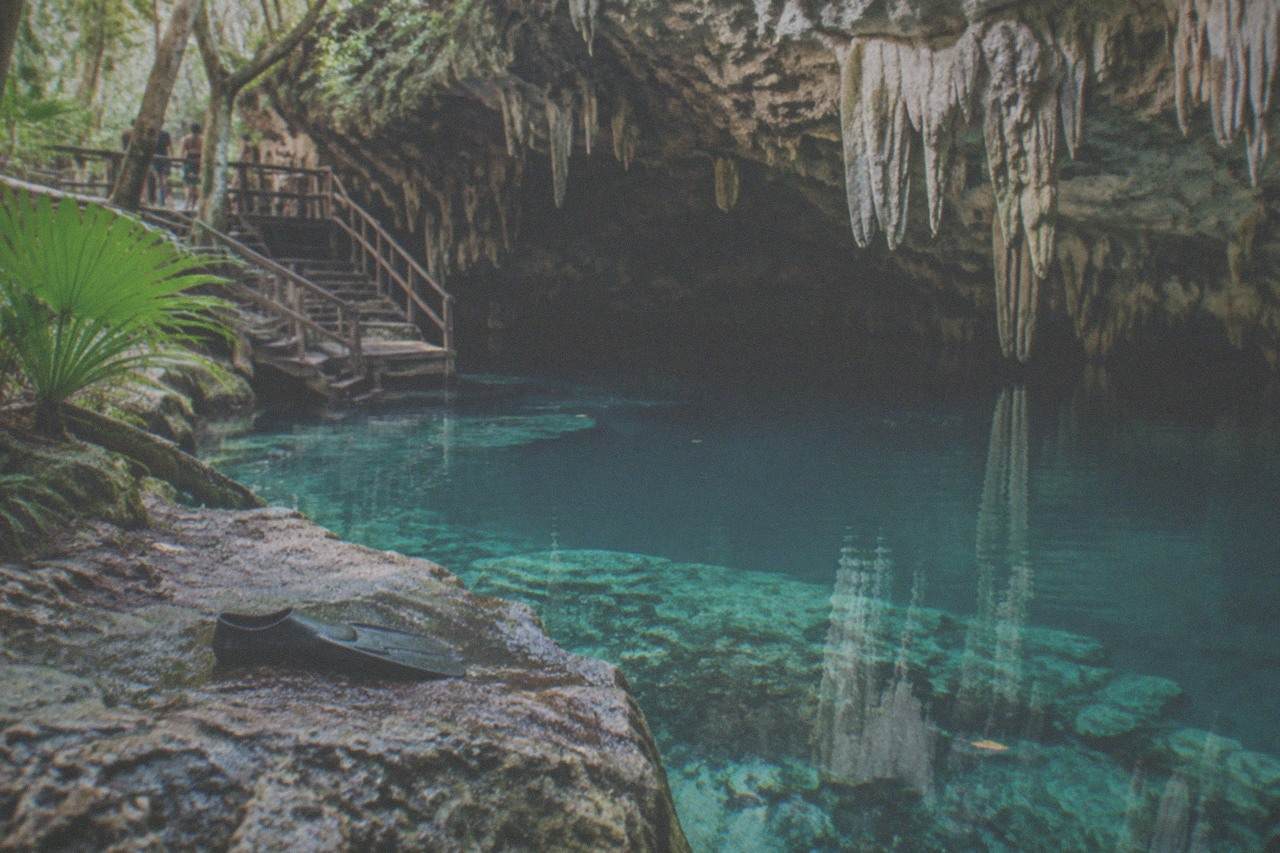
Is Diving In Cenotes Worth It?
For most travelers who already dive, or who have wondered about trying, yes: cenote diving is worth it, and it is unlike ocean diving in almost every way that matters. Visibility in the cavern zones regularly exceeds 50 meters, the water holds steady at 24 to 27 degrees C year round, and you float through a limestone cave decorated with stalactites that took millennia to form. The catch is price: $179 to $230 per person on the Tulum roster.
That price gap is the whole hesitation, and it deserves a straight answer rather than hype. Ocean dives elsewhere in Mexico can cost less. What you are paying for here is water so still and so filtered through limestone that the view behaves more like air than water, plus a guided line through a cavern system, the Sac Actun network, that ranks among the longest mapped underwater cave systems on the planet. Gran Cenote and Dos Ojos both sit inside it.
The honest starting point is that there are really two different questions hiding inside this one. Certified divers asking "is it worth $190" get one answer. Complete beginners asking "can I even do this" get a different one, and the answer is yes, in a specific format: a discover-scuba experience that requires no certification at all, from $179, meeting at Agua Clara Diving Tulum in front of Hotel Zamas. That product holds a 5.0 rating from 12 reviews, a small pool but a real one.
For background on the format itself, the site's full Tulum cenote diving guide covers operators, sites, and certification paths in depth. This piece stays on the single question of value: what the money buys, what the water is actually like, and who should skip it.
What Does Cenote Diving Actually Look Like Underwater?
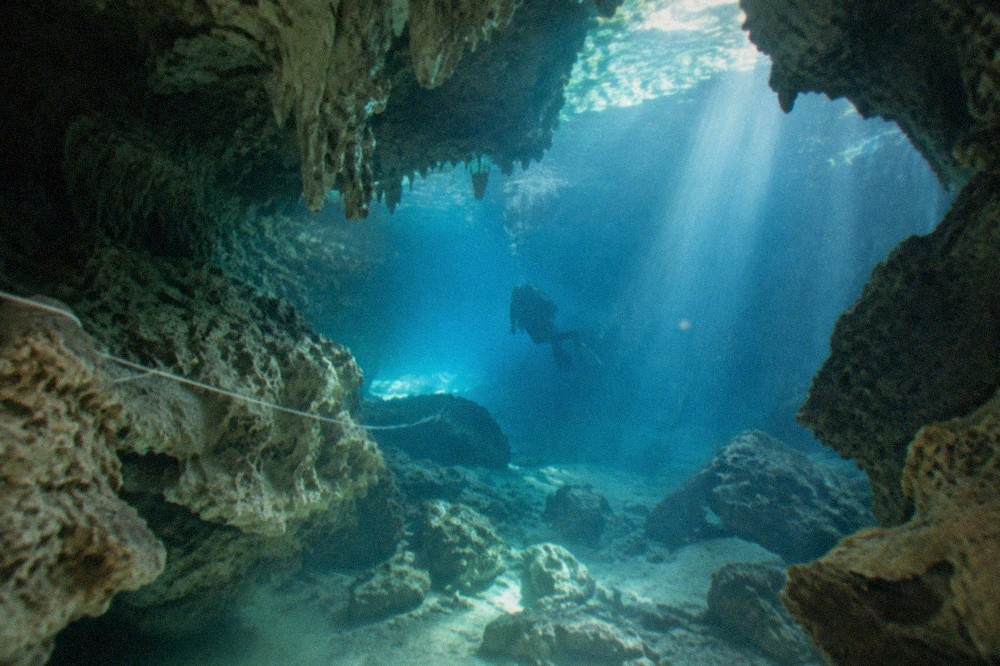
Picture a cathedral of limestone lit by shafts of daylight from a surface opening, with a guideline running through it and water so clear the walls look closer than they are. Cavern dives in the Tulum corridor stay inside the natural light zone, at depths of roughly 10 to 12 meters at sites like Dos Ojos, following a permanent line laid by the guide. Stalactites hang from ceilings that were dry during the last ice age.
That last detail is the part first-time cenote divers consistently underestimate. These are not eroded rock pools; they are flooded dry caves. The formations you drift past, columns, draperies, fossilized shells embedded in the walls, formed in open air over hundreds of thousands of years. Diving through them is the closest a recreational diver gets to cave diving without a cave certification, because the commercial format deliberately stops at the cavern boundary: within sight of daylight, on a line, with a guide who is certified far beyond what the dive itself demands.
The sites near Tulum divide into two broad characters. Shallow cavern systems such as Dos Ojos sit at roughly 10 meters maximum depth, with passages that open and close around you and halocline layers where fresh water meets intruding salt water, bending the light like a shimmer. Deep sites such as The Pit, which one Tulum roster product pairs with Dos Ojos in a single advanced day, run past 30 meters and are restricted to advanced divers for exactly that reason. The Dos Ojos cenote guide details the site itself, its 350 to 400 MXN snorkel entrance, and why its two eyes are dived on separate lines.
For a fuller rundown of certification levels and pricing structures in the Mexican cenotes, the cenote diving complete guide is a solid external reference, and the distinction between cavern and full cave formats is laid out clearly in this cavern versus cave certification progression.
Do You Need A Certification To Dive In A Cenote?
No, not to try it. A discover-scuba experience lets a complete beginner dive a cenote the same day, with pool-style instruction first and a instructor at arm's length throughout, no certification required. To dive as a certified diver you need Open Water minimum for cavern sites, and Advanced Open Water for the deep sites. Full cave zones are closed to recreational divers entirely, reserved for cave-certified technical divers.
The beginner format deserves the emphasis, because it is the most misunderstood product on this topic. Tulum's Discover Scuba Diving in Cenotes runs from $179, holds a 5.0 rating from 12 reviews, and is built precisely for people who have never breathed underwater. The listing describes a beginner-friendly structure: instruction, gear, and a supervised dive in the cenote environment, meeting at Agua Clara Diving Tulum in front of Hotel Zamas. It is the natural first-diving product on the roster, and the honest answer for anyone asking whether cenote diving is worth it before holding a certification.
For certified divers the ladder is straightforward. Open Water is the floor for guided cavern dives at sites like Dos Ojos, which sit around 10 to 12 meters, inside the daylight zone, on a permanent line. Deep cenotes such as The Pit and Angelita demand Advanced Open Water or equivalent because they drop past 30 meters, and one roster product, the Pit plus Dos Ojos two-cenote day from $230, is explicitly for advanced and Level 2 divers only. Beyond that, the daylight zone ends and cave diving begins, a technical discipline with its own certification chain that no tourist product sells.
Age minimums matter for families: many operators set 15 years as the minimum for cenote cavern tours, sometimes with parental consent required for divers under 18. The private snorkel-and-cave exploration product on the roster sets its own minimum age at 5, but that is a swim-and-snorkel format, not scuba.
How Much Does Cenote Diving Cost In Tulum?
Real bookable prices on the Tulum roster run from $179 to $230 per person: $179 for the no-certification discover-scuba format, $190 to $199 for two guided cavern dives as a certified diver, and $230 for the advanced Pit plus Dos Ojos combination, the highest diving price on the roster. All three include gear and a guide, and diving access is bundled into the package price rather than paid separately at the gate.
The market context backs those numbers up rather than undercutting them. Independent 2026 operator reporting puts typical all-inclusive guided cavern tours at roughly $160 for a two-dive day at one cenote, rising to $180 to $230 when a second cenote or a deeper advanced site is added. The Tulum roster sits squarely inside that band, which is what you want to see: no product here is priced oddly against its own market.
| Product | Format | Price | Rating and reviews | Who it is for |
|---|---|---|---|---|
| Discover Scuba Diving in Cenotes | Beginner, no certification | From $179 | 5.0 from 12 reviews | First-time divers |
| 2 Dives in Cenote Dos Ojos (Certified) | Two cavern dives | From $190 | 5.0 from 90 reviews | Open Water and up |
| Dos Ojos 2 Scuba Dives (Certified) | Two cavern dives | From $199 | 5.0 from 6 reviews | Open Water and up |
| Pit + Dos Ojos in 2 Cenotes | Advanced two-cenote day | From $230 | 4.9 from 8 reviews | Advanced or Level 2 only |
One budgeting note that surprises people: the individual gate fees, the ones that sting snorkelers paying out of pocket at Gran Cenote's 500 MXN or Dos Ojos' 350 to 400 MXN snorkel entrance, do not apply to divers the same way. Diving access at these sites is sold through the dive operator and folded into the package. A guided cavern dive day at Dos Ojos runs around 1,600 MXN when bought locally, roughly $87, which is why the all-in USD tour prices above are the fair comparison rather than the gate fee plus a rental.
For the snorkeling side of the ledger, which is the honest alternative if the diving price makes you flinch, dedicated guided cenote snorkel tours commonly run $110 to $159 per person, and the roster's cheapest standalone snorkel product, the Magical Cenote and Paradise Lagoon trip, starts at $79 with a 4.9 rating from 886 reviews. Those numbers set the floor for what a non-diving day costs.
Is Cavern Diving In Cenotes Safe?
Guided cavern diving inside the daylight zone, on a permanent line, with a fully cave-certified guide, is described across current operator and safety sources as low-risk when the rules are followed. The serious accidents on record near Tulum involve divers who entered cave zones uncertified, or without a guide, which is exactly the scenario the commercial format is designed to make impossible. For beginners, the discover-scuba format adds an instructor within reach for the entire dive.
The safety case rests on structure, not luck. Since updated requirements took effect in early 2026, active cenote dive guides in the region must hold Divemaster level or higher plus Full Cave certification, local residency and experience, current first aid, CPR and oxygen-provider training, medical insurance, and an endorsement from an evaluating instructor. The person leading your cavern dive is qualified far past the dive you are actually doing. That asymmetry is the whole safety model. Other pages covering the same trip are gathered on Tulum Cenote Tours.
The rules that protect you are simple and non-negotiable: stay inside the cavern zone where daylight is visible, follow the guideline, never enter a restriction, and surface with the guide. Divers who want the deeper question answered fully, including what the fatality record does and does not show, can read the site's piece on whether it is safe to dive in a cenote. The short version: the format's guardrails are the reason it has a good record, and leaving them is the reason the record has exceptions.
Two practical notes from the listings themselves. The two-dive Dos Ojos product for certified divers is supplied by La Calypso Dive Center and caps groups at four travelers, which keeps the guide ratio tight. Its sister listing notes 15 steps down to the water carrying tanks, so mobility matters at this site. Neither is a safety issue, but both are honest trip-planning facts.
Cenote Diving Vs. Cenote Snorkeling: Which Is Worth Your Money?
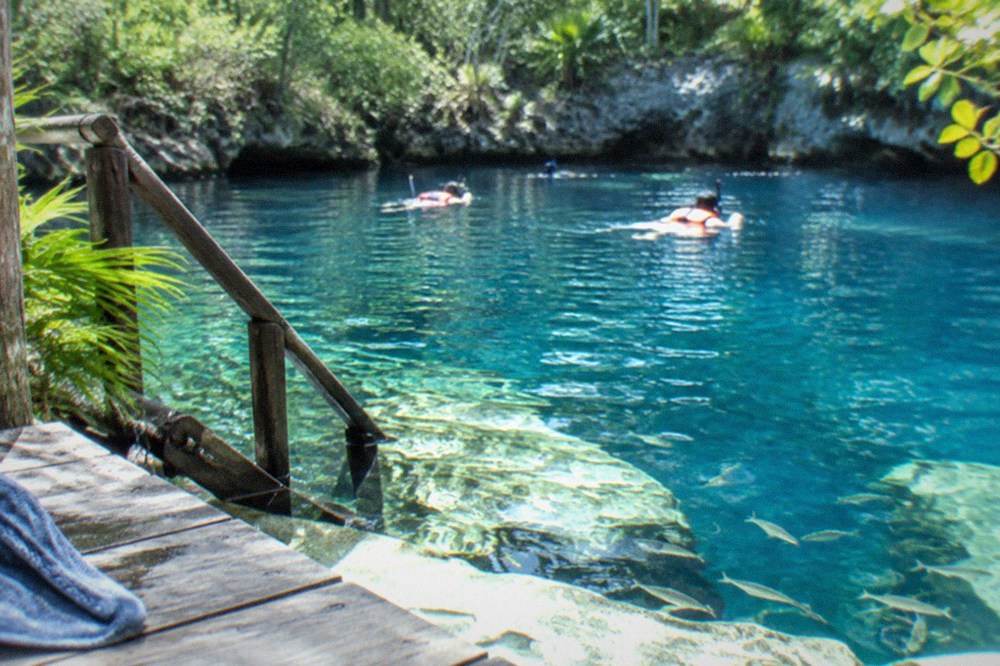
Diving wins if the cave itself is the draw, since snorkeling keeps you at the surface while the stalactite cathedrals are underneath you. Snorkeling wins on price, accessibility and family fit: from $79 versus $179, no minimum age of 15, no certification question, and many of the same fish, turtles and light effects are visible from above. The honest middle path for unsure groups is splitting up for an hour, then reuniting.
The underwater experience gap is real, though. A snorkeler at Dos Ojos sees the two eyes from the surface, which is genuinely beautiful, a ring of rock, blue depth below, shafts of light. A diver on the Barbie line or the Bat Cave line passes under that surface and travels the passage itself. The visibility figures tell the story: cavern zones report 30 to 100 meters and beyond, and the Dos Ojos cavern system specifically reports visibility often exceeding that range, with maximum dive depths around 10 to 12 meters, well inside Open Water limits.
| Cenote diving | Cenote snorkeling | |
|---|---|---|
| Entry price on the Tulum roster | From $179 | From $79 |
| Certification needed | None for discover-scuba; Open Water for certified dives | None |
| Minimum age | Around 15 with many operators | Young children fine at family sites |
| What you see | The cavern passages, lines and formations | The surface opening, light shafts, fish and turtles |
| Physical demand | Moderate; stairs with gear at some sites | Light |
| Group size | Small, often capped at 4 | Larger, shared groups |
For a fuller comparison at the snorkel end, the site's cenote snorkeling guide breaks down what each major site shows from the surface. And for the travelers whose real question is broader, whether the cenotes justify the whole trip, the verdict piece on whether the cenotes in Tulum are worth it covers the non-diving case.
When Is Cenote Diving Not Worth It?
Skip cenote diving if you are not comfortable in water you cannot stand up in, if you have unresolved ear or sinus problems equalization will punish, or if the budget only stretches to one paid activity and the ruins matter more to you. Claustrophobia is the quiet dealbreaker: the cavern zone keeps daylight visible, but you are under rock, in a passage, and no photo prepares you for that feeling.
It is also not worth it as an impulse add-on booked the night before while tired or hungover, which is how a lot of discover-scuba days go wrong. The format is beginner-safe, but it still asks you to breathe calmly through a regulator while your face is underwater inside a cave. Showing up rested is not a marketing line; it is the actual difference between a transcendent first dive and an expensive hour of managing your own nerves.
Honesty about the alternative matters too. If your party is mixed and only one or two people are drawn to diving, a strong snorkel tour plus the Tulum archaeological zone is a better shared day than a dive everyone waits around for. The combo category on the roster runs from $27 headline price, with entrance fees of roughly 40 USD paid on-site, up to $89 for a full Cancun-departing ruins and cenote day. Those are different products answering a different question, and the site's Tulum ruins and cenote combo guide covers them properly.
The Verdict For Different Travelers
Already certified and curious about caves: go, the two-dive Dos Ojos day from $190 is the classic entry point and the 5.0 rating from 90 reviews reflects a mature product. Never dived but tempted: the $179 discover-scuba format is the safest first breath underwater you can buy. Not interested in being underwater: take the $79 snorkel day and spend the difference on a second cenote. Diving with kids under 15: snorkel this trip, dive the next one.
The pattern in that paragraph is worth stating plainly, because it is the actual decision most readers are making. The question "is it worth it" has a different price of regret in each direction. A certified diver who skips the cenotes to save $60 has missed the one environment on the Yucatan coast that no ocean dive replicates. A nervous beginner who is pushed into a dive they did not want has spent $179 to feel trapped. Neither the tour operators nor this site can make that call for you, but the facts above let you make it honestly.
What the money is really buying, in one sentence: the only place on Earth where a recreational diver, or even a first-timer with an instructor at arm's length, floats through a flooded Pleistocene cave system in 50-meter visibility. Whether that sentence excites you or unsettles you is the answer to whether cenote diving is worth it.
Common Questions About Cenote Diving
Is Diving In Cenotes Worth It?
For certified divers, yes without much argument: the cavern zones offer 30 to 100 meter visibility, stable 24 to 27 degree water, and flooded cave formations no ocean site has, at $190 to $230 for a two-dive day. For beginners it is worth it only if the idea genuinely appeals, at $179 through a no-certification discover-scuba format with an instructor alongside.
Is It Safe To Dive In A Cenote?
Guided cavern dives, inside the daylight zone on a permanent line with a cave-certified guide, are described across current sources as low-risk. Serious accidents historically involve uncertified divers or unguided entry into cave zones, which commercial tours do not permit. Since early 2026, guides must additionally hold Divemaster rank, Full Cave certification, and current rescue training.
Do You Need A Certification To Dive In A Cenote?
No, not for the discover-scuba format, which takes complete beginners from $179 with instruction and an instructor in the water beside you. Guided cavern dives for certified divers require Open Water minimum, deep sites like The Pit require Advanced Open Water, and full cave zones require technical cave certification that no tourist product sells.
How Deep Do Cenote Dives Go?
Cavern dives at sites like Dos Ojos sit at roughly 10 to 12 meters maximum, well within Open Water limits. Advanced sites such as The Pit and Angelita run past 30 meters and are restricted to advanced divers. The commercial cavern format always stays within reach of natural daylight.
What Is The Water Temperature In Cenotes?
A steady 24 to 27 degrees C year round, fed by the underground aquifer, independent of surface weather or season. There is no cold or warm season to plan around, only crowd levels.
Can You Dive Cenotes If You Wear Glasses Or Have Ear Problems?
Prescription masks exist and operators commonly carry them, so eyesight is rarely a barrier. Ear and sinus problems are different: every meter of descent requires equalization, and unresolved congestion can end a dive painfully. Anyone with active sinus or ear issues should treat that as a genuine medical reason to snorkel instead.