Cenote Calavera: The Temple Of Doom Cenote Explained
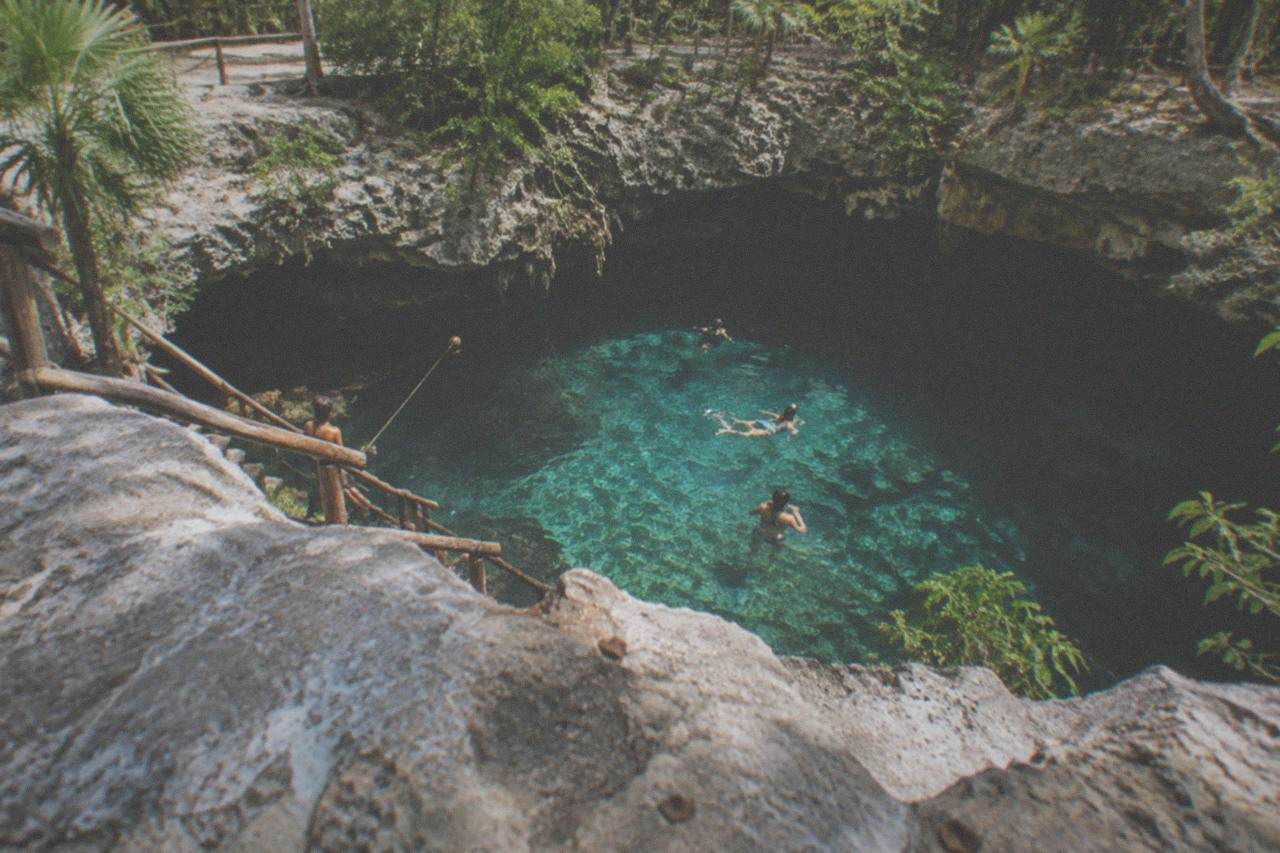
Cenote Calavera sits about three kilometres from Tulum Pueblo and earns its nickname, the Temple of Doom, from the three openings in its limestone roof. This guide covers the current entrance fee, the jumping platforms, the roughly 15 metre depth and who this cenote actually suits.
Short answer
Cenote Calavera charges roughly 250 to 300 MXN per adult (about $13 to $15), sits about 3 km from Tulum Pueblo on the Coba road, and runs about 15 metres deep. It is built for jumping, swinging and dramatic photos rather than long snorkel swims, and most guided tours do not list it by name.
Cenote Calavera, better known in travel circles as the Temple of Doom, is one of the most photographed sinkholes on the Tulum cenote corridor. The name Calavera means skull in Spanish, and from above the three round openings in the limestone roof, plus the largest central pool, are said to sketch a skeletal face. It sits roughly 3 km from Tulum Pueblo on the Coba road, which makes it one of the closest cenotes to town and one of the easiest to reach by bike or a short taxi ride.
What sets it apart from neighbours like Gran Cenote is what it does not offer. This is not a long snorkel swim or a family splash pool. Calavera is a jumping cenote first: platforms, a rope swing and a drop of roughly 15 metres to the water below. This guide lays out the honest facts, the current fee picture, the safety realities and the tour options, including the caveat that no bookable tour on this site's roster names Calavera as a stop.
What Is Cenote Calavera And Why The Temple Of Doom Name?
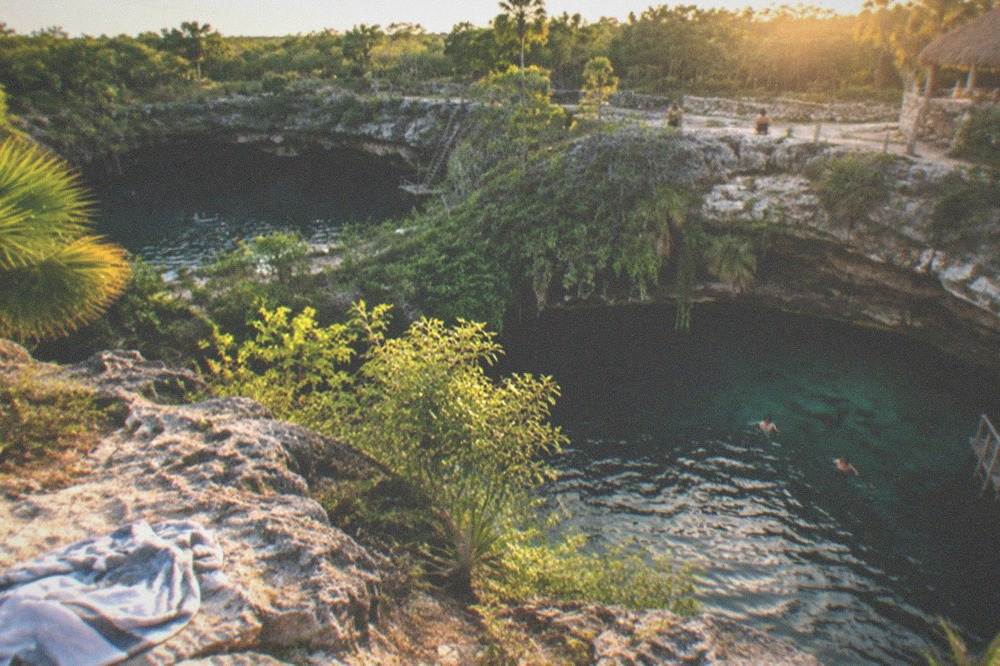
Cenote Calavera is a semi-open cenote, meaning a mostly open-air pool with cave sections, located about 3 km from Tulum Pueblo. The skull nickname comes from its three small circular openings arranged around a larger central pool, which together resemble a skull when viewed from the rim. It is roughly 15 metres deep and is best known for jumping, rope swings and adventure photography rather than extended swimming or snorkeling.
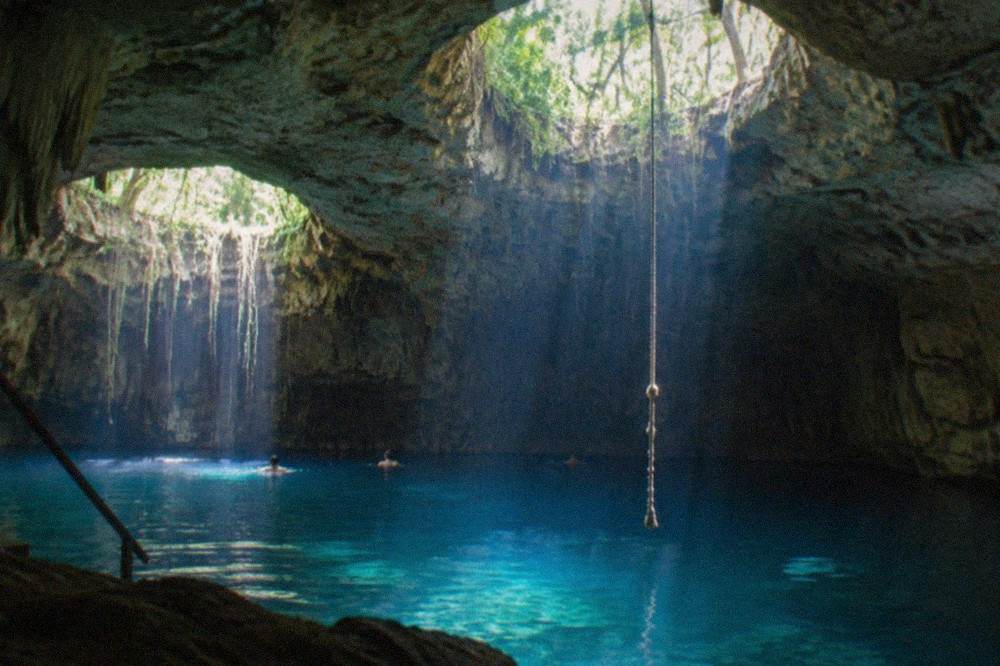
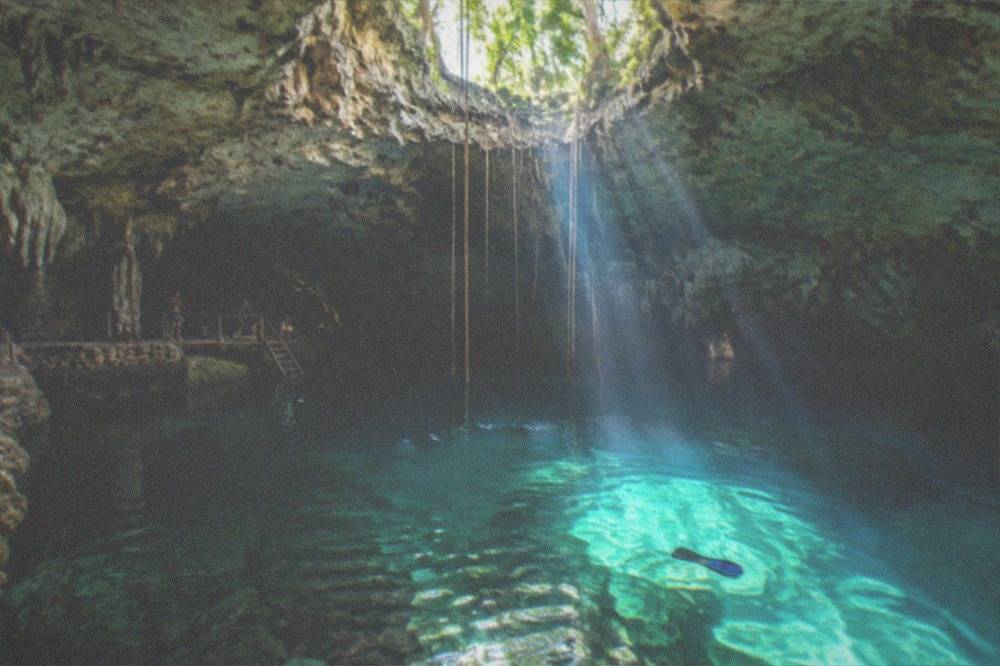
The three smaller openings let shafts of daylight down into the water at angles that photographers chase, especially around midday when the sun is high. Recent guides to the corridor describe the site as semi-open with cave sections, which in practice means you swim and jump in open water but the geology around you is carved rock rather than a wide open basin. That combination, light beams plus enclosed rock, is exactly why Calavera photos circulate so widely.
The Temple of Doom label is older traveler slang, not an official name, and it refers less to danger than to the skull imagery. Do not read the nickname as a warning that the site is unusually risky. The real risk factors here are the same ones at any deep cenote with jumping: entry height, water depth awareness and your own judgment about your swimming ability. The site opens around 9:00 AM and closes around 5:00 PM, in line with most corridor cenotes.
For a fuller map of how Calavera fits among the area's sinkholes, the cenotes near Tulum overview groups every major site by type, fee and what it suits. Calavera's slot there is the adventure and photo category, distinct from the turtle-snorkel reputation of Gran Cenote and the diving identity of Dos Ojos.
Where Is Cenote Calavera And How Do You Get There From Tulum?
Cenote Calavera sits roughly 3 km from Tulum Pueblo along the road toward Coba, about a 10 to 12 minute bike ride or a short taxi hop from the town centre. It is one of the closest cenotes to Tulum, which is both its biggest draw and its biggest weakness: easy access means the midday window fills quickly with day-trippers. Arriving near the 9:00 AM opening keeps the site quiet.
Getting there independently is simple. Bikes and taxis are the standard options, and water shoes or grippy sandals with a heel strap are the standard footwear advice for the rocky limestone edges around the pool. Bare feet are often required once you are actually in the water, so the sandals come off at the edge. There is no regular public transport dedicated to cenote hopping, so independence means wheels or a cab.
If you would rather not self-drive or arrange taxis, bike-based guided options exist. The Tulum Cenote Trail Bike Tour starts from Av. Tulum in town, includes urban bikes and helmets, and visits two or three cenotes depending on the option chosen, from $119, rated 4.9 across 143 reviews. The listing does not name its cenote stops, so treat Calavera as a possibility to confirm rather than a promised stop, but the bike format is a natural fit for a site this close to town.
Note the honest limitation on tour pairings throughout this guide: no bookable product on this site's roster names Cenote Calavera specifically in its itinerary. Tours in the adventure and multi-cenote categories typically include a stop like this one, check the specific listing before booking if Calavera is the reason you are choosing the tour.
How Much Does It Cost To Enter Cenote Calavera?
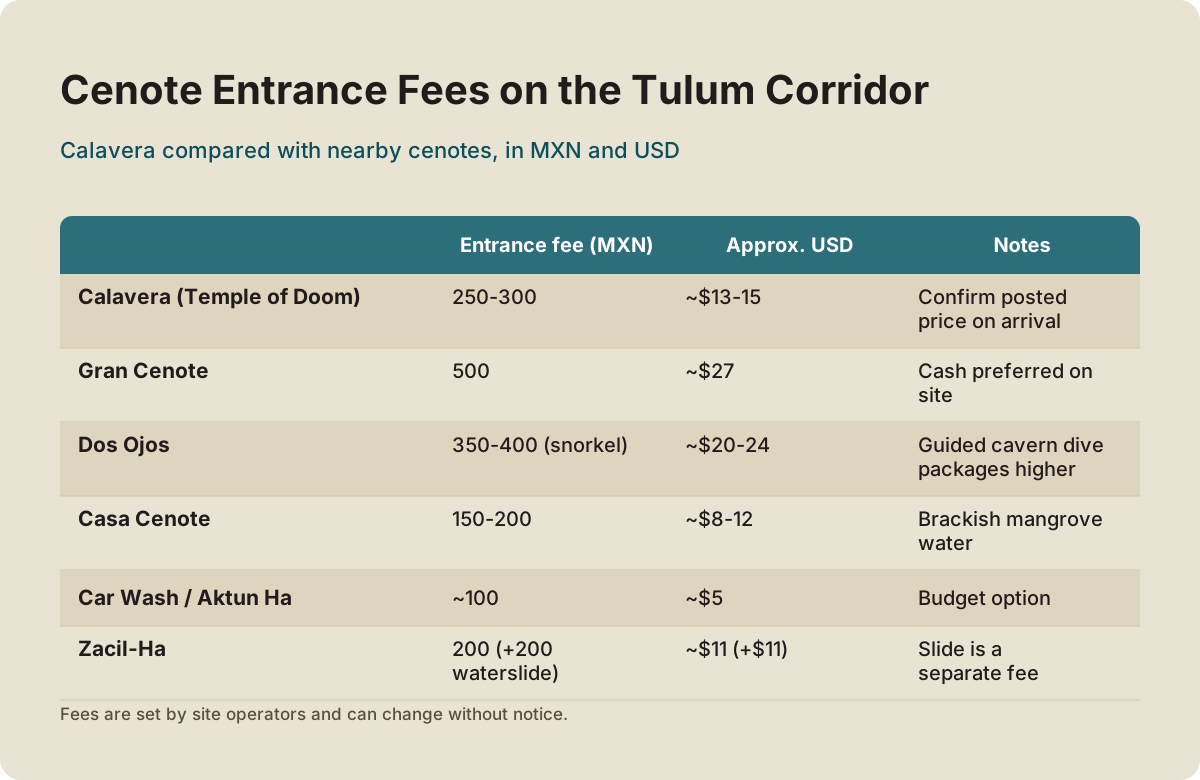
The current entrance fee at Cenote Calavera is roughly 250 MXN per adult, about $13 to $15 USD, with some sources showing 250 to 300 MXN. Fees are set by the site's operators and can change without notice, so confirm the posted price on arrival and bring cash in Mexican pesos, since card readers are unreliable at smaller corridor sites. Opening hours run approximately 9:00 AM to 5:00 PM daily.
That fee sits in the middle of the corridor's range. Popular sites like Gran Cenote charge around 500 MXN at the top end, while budget and community-run options like Car Wash, also called Aktun Ha, sit near 100 MXN. Calavera's price reflects its popularity with the adventure-photo crowd rather than any facilities advantage: expect basic changing areas and rinse showers, consistent with the general pattern that corridor fees cover basic facilities and maintenance.
| Cenote | Entrance fee (MXN) | Approx. USD | Notes |
|---|---|---|---|
| Calavera (Temple of Doom) | 250-300 | ~$13-15 | Secondary-sourced, confirm on arrival |
| Gran Cenote | 500 | ~$27 | Cash preferred on site |
| Dos Ojos | 350-400 (snorkel) | ~$20-24 | Guided cavern dive packages higher |
| Casa Cenote | 150-200 | ~$8-12 | Brackish mangrove water |
| Car Wash / Aktun Ha | ~100 | ~$5 | Budget option |
| Zacil-Ha | 200 (+200 waterslide) | ~$11 (+$11) | Slide is a separate fee |
All of these individual cenote fees are drawn from current secondary sources rather than official site operators, so treat every figure as a reasonable current number, not a fixed price. Confirm the posted board on arrival. Cash in pesos is the dependable method everywhere on the corridor; card readers work reliably mainly at the biggest sites. For a deeper fee breakdown including the officially sourced Tulum archaeological zone pricing, see the Gran Cenote guide, which sits on the same Coba road and is often combined with Calavera on a half-day loop.
A guided option that bundles multiple cenote entrances and transport costs more upfront but removes the cash-and-logistics dance entirely. Three products stand out for this.
The Cenote Triple Adventure Tour in Tulum is the anchor pick: from $129.88, four hours, three cenotes, snacks and water included, with lunch available as a paid $15 add-on, and a perfect 5.0 rating from 467 reviews. It meets at 85xciento La Vera Pizza al Taglio in Tulum Centro, with hotel pickup offered, so check the listing for your options.
Is Jumping Into Cenote Calavera Actually Safe?
Jumping at Cenote Calavera is a managed risk rather than an automatic danger. The site is roughly 15 metres deep and the platforms and rope swing are established, maintained features, but no jump is risk-free and depth varies with conditions. Honest guidance: jump only from the marked take-off points, enter feet first, check with staff on site about current water levels, and never jump after alcohol.
The 15 metre depth figure comes from current corridor guides and represents the water depth, not the platform height, so do not confuse the two. Platform and rope swing heights are set on site and can change, which is why the advice above keeps to what is knowable before you arrive. The pattern in reported cenote incidents, both here and across the region, involves untrained or impaired entries rather than equipment failure at maintained sites.
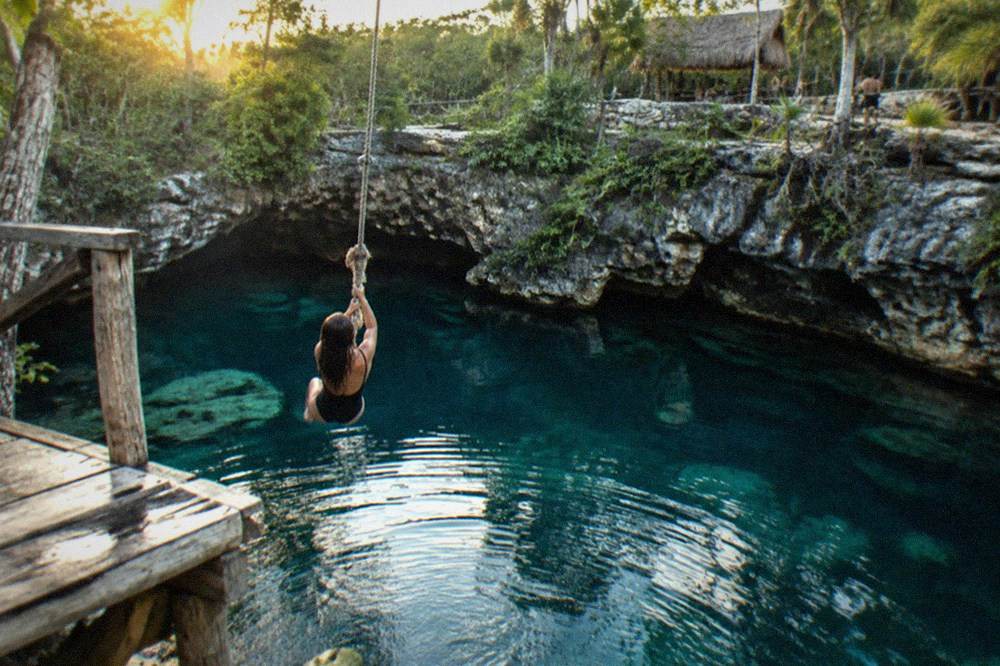
Who should skip the jump: anyone not fully confident in deep water without a vest, and swimmers who want long, easy surface swims. Calavera's open area is compact and its cave sections are not a casual snorkel playground in the way Gran Cenote's are. If your group wants turtles and gentle cavern views, read the Dos Ojos guide or the Gran Cenote piece instead. If your group wants a scream-and-splash photo, Calavera is the corridor's specialist.
Guided tours reduce the risk burden by adding supervision and, usually, life vests. Note one roster exception worth repeating plainly: the ATV Cenote and Zipline Adventure from Tulum carries no free cancellation on its listing, unlike most products on this corridor, which do offer it.
If a supervised, multi-stop cenote day sounds like a safer structure than jumping solo, the operator's live listing shows what is included before you commit.
What Is Under The Surface At Cenote Calavera?
Below the water, Cenote Calavera is a deep, mostly open chamber reaching roughly 15 metres, with cave sections extending off the main pool. Visibility is typically strong in the manner of corridor cenotes, which are fed by the freshwater aquifer. There is no notable current, and the depth means the floor drops out of daylight quickly, which is why freedivers and photographers like it more than casual snorkelers do.
The light beams from the skull openings are the signature underwater feature. Because the three small holes sit around a larger central opening, angled shafts cut through the water column at different depths through the day. Midday is the classic shooting window for that reason, which conveniently overlaps with the site's busiest hours, a trade-off photographers here simply accept.
The cave sections should be treated as scenery, not an invitation. Casual swimmers have no business entering overhead passages without a guide, and the region's safety record for cave entries is unambiguous: incidents cluster around untrained entries into cave zones. Stay in the open pool, enjoy the geology from there, and if cave passages genuinely interest you, the Tulum cenote diving guide explains the certification ladder that makes those passages accessible, from Open Water cavern limits upward.
Water temperature is stable year round at roughly 24 to 27 degrees Celsius, fed by the underground aquifer, so there is no season in which the water is notably colder or warmer. Plan around crowds and weather on the surface, not conditions in the pool.
What Rules Apply At Cenote Calavera?
Calavera follows the standard corridor rules: biodegradable or reef-safe mineral sunscreen only, with a mandatory rinse shower before entering the water, and conventional chemical sunscreen able to draw fines up to 1,200 MXN at enforcing sites. Life jackets are required or strongly recommended for children under 12 and non-swimmers. Bring cash in pesos, water shoes and a quick-dry towel, and leave any non-compliant lotions and sprays behind.
The sunscreen rule deserves precision. Every cenote in the region enforces a mineral-filter-only policy (zinc oxide or titanium dioxide) and a pre-entry rinse at the site's shower station, applied to lotions and deodorant too, not just sunscreen. Some sites go further and ban all sunscreen, even compliant products, plus repellent and makeup. Since site-by-site enforcement varies and Calavera is a smaller site, arrive prepared for the strict version and you will never be turned back.
| Rule at Calavera | What it means in practice |
|---|---|
| Biodegradable sunscreen only | Mineral filters (zinc oxide, titanium dioxide); fines up to 1,200 MXN reported |
| Mandatory rinse shower | Wash off all skin products before entering, enforced at the rinse station |
| Life jackets | Required or strongly advised for under-12s and non-swimmers |
| No food, alcohol or glass | Standard near-water ban across corridor sites |
| No unmarked jumping | Use marked platforms and rope swing only |
| Cash in MXN | Card readers unreliable at smaller sites; bring pesos |
Footwear is the practical detail people forget: grippy sandals or water shoes for the limestone edges, off in the water if the site requires bare feet. Bring a rash guard for sun protection rather than relying on sunscreen at an open-air pool. Lockers are common at the bigger sites like Gran Cenote but are not a given at smaller ones, so travel light enough that you do not depend on one. The what to bring guide has the full checklist if you are packing for a multi-cenote day.
Can You Visit Cenote Calavera On A Tour?
No tour on this site's roster names Cenote Calavera as a specific stop, so an honest answer is: not directly, and not with a guaranteed itinerary. What the roster does offer are multi-cenote adventure and snorkel tours that typically include a stop in this style of semi-open adventure cenote. Confirm with the operator's live listing before booking if Calavera itself is the priority; otherwise visit it independently and take a tour for the sites that are named.
That caveat out of the way, three products fit the Calavera traveller's profile: people who want active water stops, not ruins or slow floats.
| Tour | Price | Rating | Duration | Notes |
|---|---|---|---|---|
| Cenote Triple Adventure Tour | from $129.88 | 5.0 from 467 reviews | 4 hours | 3 cenotes, snacks and water, lunch $15 add-on, departs Tulum |
| Discovering Breathtaking Cenotes in Tulum | from $149 | 5.0 from 7 reviews | 4.5 hours | Names Dos Ojos and Casa Cenote, small operator, low review count |
| Tulum Cenote Trail Bike Tour | from $119 | 4.9 from 143 reviews | on the listing | Bike-based, 2-3 unnamed cenotes, helmets included |
The Cenote Triple Adventure Tour in Tulum is the strongest overall fit. It is the roster's best-reviewed adventure-format product at 5.0 from 467 reviews, it covers three cenotes in four hours, and it departs from central Tulum with snacks and water included, so the only cash decision on site is the optional $15 lunch. Free cancellation applies to this listing as it does to most of the roster.
The one product that names its stops is Discovering Breathtaking Cenotes in Tulum, which lists Dos Ojos and Casa Cenote explicitly. That transparency is worth paying attention to if itinerary certainty matters to you, and it is the honest recommendation when it does. The trade-off is a small operator with 7 reviews, a real number rather than a red flag, but one to weigh knowingly.
Booking either is straightforward: check availability on the live listing before locking plans, since departure times and group sizes shift seasonally. In a region where itineraries change with weather and site access, reading the current listing beats every summary, including this one.
When Is The Best Time Of Day To Visit Cenote Calavera?
Arrive at the 9:00 AM opening. Corridor crowd patterns are consistent: sites are quietest at opening, build as tour buses arrive between 10 or 11 AM and 2 PM, and ease again after about 2:30 PM. At a small, photo-driven site like Calavera, midday brings both the best light beams and the longest waits for the platform, so pick which you value more and time your visit accordingly.
The photographer's dilemma is real here. The skull-opening light shafts are strongest around midday, exactly when the site is fullest. Two workable strategies: come early for a calm swim and jump session with softer light, or come after 2:30 PM for thinner crowds and still-strong afternoon beams. Weekdays run quieter than weekends at popular sites, and the shoulder months of May, late September and early October are the corridor's low-crowd sweet spots.
How Does Calavera Compare With Its Neighbours?
Calavera is the corridor's adventure-and-photo specialist: deepest appeal for jumping, compact for swimming, close to town and mid-priced at roughly 250 to 300 MXN. Gran Cenote, 4 km along the same road, wins for families, turtles and easy snorkel at about 500 MXN. Dos Ojos, 20-odd km north, is the diving and cavern flagship at 350 to 400 MXN to snorkel. Choose Calavera when the jump and the photo are the point.
Put simply, the Coba road gives you a natural two-stop day: Gran Cenote for the long, gentle swim with turtles, then Calavera for the jump and the light beams, both within ten minutes of town. Add Car Wash at about 100 MXN if the budget is tight, or Zacil-Ha for the waterslide if kids are in the group. The Zacil-Ha and Car Wash guide covers those two budget-friendly sites in full.
| Site | Fee (MXN) | Best for | Skip if you want |
|---|---|---|---|
| Calavera | 250-300 | Jumping, rope swing, light-beam photos | Long swims, turtles |
| Gran Cenote | 500 | Families, snorkeling, turtles | Solitude, low price |
| Dos Ojos | 350-400 (snorkel) | Diving, cavern visibility | A quick visit, it is 20+ km out |
| Car Wash | ~100 | Budget, natural setting | Facilities, adrenaline |
One more honest note for planners working through a whole Tulum itinerary: independent visits to Calavera and its neighbours are entirely doable by bike or taxi, and you can visit cenotes without a tour if you prefer setting your own pace. The tour value is in gear, supervision and the sites you could not organize alone, not in access to Calavera specifically.
Planning several cenote days across the region? Tulum Cenote Tours keeps a verified roster of every bookable format, from snorkel loops to certified cavern dives, with prices and review counts checked against live listings.
Common Questions About Cenote Calavera
How Much Does It Cost To Go To Cenote Calavera?
Roughly 250 to 300 MXN per adult, about $13 to $15 USD. The fee is set by the site's operators and can change, so confirm the posted price on arrival and pay cash in Mexican pesos.
How Deep Is Cenote Calavera?
About 15 metres. That figure refers to the water depth, not the platform height, and depth can shift with conditions, so always check with staff before jumping.
Can You Jump Into Cenote Calavera?
Yes, jumping is the site's main activity, from marked platforms and a rope swing. Jump feet first from marked take-off points only, skip it after any alcohol, and note the site suits confident deep-water swimmers more than nervous ones.
Is Cenote Calavera Good For Swimming Or Snorkeling?
It is better for jumping and photos than for long swims. The open area is compact and the cave sections are not casual snorkel territory. For snorkeling, Gran Cenote and Dos Ojos are the stronger corridor choices.
What Is The Best Time To Visit Cenote Calavera?
At the 9:00 AM opening for quiet water, or after 2:30 PM for thinner crowds with strong afternoon light beams. Midday has the best light but the most visitors. Weekdays beat weekends.
Do Tours From Tulum Visit Cenote Calavera?
No tour on this site's verified roster names Calavera as a stop. Multi-cenote adventure tours typically include stops in this style of site, but confirm the itinerary on the operator's live listing before booking, or visit Calavera independently and tour elsewhere.