Why Do Cenotes Close At 5?
Most Tulum cenotes run roughly 8 or 9 AM to 5 PM for staffing and daylight reasons, not a hidden rule. Here is how to plan a morning slot that actually works.
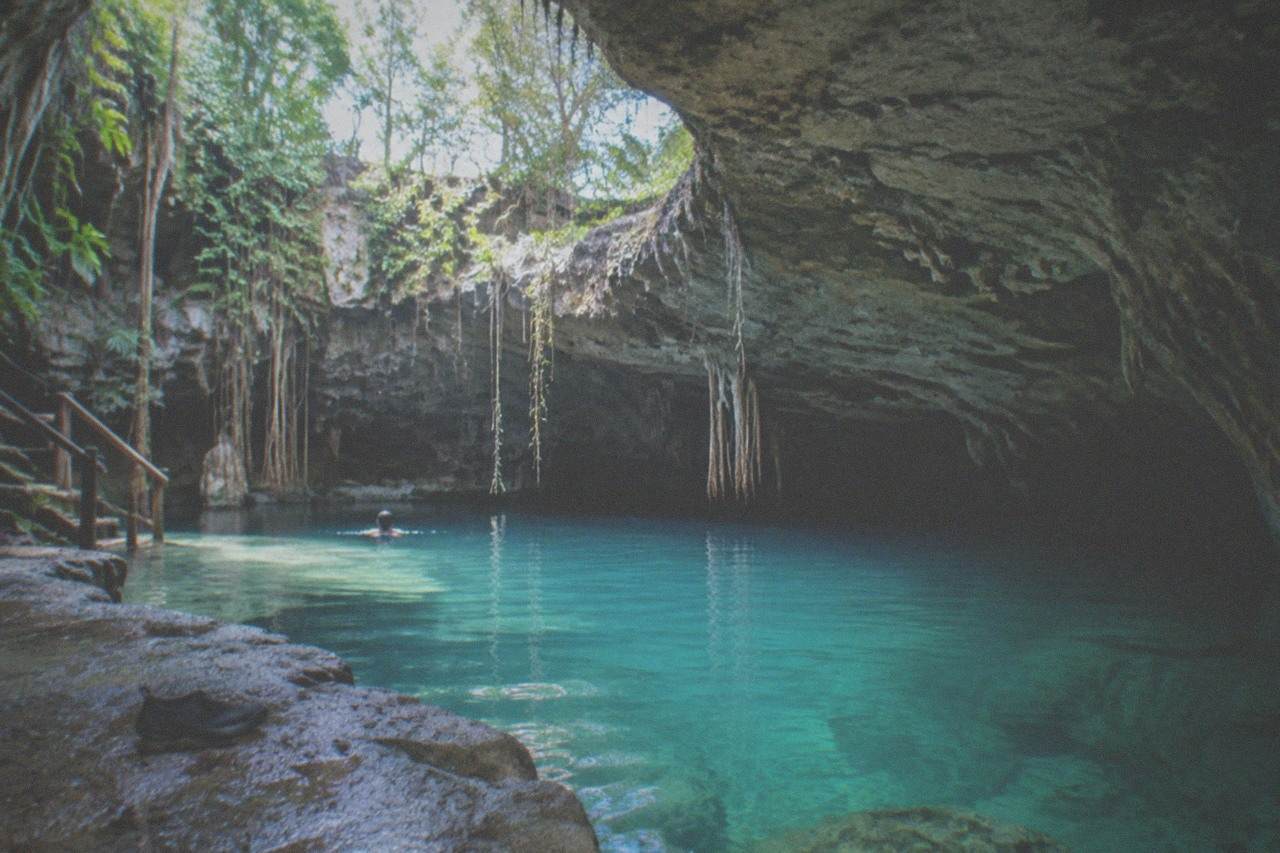
The last entry window at most cenotes near Tulum falls somewhere between 3:00 and 4:15 PM, even when the gate stays open until 5:00. Gran Cenote posts a 4:45 PM close with last entry around 4:15, Dos Ojos often stops admitting snorkelers hours before its nominal 5:00 PM end, and Calavera and Casa Cenote both wrap at 5:00 PM sharp. The reason is mundane: small site crews need daylight to run final safety checks on the water, and the freshwater ecosystem gets a daily break from swimmers. None of it is a hidden rule, but it does mean a 3 PM walk-up arrival is a gamble. Tulum Cenote Tours covers the practical side of that gamble below, including which scheduled departures make the closing hour irrelevant.
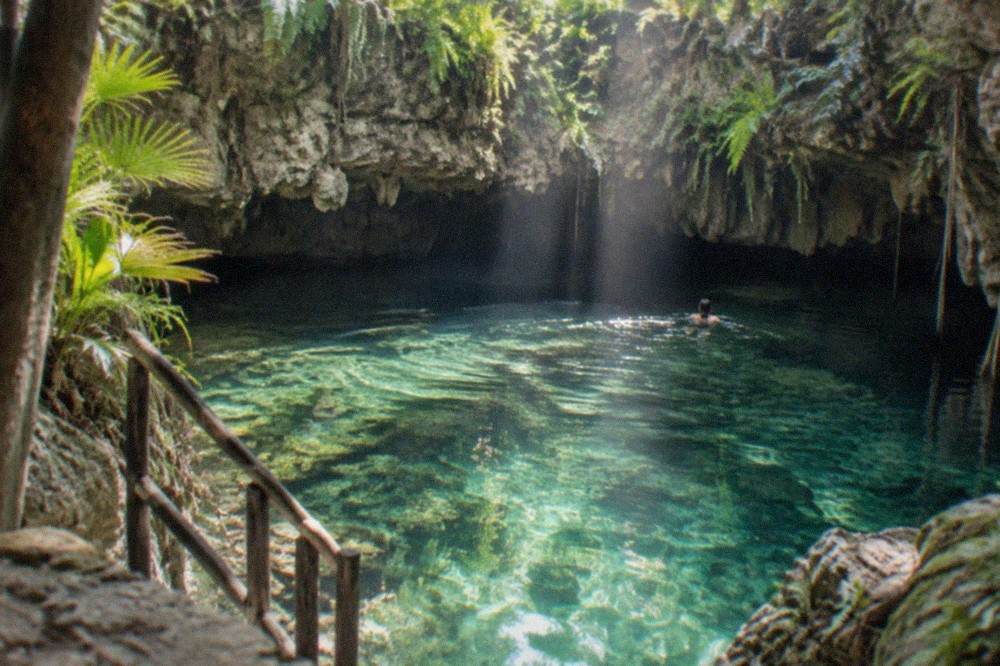
Why Do Cenotes Close At 5?
Most cenotes in the Tulum corridor operate on a roughly 8 or 9 AM to 4:45-5 PM schedule because small ejido and operator crews need daylight to clear the water, run safety checks, and close out the site, and because the fragile freshwater ecosystem benefits from a daily rest period with no swimmers. It is a staffing and daylight decision, not a legal rule, and it is remarkably consistent across sites that otherwise have nothing in common.
The consistency surprises people. Gran Cenote, Casa Cenote, and Calavera are run by different ejidos and operators, sit at different distances from town, and charge different fees, yet all of them land on the same late-afternoon cutoff. That points to shared operational logic rather than coordination. A cenote is a closed freshwater system with no natural flushing from the ocean, so anything left in the water, from sunscreen residue to a dropped mask strap, stays there. Daily closing gives crews time to walk the basin, retrieve lost items, check the entry platforms and stairs, and let the water settle before the next morning's first swimmers arrive.
Daylight matters more than visitors expect. Many of the popular sites are at least partly cavern-style, with swim-throughs and cave sections where the afternoon light angle changes what guides can see. A site that feels well lit at 11 AM can be dim in the passages by 4 PM. Crews do not want the last snorkelers of the day heading into a darkened cavern section while the staff is already thinking about lock-up. One current Tulum cenotes overview with hours and fees covers the landscape in detail if you want the site-by-site picture, and the pattern holds across the corridor: morning entry is the reliable window, late afternoon is not.
The practical takeaway is simple. The closing time is not negotiable at the gate, and arguing with it wastes the last daylight you have. The fix is to treat the morning as the only real swimming window and plan around it, which is exactly what a scheduled tour does for you.
When Do Cenotes Near Tulum Actually Open And Close?
Opening times cluster at 8:00 AM for the big sites and 9:00 AM for the smaller ones, with closing between 4:45 and 5:00 PM. Gran Cenote runs roughly 8:00 AM to 4:45 PM with last entry around 4:15 PM, Dos Ojos posts 8:00 AM to 5:00 PM but often stops admitting snorkelers by early afternoon, and Calavera and Casa Cenote both close at 5:00 PM.
The table below pulls the verified current figures together. Hours are set by each site's operator and can shift with season or staffing, so confirm on arrival rather than treating any line as permanent.
| Cenote | Opening time | Closing time | Last entry | Distance from Tulum |
|---|---|---|---|---|
| Gran Cenote | ~8:00 AM | ~4:45 PM | ~4:15 PM | ~4 km on the Coba road |
| Dos Ojos | ~8:00 AM | ~5:00 PM | Often as early as ~3:00 PM | ~20-22 km north on Highway 307 |
| Calavera | ~9:00 AM | ~5:00 PM | Earlier in practice | ~3 km on the Coba road |
| Casa Cenote | ~9:00 AM | ~5:00 PM | Earlier in practice | ~8 km north on Highway 307 |
Two patterns deserve attention. First, the gap between posted closing and effective last entry. Dos Ojos is the clearest case: the gate says 5:00 PM, but snorkel entry has been reported closing as early as 3:00 PM because the site batches visitors and the swim itself takes time. Second, the sites closest to town open earliest and fill earliest. Gran Cenote is a 7 to 10 minute drive from Tulum Pueblo, which is precisely why its midday window is the most crowded on the whole corridor.
If you are building a self-drive day, the honest arithmetic is that each cenote costs you roughly 90 minutes to 2 hours of the visiting day once you count parking, the mandatory rinse shower, paying the entrance fee in cash, and actual water time. A 4:45 PM close means the last realistic unassisted visit of the day starts around 2:30 PM, and that slot is the most crowded and the most likely to hit a batch-entry wait.
What Happens If You Arrive Late In The Afternoon?
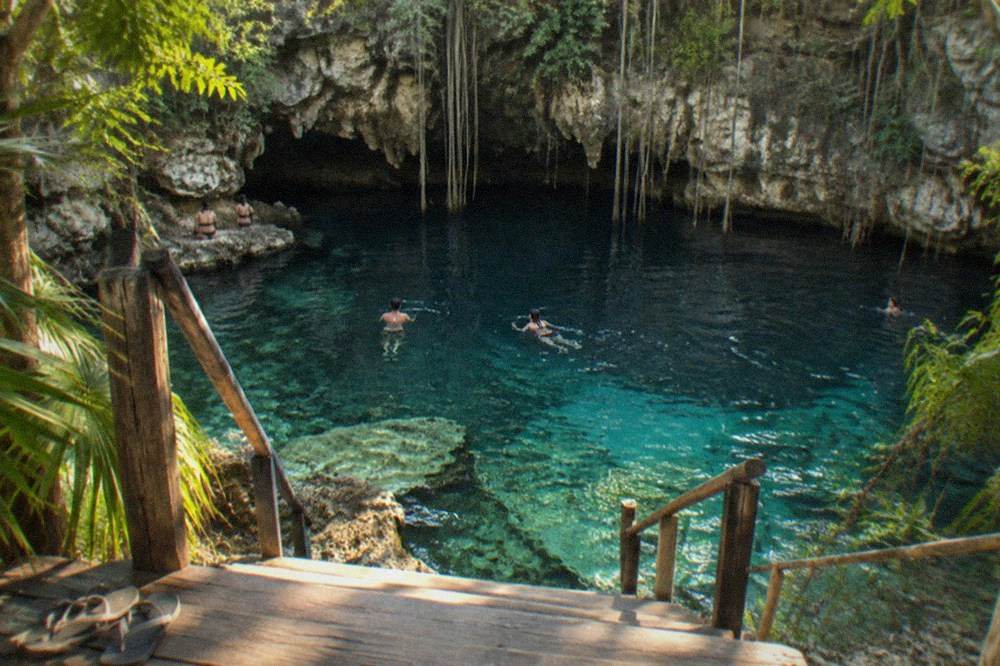
Arriving after 2 PM typically means peak crowds, possible 20-plus minute batch-entry waits, shortened water time, and a real chance of being turned away at a site whose posted closing time has already effectively passed. You also lose the light: partly cavern sites dim in the afternoon, and the last entry cutoffs land well before the posted 5 PM close at the busiest locations.
The midday-to-early-afternoon window, roughly 10 or 11 AM to 2 PM, is when tour buses arrive and when the corridor's sites run at their fullest. Waits of 20 minutes or more are normal at that hour, and some sites admit visitors in batches rather than continuously. Arrive at 1:30 PM and you may queue, rinse, and pay your way into a 2:15 PM entry with the crowd still thick and the light already dropping in the cave sections. That is a bad trade for a fee of 500 MXN (roughly $27-30) at Gran Cenote or 350-400 MXN (roughly $20-24) at Dos Ojos.
There is also the sunscreen problem, which bites hardest for late arrivals in a rush. Every cenote in the corridor enforces a biodegradable or reef-safe sunscreen-only rule, with a mandatory rinse-off shower before entering the water, and fines for non-compliant products reported up to 1,200 MXN at enforcing sites. Some sites go further and ban all sunscreen, even the compliant kind, plus repellent, makeup, and lotions. A hurried late arrival is exactly when people skip the rinse or forget the tube of conventional sunscreen in their beach bag, and bag checks at the entrance are real. The visitor rules and what to carry are covered in full in the what to bring guide for cenote tours, and the fee side of the visit is broken down in the cenote entrance fees guide for Tulum.
The other late-day risk is payment. Most cenotes want cash in Mexican pesos, and card readers are reliable mainly at the big sites like Gran Cenote and Dos Ojos, unreliable or absent elsewhere. A late arrival that discovers the card reader is down and the cash machine is 20 minutes away has effectively lost the day's last viable window.
None of this is a scam or a hidden trap. It is just a corridor of small, cash-based, daylight-run sites with consistent hours and no slack at the end of the day for a late walk-up.
Why Do Morning Tour Slots Beat Late Walk-Ups?
A scheduled morning departure converts the closing time from a constraint into a non-issue, because tour operators build the day backwards from the last entry cutoffs and arrive at or near opening, when water is calm, crowds are thinnest, and the light in the cavern sections is at its best. You also get gear, rinse logistics, and entrance handling folded into the booking.
The roster's most-reviewed snorkel product illustrates the value of a fixed morning start. The Tulum Guided Tour with Magical Cenote, Lagoon Snorkeling and Beachside Lunch runs 6.5 hours from $119, carries a 4.9 rating across 1,975 reviews, and pairs the ruins with a cenote and a Yalku lagoon snorkel stop, with hotel pickup available from Cancun and the Riviera Maya and the Tulum ruins entrance fee of roughly $15 per person paid separately. Its departure is set so the cenote stop lands in the mid-morning window, not the 2 PM crush. The same logic runs through the whole booking category: operators who run this corridor daily know exactly when each site flips from quiet to crowded, and their schedules reflect it.
For a shorter, cheaper version of the same idea, the Magical Cenote and Paradise Lagoon Snorkeling Adventure runs 3.5 hours from $79 and holds a 4.9 rating across 886 reviews, making it the roster's cheapest standalone snorkel product. A 3.5-hour fixed-start format is basically a morning window with transport and gear attached, and it leaves the rest of your day free.
The strongest argument is not comfort, it is arithmetic. A morning tour slot means you are in the water near opening, out before the midday peak, and done before the last-entry window even becomes a topic. A late independent arrival means you are racing a cutoff you did not know existed, at the site's most crowded hour, with a rinse station queue in front of you. The tour does not buy you a better cenote, it buys you the right hours at the same water.
Which Cenote Hours Differ From The Norm?
Most Tulum-corridor sites keep the 8 or 9 AM to 5 PM pattern, but the effective last-entry times vary more than the posted hours suggest, and the driving distances differ enough to matter: Dos Ojos sits 20 to 22 km north of Tulum, roughly 25 minutes by car, while Gran Cenote, Calavera, and Car Wash sit within a few kilometers of town on or near the Coba road.
Distance is the hidden variable in the closing-time question. A site that posts a 5:00 PM close and lies 25 minutes up Highway 307 has a real last-departure-from-town time around 3:45 PM if you want meaningful water time, and earlier if you want calm water. Dos Ojos is the classic case: its snorkel entrance runs 350-400 MXN (roughly $20-24) and its guided cavern dive packages are priced far higher, around 1,600 MXN, but the site's effective admission window for snorkelers closes well before the posted 5 PM, and the drive eats the difference. Sites closer to town, like Calavera at roughly 3 km, are more forgiving for a late start, though they still fill with the midday crowds.
The smaller community-run sites have their own rhythm. Car Wash, or Aktun Ha, sits about 8 km out with an entrance of roughly 100 MXN (about $5), the lowest fee in the corridor, and Zacil-Ha charges around 200 MXN (about $11) with an optional 200 MXN waterslide add-on. These sites have lighter facilities, often no lockers, and crews that close up promptly. The fees across the corridor are laid out in the current Tulum cenotes overview, and every figure there is a "set by the operator, can change, confirm on arrival" number, not a fixed tariff.
One structural note worth keeping: Gran Cenote and Dos Ojos are both part of the Sac Actun system, one of the longest mapped underwater cave networks in the world. That shared geology is why both sites combine open swimming areas with cavern sections, and why both close their swim windows with daylight to spare. The Gran Cenote site guide goes deeper into how the semi-open layout shapes its hours.
Does The Closing Time Change With The Seasons?
The daily 8 or 9 AM to 5 PM pattern holds year-round, because cenote water temperature stays a constant 24-27 degrees Celsius and visibility is fed by the freshwater aquifer, not surface weather. What changes with the seasons is crowd density, not the clock, and sargassum, the seaweed that disrupts Tulum's beaches, never reaches cenotes at all.
This is the point where cenotes quietly outclass the coast. Tulum's beaches have had a difficult sargassum year, with the local cleanup operation collecting more than 6,500 tons from the beaches and the season running unusually early, and beach conditions get tracked closely through the fall. Cenotes are inland freshwater sinkholes with no ocean connection, so seaweed arrivals are simply not part of their reality, in any month. Water temperature does not swing either, because the aquifer buffers it: the same 24-27 degree water greets swimmers in January and July. The seasonal guidance in the best time to visit guide for Tulum cenotes covers the month-by-month trade-offs in full.
What the seasons do change is the crowd curve on top of the fixed hours. December through March and the peak summer weeks bring the highest visitor numbers, and the midday crush at popular sites is thickest then, which makes the fixed closing time bite harder, since more people are competing for the same shrinking afternoon window. May, late September, and early October are the lower-crowd sweet spots, with manageable rain in the wet season and noticeably shorter queues at the big sites. Weekdays are quieter than weekends across the board.
Heavy rain deserves one honest clause, not a warning. Open-air cenotes can see short-term visibility dips after strong storms, as surface runoff clouds the water temporarily, sometimes down to the 20-28 meter range, while closed and cavern cenotes are largely unaffected. Rain does not close sites, and it does not change the hours. It just means the clearest water in the corridor belongs to the cavern sites the morning after a storm, which is one more argument for booking a morning slot at a cavern-style site rather than gambling on a late open-water swim.
How Should You Plan Around The 5 PM Close?
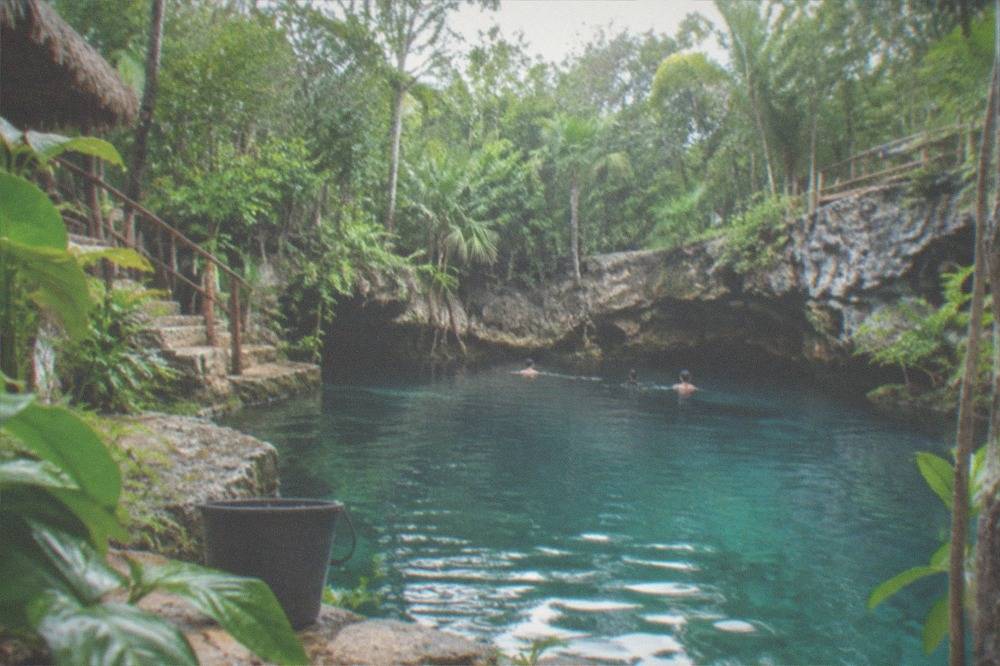
Plan one cenote per half-day, target arrival within the first hour of opening, carry pesos for the entrance fee, and treat 2 PM as the effective deadline for starting any unguided visit. If your day cannot accommodate a morning, book a scheduled tour with a fixed departure, because the operator absorbs the timing risk that the closing hour otherwise puts on you.
A clean self-guided morning looks like this: pick a site within 20 minutes of where you are staying, arrive for the 8 or 9 AM opening, pay the entrance in cash, use the rinse station before the crowd builds, and swim in the calmest, quietest water the site will offer all day. You are out before the tour buses land, with the whole afternoon left for the beach, the ruins, or nothing at all. The ruins side of the day has its own clock, since the Tulum archaeological zone also runs 8:00 AM to 5:00 PM with a last entry around 3:30 PM, and the current unified entrance fee is 265 MXN for foreign visitors and 80 MXN for Mexican nationals, covering the zone together with the protected area, while the adjoining Parque del Jaguar beach park is free to enter.
The tour route through the same hours is even simpler. The Cenote Triple Adventure Tour in Tulum runs 4 hours from $129.88, holds a 5.0 rating across 467 reviews, visits three cenotes in one departure, and includes snacks and water with lunch available as a paid $15 add-on. It meets in Tulum Centro and is built entirely around the morning window. The three-format comparison below shows how the main booked options split the same day.
| Booked format | Product | Length | From | Rating and reviews |
|---|---|---|---|---|
| Short snorkel, cheapest standalone | Magical Cenote and Paradise Lagoon Snorkeling Adventure | 3.5 hours | $79 | 4.9 from 886 reviews |
| Three-cenote morning circuit | Cenote Triple Adventure Tour in Tulum | 4 hours | $129.88 | 5.0 from 467 reviews |
| Ruins, cenote and lagoon with lunch | Tulum Guided Tour, Magical Cenote, Lagoon Snorkeling and Beachside Lunch | 6.5 hours | $119 | 4.9 from 1,975 reviews |
All three are examples of the same structural fix: a published start time, an itinerary that works backwards from the last-entry windows, and a day that finishes with margin instead of a sprint. Most products on this corridor carry free cancellation on the live listing, so the timing risk of a fixed slot is smaller than the timing risk of a 3 PM walk-up.
The infogain picture for the closing-time question, in short:
Common Questions About Cenote Closing Times
Why Do Cenotes Close At 5?
Most cenotes close between 4:45 and 5 PM because small site crews need daylight for final water checks, entry-platform inspection, and lock-up, and because the closed freshwater ecosystem benefits from a daily rest with no swimmers. It is a staffing and daylight decision, not a legal rule, and effective last entry is often earlier than the posted close.
What Time Do You Actually Need To Arrive At A Cenote?
Plan to arrive within the first hour of opening, 8 or 9 AM at most Tulum-area sites, for the calmest water and shortest queues. If you cannot do morning, treat 2 PM as the practical deadline for starting an unguided visit, since last-entry windows run earlier than the posted closing times and midday crowds peak from late morning to early afternoon.
Do Cenote Hours Change In Winter Or Summer?
The daily pattern holds year-round, because cenote water temperature stays a constant 24-27 degrees Celsius and visibility comes from the freshwater aquifer rather than surface conditions. Seasons change crowd density, not the clock: December through March and peak summer are busiest, while May, late September, and early October are quieter.
Does Rain Close Cenotes Early?
No. Rain does not change cenote hours. Light rain has little effect on water conditions, and open-air cenotes can see only short-term visibility dips after heavy storms while cavern sites stay largely unaffected. The closing time stays tied to daylight and staffing, not weather.
Can A Tour Get You In After The Walk-Up Window?
A scheduled tour does not buy after-hours access, and none is offered. What it does is place you at the site near opening, when water is calm and crowds are thin, with transport, gear, and rinse logistics handled. That makes the closing time irrelevant to your day rather than something you race against.
Do You Need Cash For Cenote Entrance Fees?
Mostly yes. Entrances run roughly 100 to 500 MXN across the corridor's popular sites, and most cenotes require cash in Mexican pesos. Card readers are dependable mainly at the major sites like Gran Cenote and Dos Ojos and unreliable elsewhere, so carry pesos and confirm the current fee on arrival.