What's At The Bottom Of A Cenote?
A look at what actually sits at the bottom of a cenote: depths, rock formations, freshwater life, and what divers and snorkelers can realistically see near Tulum.
What's At The Bottom Of A Cenote?
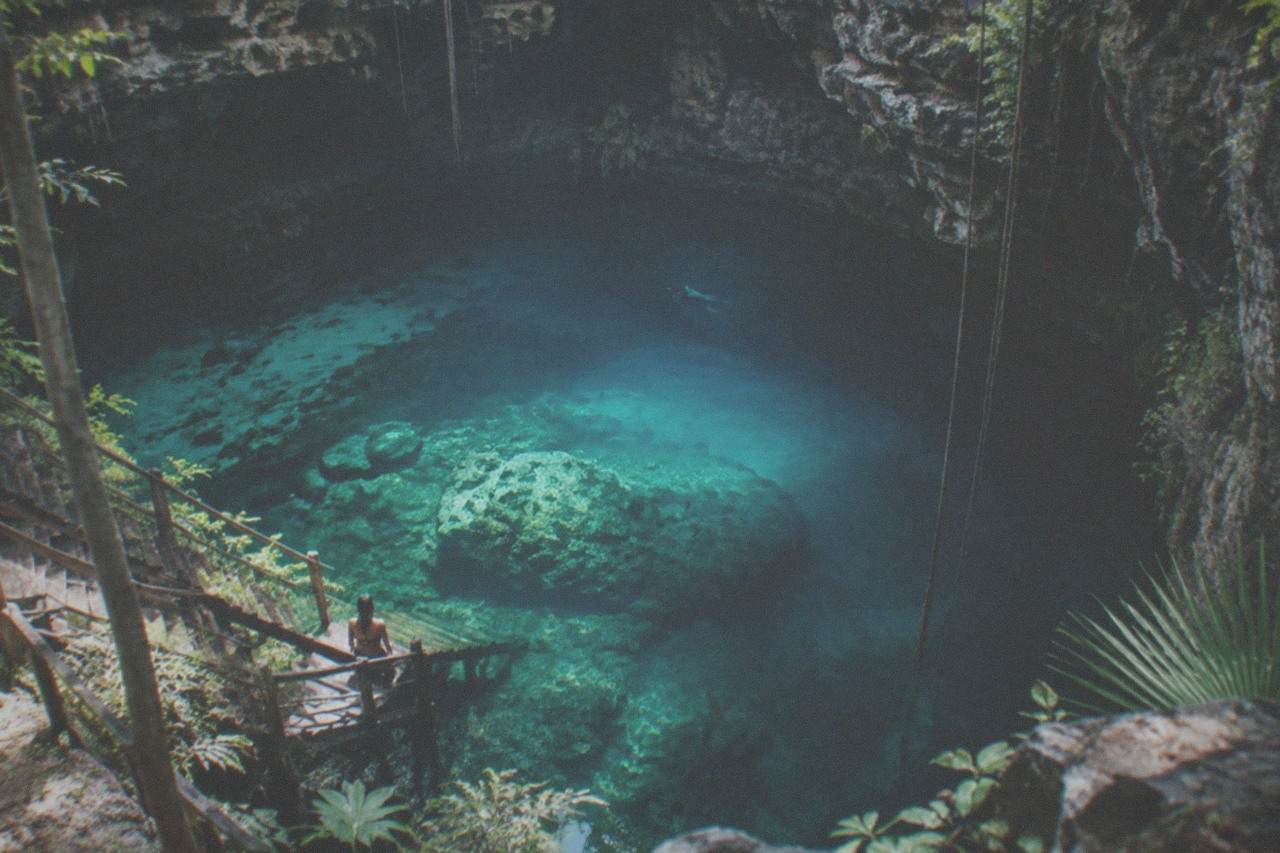
The bottom of a cenote is flooded limestone: a floor of collapsed rock, sand, and in cavern sites a landscape of stalactites and stalagmites formed thousands of years ago when the caves were dry. In deep sites like The Pit, the true bottom sits beyond 30 meters and recreational divers never touch it. In shallow ones, it is close enough to see clearly from the surface.
The Yucatan Peninsula has almost no rivers and almost no lakes. Rain filters straight through the porous limestone and collects in a vast underground aquifer, and over millions of years that slightly acidic water dissolved caverns out of the rock below the water table. When a cave ceiling grew too thin and collapsed, it opened a circular window: a cenote. The "bottom" you swim over is therefore not a lakebed in the ordinary sense. It is the floor of a drowned cave system, part of the Sac Actun network, one of the longest mapped underwater cave systems on Earth.
What that floor looks like depends almost entirely on the type of cenote. An open basin like Zacil-Ha has a bright sandy and rocky bottom a few meters down, with sunlight all the way to the edge. A semi-open site like Gran Cenote mixes shallow pools with swim-throughs, and the bottom there is a geology lesson: stalactites hang from the overhangs, resident turtles graze, and cave sections drop into darker passages that recreational swimmers stay out of. A cavern site like Dos Ojos is a flooded tunnel system where the "bottom" is a guideline, rock, and darkness beyond the natural light zone.
Most of the questions this site gets cluster on the practical version of this curiosity: how deep, what lives down there, whether divers can reach it, and whether a normal swimmer can see anything worth seeing. The short version is that the depths vary enormously, the life is modest but real, and guided formats from a relaxed swim tour to a full cavern dive exist for every level of comfort. The three options below are a good spread of how people actually get to the bottom of this question: a private exploration for families and cautious swimmers, a two-dive cavern trip for certified divers, and a three-cenote swim day for everyone else.
How Deep Do Cenotes Near Tulum Actually Go?
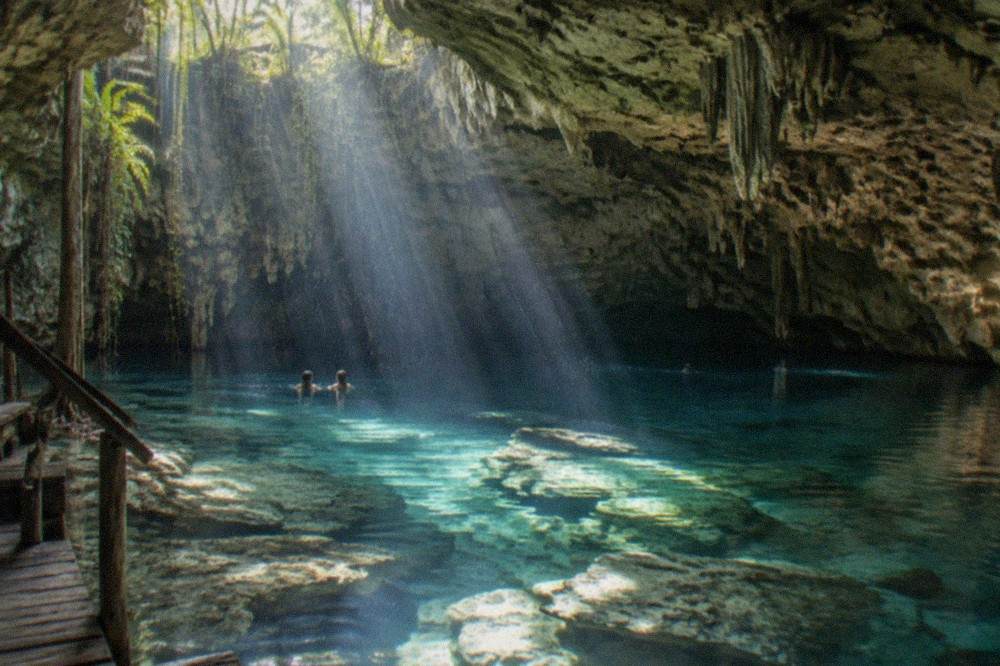
Depths in the Tulum corridor range from about 3 meters in open, family-friendly basins to 15 meters at jump sites like Calavera and 10 to 12 meters in the cavern zones of Dos Ojos. The deep outlier is The Pit, one of the area's advanced dive sites, where the floor drops past 30 meters and only advanced certified divers are taken there.
There is no single answer to cenote depth because "cenote" covers four or five very different shapes of hole in the same limestone shelf. The verified figures that circulate among Tulum dive shops and current guides break down roughly like this.
| Site | Typical depth | Type of bottom | Who reaches it |
|---|---|---|---|
| Car Wash (Aktun Ha) | ~3 m in the open section | Sandy, planted, shallow | Swimmers and snorkelers |
| Gran Cenote | Shallow pools plus cave sections | Rock, stalactites, turtles | Snorkelers; cavern divers below |
| Cenote Calavera | ~15 m | Collapsed rock, dark shaft | Jumpers from platforms above |
| Dos Ojos cavern line | ~10-12 m | Tunnel floor, rock formations | Guided certified divers |
| The Pit | 30 m plus | Deep shaft | Advanced Open Water and above |
Those are reported figures from current dive-shop and operator sources, and conditions at individual sites can shift with water levels after heavy rain. The reliable pattern for planning is this: if a cenote is marketed for swimming and toddlers, its bottom is a shallow, sunlit shelf. If it is marketed for jumping, expect a dark shaft of 15 meters or so. If it is marketed for diving, the bottom is a cave floor that a guide keeps you above rather than a place you stand.
For families weighing which version to book, the best cenote swim formats for small children run almost entirely across the shallow end of this table, which is exactly why the toddler question has a different answer than the diving one.
Planning a day around this? A private guide handles depth questions in person, and most travelers appreciate that reassurance in advance.
What Actually Lives At The Bottom?
The honest answer is: not much, in most cenotes. Clear freshwater, rock, and a modest cast of small fish, freshwater shrimp and the turtles of Gran Cenote are the norm. The famous exception is Casa Cenote, whose brackish mangrove connection hosts fish among the roots and the occasional crocodile sighting, something that does not generalize to the closed freshwater sinkholes of the Tulum corridor.
Freshwater life in a cave-fed sinkhole is limited by food and light. There are no big fish, no coral, and nothing that mermaid videos have primed visitors to expect. What you actually see near the bottom depends on the site: at Gran Cenote the resident turtles are the headline, grazing the rocks and surfacing beside snorkelers; at Casa Cenote, the mangrove-lined channel holds visible schools of fish around the roots, and its mix of salt and fresh water, the halocline, is the thing divers mention most.
That Casa Cenote crocodile note deserves precision, because it gets blurred badly across travel content. One cenote on the corridor sits in brackish mangrove habitat connected toward the ocean, and occasional crocodile sightings there are a real, documented quirk of that specific water. The typical Tulum cenote is a closed freshwater pool with no ocean connection and no crocodile habitat at all, which is why blanket claims about "crocodiles in cenotes" mislead readers. The reliable framing, and the one the crocodile question deserves, is mangrove-specific, occasional, and site-named.
Below the light zone, life thins to almost nothing. Cave biologists find crustaceans and microbial films in the flooded passages, but a recreational diver descending a cavern line sees geology, not fauna: white limestone, sediment, and the black continuation of the tunnel. That is part of the appeal. The bottom of a cenote is less an aquarium than an archive, and the archive is rock.
Can Divers Actually Reach The Bottom?
Certified divers can reach the floors of cavern zones, which sit around 10 to 12 meters at Dos Ojos, but reaching the bottom is never the point: guides keep divers on a line inside the natural light zone, and anything beyond that requires cave certification, which no tourist product on the market sells. Deeper sites like The Pit demand Advanced Open Water or equivalent.
The distinction that governs all of this is cavern versus cave. Guided cavern diving keeps you within sight of daylight, above the zone where a cave begins, and it requires only an Open Water certification plus a full-cave-certified guide. Beyond the daylight zone, diving is a technical activity with Intro to Cave or Full Cave training, sidemount configurations and line protocols, and it is not sold to recreational travelers as a tour at all. That line between the two is the single most important safety boundary in the sport, and it maps cleanly onto what a booking platform can and cannot legally offer you.
On the Tulum corridor, the practical product for certified divers is a two-dive cavern day. The roster's flagship version, two dives in Cenote Dos Ojos for certified divers, runs from $190, holds a 5.0 rating from 90 reviews, lasts about four hours, and is supplied by La Calypso Dive Center with a maximum of four travelers per guide, certified divers only, no lunch included. The listing names its meeting point in Tulum Centro, and the format is exactly the one described above: a guide, a line, a light zone, and a floor you pass over rather than land on.
For divers who are not certified yet, the honest option is not a cheaper dive but a different one. A beginner-friendly discover-scuba format exists in the cenotes, from $179 with no certification required, and the full local guide to cenote diving breaks down which products suit which certification level. The floor of the cavern is reachable; the floor of the cave is a different sport.
Why Is The Water At The Bottom So Clear?
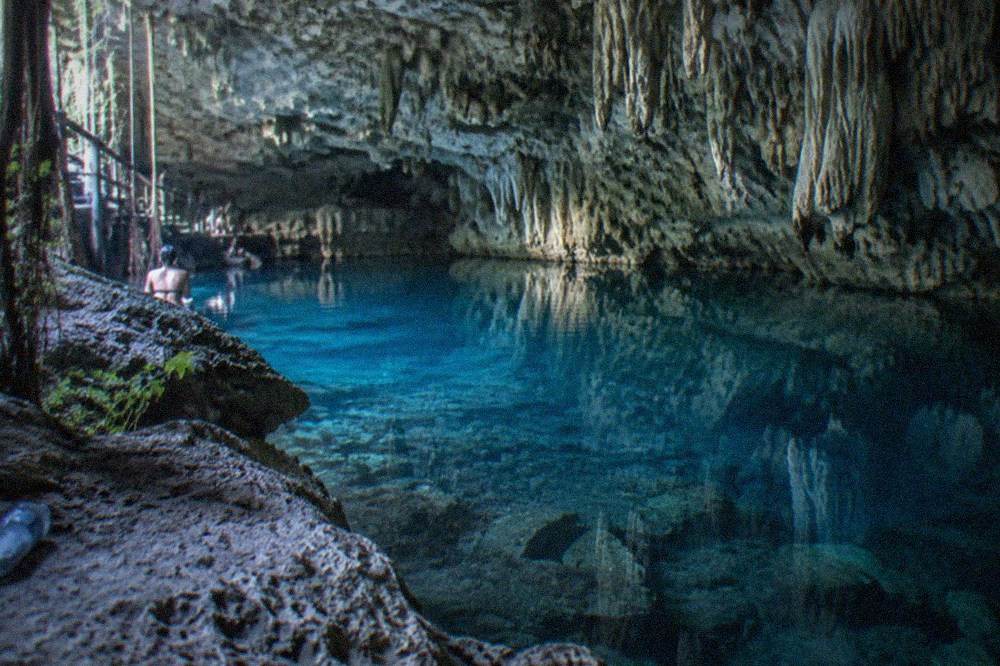
Cenote water is rain that has been filtered through meters of limestone before it ever reaches the pool, so it arrives with almost no sediment, no algae and no current, and the closed cavern sites hold visibility of 30 meters and more year-round. Open cenotes can cloud briefly after heavy rain as runoff enters, but the aquifer-fed sites clear again within days.
The filtering is the whole story. Rain in the Yucatan does not run across the surface picking up silt, it drops straight through the rock, which strips out particles and delivers water that is closer to bottled clarity than to lake water. Divers in the Dos Ojos caverns routinely report visibility from 30 to well over 50 meters, and the fresh sources describe ranges past 100 meters in parts of the system. That clarity is also why photography in the dry season, from about November through April, is so striking: long light shafts reach the bottom without scattering.
Seasonal effects exist but they are mild and mostly cosmetic. Heavy rain in the wet months can cloud open, surface-connected basins for a short period, with visibility dipping temporarily, while closed and cavern cenotes are largely unaffected because their water arrives through rock rather than over it. Nothing about sargassum reaches here either: seaweed is strictly an ocean-beach phenomenon, and inland freshwater sinkholes have no connection to the currents that carry it, which is why cenotes are the dependable clear-water plan in Tulum in any month.
One planning footnote that swimmers often miss: that same still, filtered water sits at a steady 24 to 27 degrees Celsius regardless of the weather above, a swing of a degree or two rather than a season. There is no cold month to avoid and no warm month to wait for on the surface temperature alone.
Can You See The Bottom Without Diving At All?
Yes, and for most visitors this is the smarter choice. In shallow open cenotes the bottom is visible from the deck, and in cavern-framed sites like Gran Cenote or the Dos Ojos platform, snorkelers look down onto rock formations, turtles and the light zone of the same passages divers enter, with no certification, no training and no equipment beyond a mask.
The snorkel experience should not be sold short against the dive one, because in several of the corridor's best-known sites the two groups are literally looking at the same rock. A mask and a calm kick put you over stalactite fields, turtles and the mouths of flooded tunnels in a way no glass-bottom boat anywhere matches. Dedicated guided snorkel formats commonly bundle transport, gear, entrances and sometimes lunch, and recent operator listings cluster in the $110-$159 per person range for multi-cenote days, with entrance fees alone running roughly 100-500 MXN (about $5-27) depending on the site.
| Way to see a cenote bottom | Typical cost | What you see at the bottom |
|---|---|---|
| Independent swim (buy entrance at the gate) | 100-500 MXN per site | Sandy shelves, rock, turtles at Gran Cenote |
| Guided multi-cenote snorkel tour | From $79-$149 | Same sights plus commentary and gear |
| Private guided exploration | From $199 | Flooded passages and underground rivers, guide-led |
| Cavern dive, certified | From $190-$230 | Tunnel floors and formations at 10-12 m |
Fees in that table are set by each site or operator and can change, so confirm on arrival; most gates take cash in pesos, with cards reliable mainly at the larger sites. That practical layer, from pesos to lockers to sunscreen rules, is covered in the full Tulum cenote fees guide.
For the version of the question that families ask, whether the bottom is scary, the answer is generally no: the swim-format sites are shallow, life-jacketed and lifeguarded by calm water, and the reassurance is covered properly in is it safe to swim in cenotes?.
The private option deserves one honest paragraph of its own. A private guided cenote and underground river exploration, from $199 for a five-hour outing, rated 5.0 from 171 reviews, takes a party of two or more, minimum age 5, into cave passages and river sections in a swim-and-explore format rather than a scuba one. Because it is private, the depth, pace and route adjust to the group, which is exactly what parents with one nervous swimmer and one fearless one tend to need.
Why Do Cenote Bottoms Look So Different From Each Other?
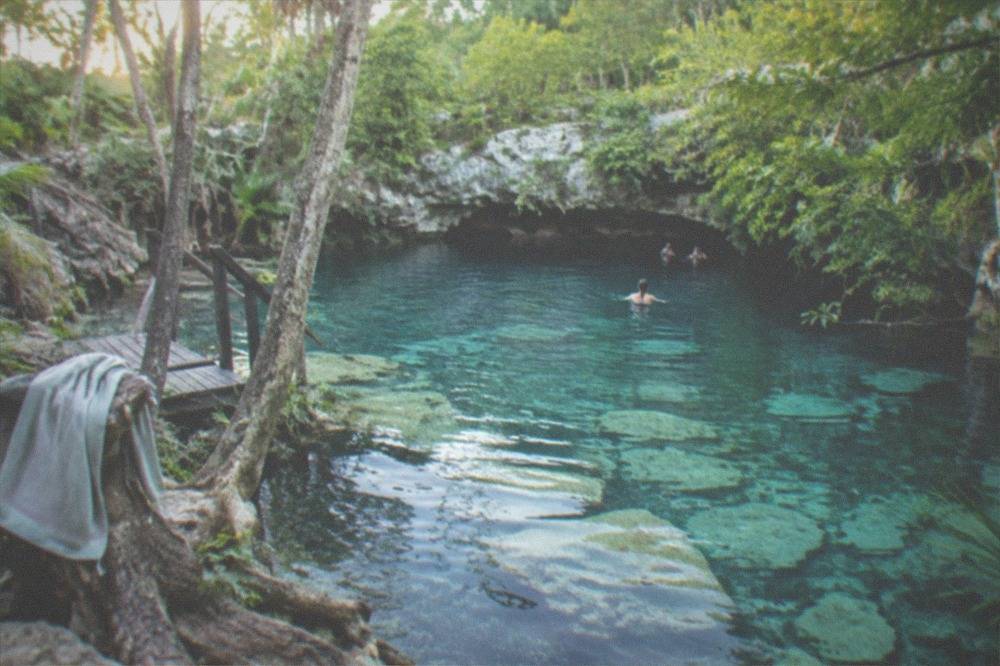
Every cenote bottom is a snapshot of a different moment in the same slow collapse: some are mature open basins where the old cave is long gone, some are young holes in intact cavern roofs, and some, like Calavera, are three small openings into one dark shaft. The age of the collapse, not the depth, decides whether you see a sandy shelf or a stalactite tunnel.
Geologists describe cenotes as stages in a sequence. A young collapse leaves a closed or semi-closed cavern with hanging formations and deep shaded water, the Dos Ojos type. An older, wider collapse opens the roof to the sun, the Gran Cenote and Zacil-Ha type, with vegetation, warm light and a shallow accessible floor. The oldest stages merge into lagoons. Calavera's three-eyes profile, the one photographed constantly from its rim, is a middle stage: a thin cap of rock with small punctures into one shaft.
That staging explains the confusing price spread too. Sites where the formations are intact and the experience is inside a functioning cave system charge more and manage access more tightly; sites that are basically lovely swimming holes with facilities charge a community fee and rent you a slide. A good pairing on one day is one of each, which is precisely the structure multi-stop products like a three-cenote adventure from $129 (5.0 from 467 reviews, four hours, three stops with snacks and water included, lunch a paid $15 add-on) or a bike-based trail from $119 (4.9 from 143 reviews, two to three stops, urban bikes and helmets included) are built around.
If you are planning rather than daydreaming at this point, Tulum Cenote Tours keeps the full roster of bookable formats, snorkel, dive, ruins and ATV, with verified prices and review counts per product.
Common Questions About Cenote Depths
What's At The Bottom Of A Cenote?
Flooded limestone: collapsed rock, sand, and in cavern sites the stalactites and stalagmites of a cave that formed when the passages were dry. Shallow open cenotes have sunlit sandy floors a few meters down; cavern sites like Dos Ojos bottom out around 10-12 meters; deep sites like The Pit pass 30 meters and are dived only by advanced certified divers.
Is It Safe To Dive In A Cenote?
Guided cavern diving, staying inside the natural light zone with a fully certified guide, is described by current dive-safety sources as low risk, and it requires only Open Water certification. Diving beyond the light zone into the cave proper is a technical activity reserved for cave-certified divers, and reported incidents near Tulum have overwhelmingly involved people entering those zones untrained or unguided.
Can You Visit Cenotes Without A Tour?
Yes. Every major cenote on the Tulum corridor sells entrance at the gate, typically 100-500 MXN in cash, and swimmers can arrive independently. Tours add transport, gear, entrances and a guide's route knowledge, which matters most at cavern-framed sites and for anyone without a car.
Why Do Cenotes Close At 5?
Cenotes close in the late afternoon because the sites are managed, lifeguarded and volume-controlled, and a hard cutoff keeps the water and facilities undisturbed overnight. The Tulum archaeological zone follows the same daily pattern, opening at 8:00 AM and closing at 5:00 PM with last entry earlier in the afternoon.
Are There Animals At The Bottom Of A Cenote?
A few. Turtles at Gran Cenote are the best known, small fish and shrimp appear in several sites, and Casa Cenote's brackish mangrove channel hosts visible fish schools and the occasional crocodile sighting, a quirk of that specific site rather than a general cenote trait. Below the daylight zone, life thins to almost nothing but rock and microorganisms.