Is It Worth Going To Tulum Ruins?
An honest yes-leaning verdict on the Tulum archaeological zone: the real 2026 unified entrance fee, what you actually see, how much time it takes, and the combo tours that pair the ruins with a cenote swim.
Is It Worth Going To Tulum Ruins?
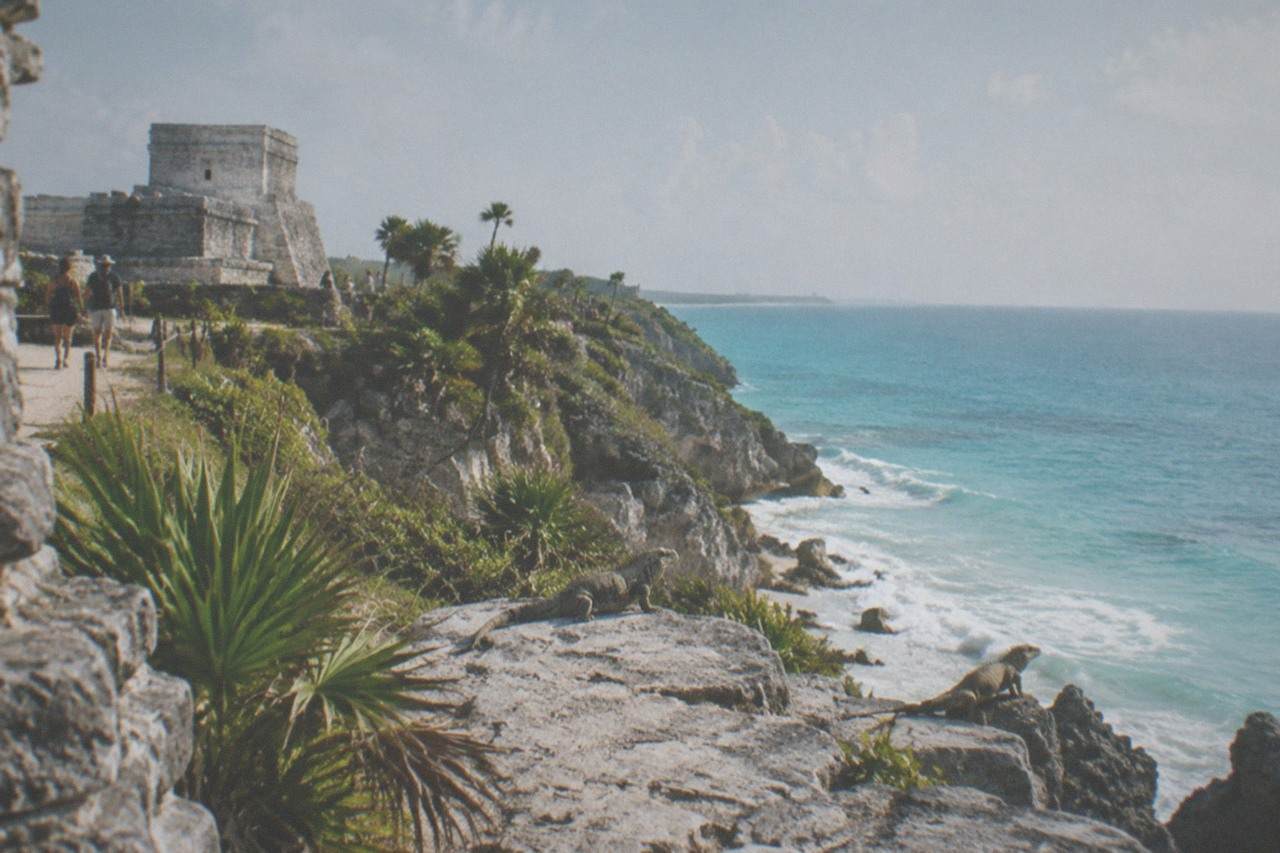
Yes, for almost every visitor, the Tulum ruins are worth it, and the reason is simple: it is the only major Mayan archaeological site you can visit with the Caribbean Sea directly below your feet. The unified 2026 entrance fee of 265 MXN (roughly $14) for foreign visitors, or 80 MXN for Mexican nationals, buys a compact 45-to-90-minute walk past temples, walls, and iguanas on a cliff. Few sites anywhere deliver that view for that price.
The honest framing matters here, because Tulum has a reputation problem. Travel forums are full of complaints about crowds, tour buses, and a site that is small compared with Chichen Itza or Coba. All of that is true. What those complaints miss is what the site is: a walled Mayan port town from the 13th to 16th centuries, perched 12 meters above the water, with the Parasol and Castle temples framing an ocean panorama that no photograph quite captures. If you arrive expecting a sprawling ruined city, you will be disappointed. If you arrive expecting a short, spectacular, historically real walk, you will not.
The verdict also depends on how you go. Independent visits work well from Tulum town, which sits roughly 10 minutes away by taxi or bike. But the largest share of visitors pair the ruins with a cenote swim, and that pairing is where the corridor's value really shows. The Tulum ruins and cenote combo guide on this site breaks those pairings down tour by tour, and the three strongest options span a wide price range.
For a reader who wants the decision made quickly, the Tulum Ruins and Cenote Guided Tour from Cancun is the most-reviewed way to do both in one booking, from $89, rated 4.6 across 2,606 reviews, running 8 to 9 hours with its cenote stop at Mariposa or Chen Ha. The cheapest headline on the roster is the Riviera Maya: Tulum Ruins and 2 Cenotes Half-Day Tour, from $27 plus entrance fees paid on-site, rated 4.4 across 1,166 reviews. The mid-point is the Coba, Tulum Ruins, and Cenote Mariposa tour with lunch, from $82, rated 4.5 from 94 reviews.
What Do The Tulum Ruins Cost To Visit In 2026?
Foreign visitors pay 265 MXN (roughly $13 to $15) and Mexican nationals pay 80 MXN, under the unified ticket that took effect in late July 2026 and covers the archaeological zone together with the protected natural area. The nearby Parque Nacional del Jaguar beach area is free for everyone, with an optional 20 MXN electric shuttle inside. Fees are set by the authorities and can change, so confirm on arrival.
The 2026 fee story is genuinely confusing if you read older articles, and it is worth getting right. In January 2026 the INAH fee roughly doubled to around 209-210 MXN for foreign visitors and 105 MXN for nationals, part of a nationwide update to the Federal Law of Rights. Then a federal decree published around July 17, 2026 unified access into one combined ticket covering the INAH zone, the CONANP protected area, and the Parque del Jaguar, settling at approximately 265 MXN foreign and 80 MXN national. That July structure is what applies now; the January doubling was superseded by it.
The official announcement of the reduction and the free Parque del Jaguar access comes from the Mexican presidency, and it is the one fee figure in this whole corridor with a confirmed government source: the Plan Tulum Renace press release. For the January-to-July history, reporting on the INAH fee doubling covers the earlier chapter. The practical takeaway is that the current fee is lower than most 2026 guidebooks printed in the first half of the year.
| Period | Foreign visitors | Mexican nationals | What it covered |
|---|---|---|---|
| Before January 2026 | ~104 MXN | ~58 MXN (typical INAH split) | Archaeological zone only |
| January to July 2026 | 209-210 MXN | 105 MXN | INAH zone only, doubled under the fee reform |
| Late July 2026 onward (current) | 265 MXN | 80 MXN | Zone plus ANP combined; Parque del Jaguar free separately |
One more money note that belongs to trip planning rather than the gate: the Quintana Roo Visitax, roughly 283 MXN per foreign visitor, is a state airport tax, not an entrance fee of any kind. You pay it online or at airport kiosks. It never appears on a ruins or cenote price line.
What Do You Actually See At The Site?
The zone is small and intensely scenic: a 5-to-7-meter stone wall enclosing the remains of a late Mayan port, with the El Castillo pyramid, the Temple of the Frescoes, and the Temple of the Descending God as the headline structures, all a short walk apart. Most visitors spend 45 minutes to 90 minutes inside. Iguanas sun themselves on the stones and the Caribbean glitters below the cliff edge.
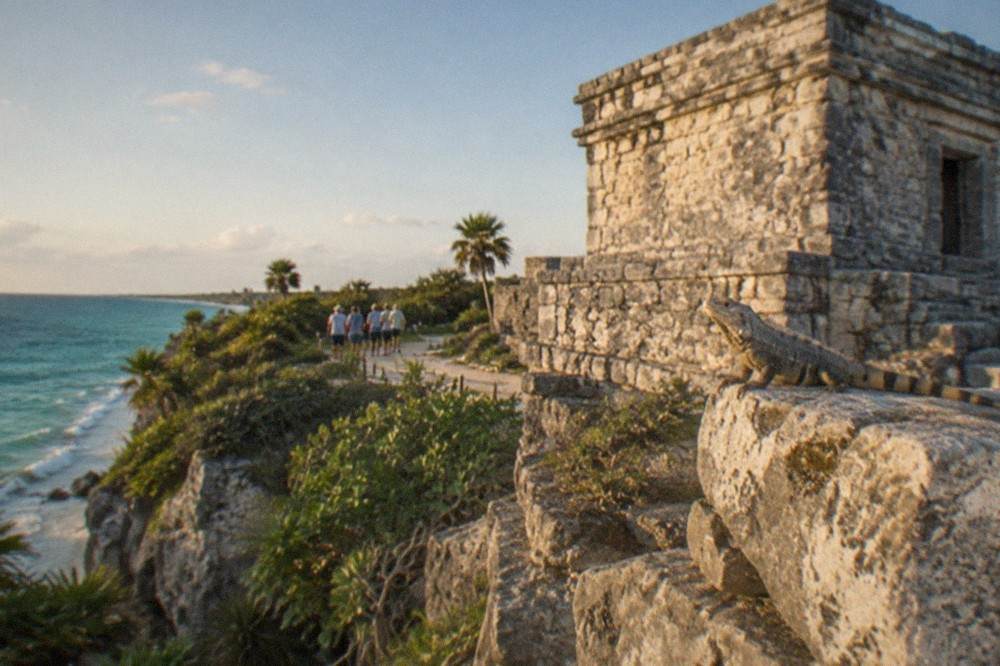
The site opens daily from 8:00 AM to 5:00 PM, with last entry at 3:30 PM and no regular weekly closure, per the standard hours reference. Arriving at 8:00 AM, before the tour buses from Cancun and Playa del Carmen land between 10 AM and 2 PM, changes the experience dramatically. Mid-morning, the main path by El Castillo can feel like a queue with a view. Early, it feels like the postcard.
There is also a September 2026 clarification worth knowing about, because it settled a real controversy: INAH officially stated it retains full responsibility for administering, operating, and protecting the zone, with no privatization or transfer of its functions to any military-linked or private entity, despite earlier reporting about unified ticket collection. The INAH management clarification is the document to read if you saw those headlines. For a visitor, nothing about the fee unification changes who looks after the stones.
For most travelers staying in Cancun or Playa del Carmen, the honest recommendation is a guided combo, and the strongest one on this roster is the Tulum Ruins and Cenote Guided Tour from Cancun. It departs the Cancun hotel zone plainly, with Playa del Carmen, Riviera Maya, and Tulum pickup also offered, runs 8 to 9 hours, and pairs the cliffside walk with a cenote swim at Mariposa or Chen Ha, from $89. Entrance and conservation fees are extra, paid on-site. The tour's 2,606-review pool is the largest on the whole site.
Tulum Ruins Or Coba Or Chichen Itza: Which Is Worth Your Day?
Tulum wins on scenery, accessibility, and time: it is compact, 10 minutes from town, and pairable with a cenote before lunch. Coba wins on climbing and jungle atmosphere, and Chichen Itza wins on sheer scale, but both demand most of a day from the Riviera Maya. If your priority is one memorable morning rather than an expedition, Tulum is the right pick.
The comparison is really about what a day costs you. Chichen Itza is one of the New Seven Wonders and genuinely staggering, but from Tulum it means roughly two hours each way on the road and a full-day commitment, usually with a crowd that peaks hard. Coba, north-west of Tulum near the Coba ruins road, offers tall jungle pyramids you could historically climb and a quieter, wilder feel, and it pairs naturally with cenotes on the Coba road like Gran Cenote, about 4 km west of Tulum Pueblo. Tulum's site, by contrast, is right there: 8 AM entry, done by 10, cenote by 11:30, lunch by 1. The rest of the planning pages sit on Tulum Cenote Tours.
The combo roster reflects exactly this trade-off. The Coba, Tulum Ruins, Cenote Mariposa and Lunch tour from the Riviera Maya area, from $82 with a 4.5 rating from 94 reviews, is built for the reader who wants both ruins zones and a swim in one long day, and lunch is included. The cheaper Riviera Maya: Tulum Ruins and 2 Cenotes Half-Day Tour, from $27 plus roughly $40 in on-site adult entrance fees, is for the reader who wants two swims and one ruins stop in a shorter window.
| Tour | Headline price | Rating and reviews | Best for |
|---|---|---|---|
| Tulum Ruins and Cenote Guided Tour from Cancun | From $89 | 4.6 across 2,606 reviews | Cancun-based visitors wanting the most-reviewed option |
| Riviera Maya: Tulum Ruins and 2 Cenotes | From $27, plus ~$40 fees on-site | 4.4 across 1,166 reviews | Budget travelers from Riviera Maya hotels |
| Coba, Tulum Ruins, Cenote Mariposa and Lunch | From $82 | 4.5 across 94 reviews | Ruins completists wanting both sites and lunch |
If you are weighing the whole region rather than one town, the Riviera Maya cenotes overview maps which stretches of the corridor reward a second or third swim day.
How Much Time Do You Need, And When Should You Go?
The guided ruins portion of most tours runs 45 minutes to an hour and 10 minutes, plus free walking time, and the cenote stop that follows typically lasts 1 to 2.5 hours. Independent visitors should budget two unhurried hours on-site. The best arrival window is 8:00 to 9:30 AM on a weekday; crowds peak from late morning to mid-afternoon and thin again after about 2:30 PM.
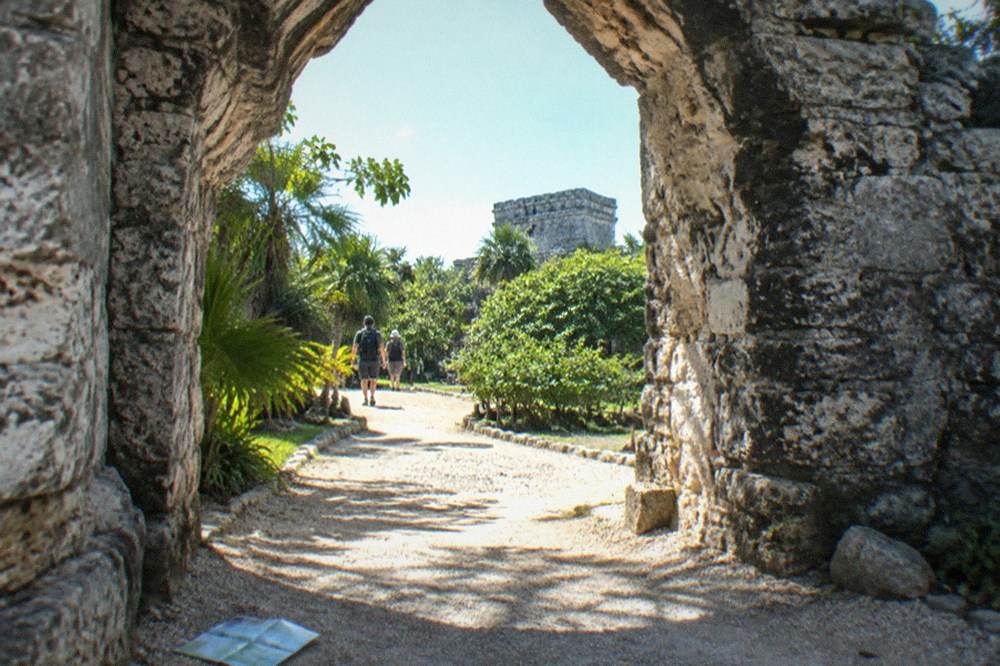
Those time-allocation figures come from current combo-tour itineraries, and they hold up in practice: the zone's compactness is its convenience and its ceiling. This is why the yes-leaning verdict here comes with an asterisk. If you only have half a day in the corridor, Tulum ruins plus one cenote is the single best half-day in the region, full stop. If you have three or four days, you can afford Coba or Chichen Itza as the big ruins day and still do Tulum early one morning, which is exactly the pattern returning travelers describe.
Season matters less than you would think for the ruins themselves, and more than you would think for the beaches below them. The site closes for electrical storms, high winds over 40 km/h, lightning, or hurricane threats, announced same-day, and light rain usually does not close it because the paths drain well. Hurricane season runs June 1 to November 30 with the highest statistical risk in September and October, and the rainy season spans June to October with mostly afternoon showers. The dry stretch from November to April is the comfortable default.
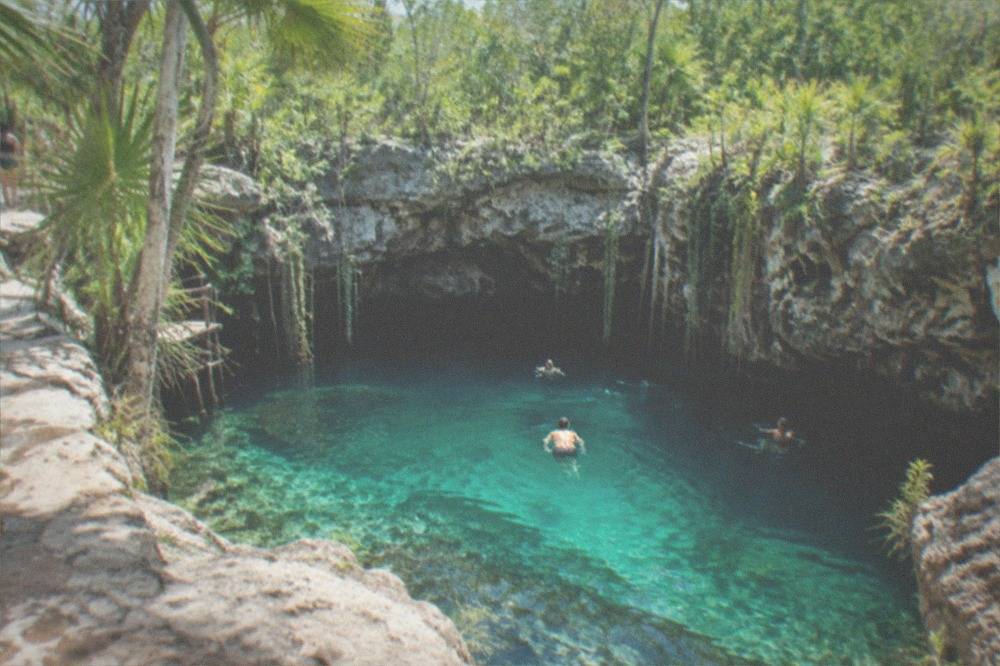
One seasonal point deserves honesty: 2026 has been an unusually heavy sargassum year on the coast, with arrivals starting in late January and more than 6,500 tons collected from Tulum beaches, and the seaweed affects the ocean beaches you can see from the cliff, not the ruins visit itself and certainly not the cenotes. Cenotes are inland freshwater sinkholes with no ocean connection, so they stay clear year-round, which is exactly why pairing the ruins with a cenote swim is the most weatherproof plan in the corridor.
The Combo Move: Ruins In The Morning, A Cenote After
Pairing the ruins with a cenote is the standard and best-value play, and the roster's combo category spans $27 to $89. The half-day format fits ruins plus two swims; the full-day Cancun format adds transport; the Coba format adds a second ruins zone and lunch. Whichever you pick, the order almost always runs ruins first while the light is good and crowds are thin, then the water.
The Coba, Tulum Ruins, Cenote Mariposa and Lunch tour is the pick for the traveler whose heart is set on standing at two ruins zones in one day. It departs from Riviera Maya hotels in the Playa del Carmen area, carries a 4.5 rating from 94 reviews, includes lunch, and runs from $82. Its earlier cached price of $58.24 has been superseded by the live read, so treat $82 as the current figure. Entrance fees at the sites are additional, as with most combos in this price band.
The Riviera Maya: Tulum Ruins and 2 Cenotes Half-Day Tour is the roster's cheapest headline at $27, with a life vest and locker included, rated 4.4 across 1,166 reviews. Its trade-off is stated plainly on the listing: entrance fees and taxes of roughly $40 per adult are paid on-site, so the real all-in cost is materially higher than the headline. It departs with Riviera Maya hotel pickup and squeezes the ruins plus two swims into a half-day, which makes it the natural choice for a family that does not want a 12-hour day.
For readers starting from Cancun, the Tulum Ruins and Cenote Guided Tour from Cancun remains the anchor option: 8 to 9 hours, from $89, 4.6 across 2,606 reviews, departing the Cancun hotel zone with Riviera Maya and Tulum pickup also offered. Its cenote stop is Mariposa or Chen Ha, and entrance and conservation fees are extra. If the whole trip is Cancun-based, this is the tour that answers the ruins question in a single booking.
A separate question is whether you need a tour at all, and the honest answer is that independent visits are entirely workable from Tulum town, as the can you visit cenotes without a tour breakdown explains for the water half of the day. What a combo buys you is transport, timing, and a guide at the ruins, which matters more here than at a beach club but less than at Chichen Itza, where the guiding genuinely changes what you understand.
Whether the cenotes themselves deserve your time is its own question, and it has its own honest answer with fees and figures attached: see are the cenotes in Tulum worth it for that side of the verdict. The short version from this desk: yes, and the pairing is what makes both halves better, because the ruins give the morning history and the cenote gives the afternoon cool, clear water.
Common Questions About The Tulum Ruins
Is It Worth Going To Tulum Ruins?
Yes. The site is small but uniquely positioned on a cliff over the Caribbean, the unified entrance fee is 265 MXN for foreign visitors (80 MXN for Mexican nationals), and a visit fits comfortably inside half a day, leaving time for a cenote swim. Arrive at opening to beat the midday tour crowds.
How Much Does It Cost To Enter The Tulum Ruins In 2026?
The unified ticket from late July 2026 is 265 MXN (roughly $13 to $15) for foreign visitors and 80 MXN for Mexican nationals, covering the archaeological zone together with the protected natural area. The adjacent Parque Nacional del Jaguar is free for everyone, with an optional 20 MXN electric shuttle. Fees can change, so confirm on arrival.
What Are The Tulum Ruins Opening Hours?
The site opens daily from 8:00 AM to 5:00 PM, with last entry at 3:30 PM, and no regular weekly closure. Closures can happen for electrical storms, high winds, lightning, or hurricane threats, announced same-day.
How Long Do You Need At The Tulum Ruins?
Most visitors spend 45 to 90 minutes inside. Guided portions on combo tours run about 45 minutes to an hour and 10 minutes, followed by free walking time, and the cenote stop afterward typically lasts 1 to 2.5 hours.
Is Gran Cenote Worth Visiting?
Yes, as a swim and snorkel stop. Gran Cenote sits about 4 km west of Tulum Pueblo on the Coba road, charges a 500 MXN adult entrance fee (roughly $27), and is known for turtles and accessible semi-open water. The full verdict, including who it suits best, is in the is Gran Cenote worth visiting breakdown on this site.
Can You Visit The Tulum Ruins And A Cenote In One Day?
Easily. Combo tours on this roster run from $27 to $89 and pair the ruins with one or two cenote swims, some with lunch. Independent travelers can do it themselves from Tulum town, since Gran Cenote is roughly 5 km from the archaeological zone, about 5 to 10 minutes by taxi.