Is It Safe To Swim In Cenotes?
An honest safety answer for Tulum cenotes: real risks like slippery limestone and non-swimmers, why sunscreen and rinse rules exist, crocodile facts, and which guided tours manage the risks best.
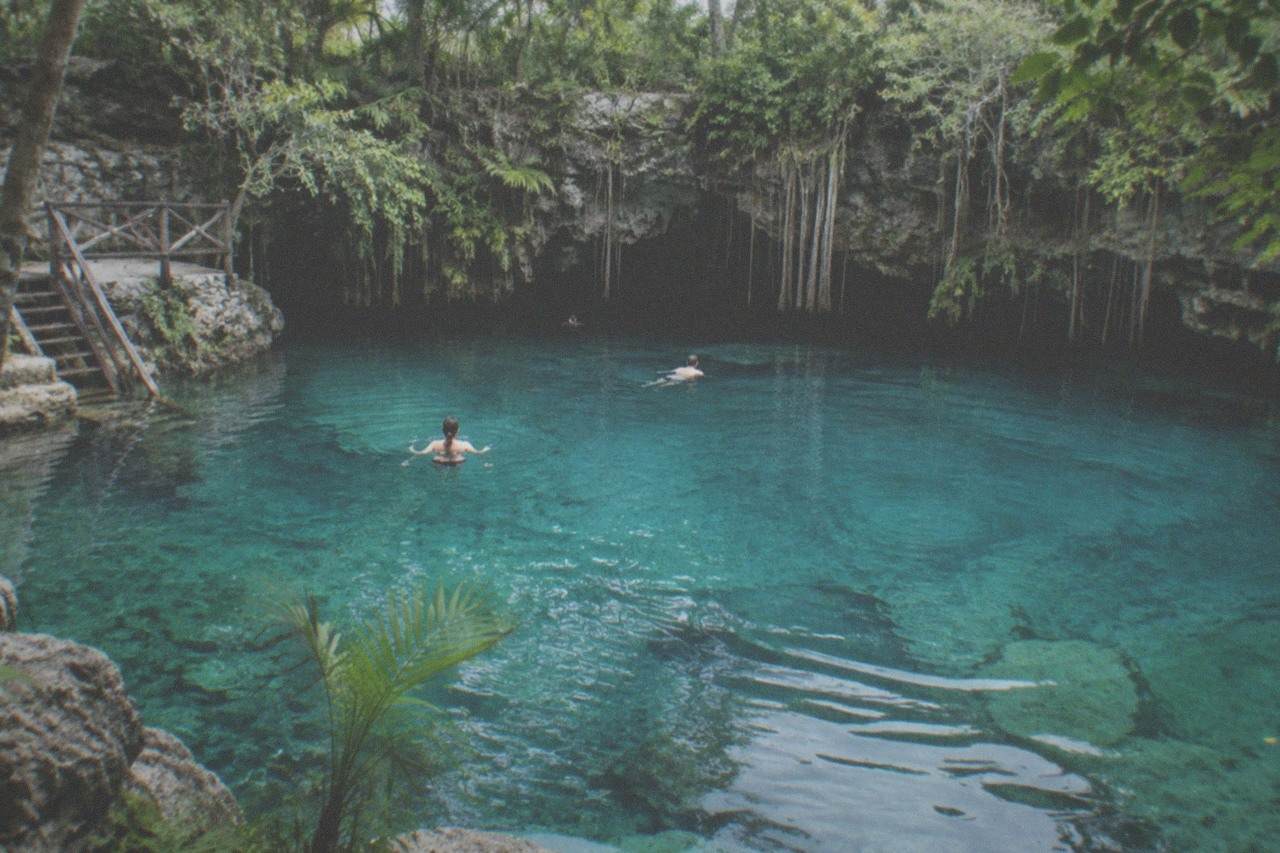
The short version of this question is yes. The long version is what every worried searcher actually wants: which parts of a cenote swim are genuinely safe, which parts need respect, and which warnings you hear online are about protecting the water rather than protecting you. The cenotes around Tulum are clear, fresh, filtered groundwater, they hold a steady 24 to 27 degrees C all year, and they are swum by thousands of visitors a month without incident.
That said, "generally safe" is not the same as "no rules." Cenotes are natural sinkholes with limestone ledges, no lifeguards on duty, and a handful of site-specific policies on sunscreen, rinsing, and life jackets that are enforced with real fines. This article walks through the actual risk picture, the reason the sunscreen rules exist, what matters for kids and non-swimmers, and how guided tours handle most of the hard parts for you.
Is It Safe To Swim In Cenotes?
Yes, swimming in cenotes is generally safe, and the risk profile is closer to a lake swim than to the ocean: no currents, no waves, clear fresh water at a steady 24 to 27 degrees C. The genuine hazards are physical and avoidable, mainly slippery limestone edges, water too deep to stand in, and jumping in the wrong spot. Guidance, a life jacket and sensible footwear remove most of it.
The main reason the safety answer is so positive is the water itself. Cenotes are windows onto the Yucatan's underground aquifer, fed by rain filtered slowly through limestone. The result is fresh water with exceptional clarity, a stable temperature that does not swing with the season, and no marine life capable of hurting a swimmer. There are no currents that pull you offshore, no undertow, and no jellyfish. For a nervous swimmer, that is a far friendlier environment than almost any beach.
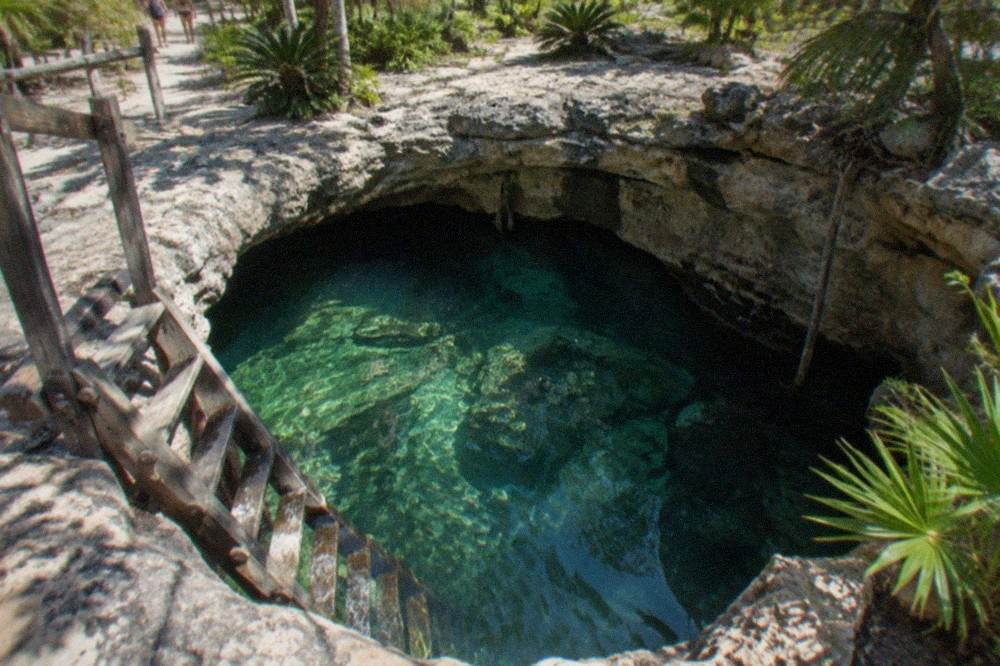
The injuries that do happen around cenotes are almost never about the water. They come from the rock: wet limestone steps, algae-slick ledges, and entries where the footing changes without warning. Water shoes or grippy sandals with a heel strap make a real difference here, and most sites ask you to leave them at the edge rather than wear them in the water anyway. The other avoidable hazard is jumping. Some cenotes, like Calavera, are known jump sites with established platforms, while others are shallow near the edges or have rock just under the surface. Jumping where nobody has jumped before is the single behavior most likely to end badly.
Guided tours move most of the remaining risk off your plate. The guide knows each site's layout, where the shallow shelves are, and which entry points are sane. For a first cenote visit, that local knowledge is worth more than any equipment.
If safety is the reason you are hesitating, the Cenote Triple Adventure Tour in Tulum is the format that answers it most directly: three cenotes in four hours, from $129.88 per person, with a guide present at every stop and snacks and water included (lunch is a paid $15 add-on). It carries a 5.0 rating across 467 reviews, which is one of the larger review pools among the small-group cenote products on the market. A bigger-picture option is the Tulum Guided Tour, Magical Cenote, Lagoon Snorkeling and Beachside Lunch, which pairs a guided ruins walk with lagoon and cenote snorkeling, 4.9 from 1,975 reviews, from $119, though the Tulum ruins entrance fee of roughly $15 per person is extra.
What Are The Actual Risks In A Cenote?
The real risks are four: slipping on wet limestone, swimming over water deeper than you can stand in, jumping without knowing the depth, and swimming alone without anyone watching. None involve the water quality itself. Drownings and injuries at Mexican cenotes overwhelmingly involve unguided visitors, alcohol, or unsupervised jumping, which is why the guided-tour safety record is so much better.
Start with the honest baseline. Cenote swimming is not supervised the way a public pool is. Most sites have no lifeguard, and staff at the entrance are focused on tickets, gear rental and rules, not on watching the water. That puts the responsibility on you or on your guide. The single biggest behavioral factor in cenote accidents is unsupervised swimming, especially combined with jumping or alcohol, and most sites ban alcohol and glass near the water for exactly this reason.
The rock deserves respect twice over. Limestone is sharp-edged and, once wet, slippery underfoot. Entries often involve steps carved into rock or wooden ladders, both of which need three points of contact. If you are visiting with older relatives or anyone unsteady, the sites with easy stair entries are the ones to choose, and a guide will point you to them.
Depth is the invisible risk. Many cenotes are shallow at the rim and drop to 10 or 15 meters within a few strokes. Calavera sits at roughly 15 meters, and Dos Ojos is dived to about 10 meters on its cavern lines, so "clear water" does not mean "shallow water." This is precisely why life jackets matter for non-swimmers and young children, and why the jumping culture is confined to the sites built for it.
For a structured comparison, here is the honest risk map, with the mitigation for each item.
| Risk | How real is it | Best mitigation |
|---|---|---|
| Slipping on wet limestone | The most common injury cause | Water shoes with grip, hold railings, three points of contact on ladders |
| Deep water, no lifeguard | Present at most sites | Life jacket, swim near your group, choose guided tours |
| Jumping without knowing depth | Serious at non-jump sites | Jump only at established jump sites with a known platform |
| Cold shock | Not applicable | Water holds 24 to 27 degrees C year round |
| Water contamination | Not a practical concern | Fresh filtered aquifer water; rinse rules keep it that way |
| Wildlife in the water | Effectively nil at closed freshwater cenotes | See the crocodile note below, it is specific to one site |
The wildlife row deserves its own honest footnote. The "crocodiles in cenotes" stories you may have seen online trace almost entirely to Casa Cenote, which is unusual: a brackish mangrove-linked cenote whose water connects toward the ocean, and where occasional crocodile sightings are part of the site's character. The closed freshwater sinkholes that make up most of the Tulum corridor, Gran Cenote, Dos Ojos, Calavera, Car Wash, Zacil-Ha, have no crocodile habitat at all. For the full picture, see the dedicated article on crocodiles in Mexican cenotes.
Why The Sunscreen And Rinse Rules Exist
The biodegradable sunscreen rule and the mandatory pre-swim rinse are not about hazards to swimmers. They exist because a cenote is a closed freshwater ecosystem: ordinary chemical sunscreen, lotion, repellent and deodorant accumulate in water that has nowhere to drain, so sites enforce mineral-only products and a rinse before entry, with fines up to 1,200 MXN.
This is the point where most safety anxiety gets confused. Visitors read "fines for sunscreen" and assume the water must be dangerous. The logic runs the other way. Because cenote water barely circulates, whatever is on your skin goes into a system that takes it a long time to flush out. A single day of conventional sunscreen on a few dozen swimmers measurably clouds a small cenote. The fine, up to roughly 1,200 MXN at enforcing sites, is an ecosystem protection measure, and the rinse stations at every site are the same idea in practice.
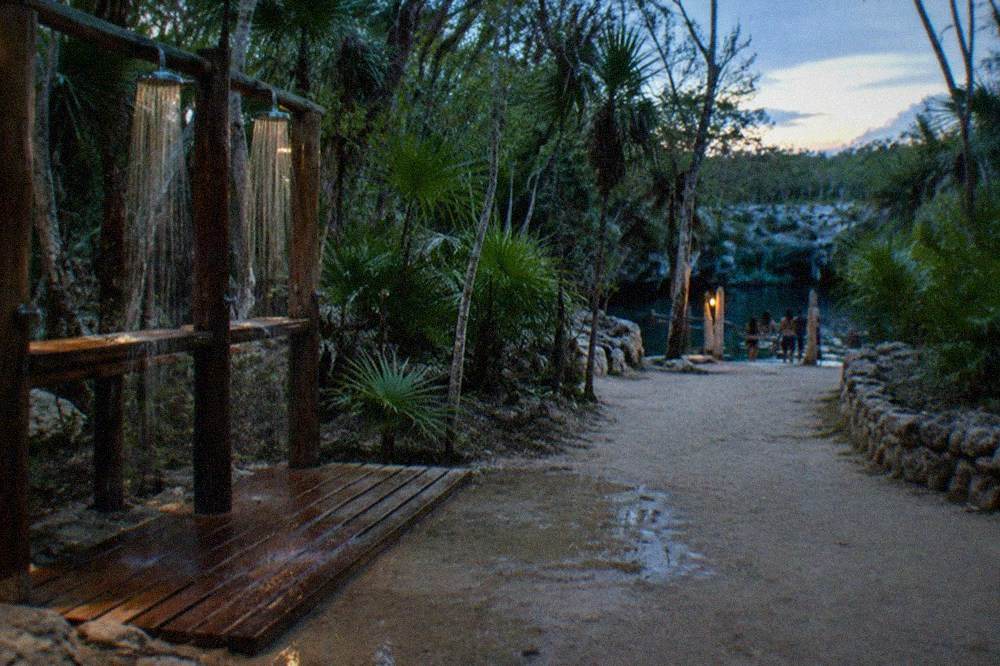
The rules themselves are simple once stated plainly. Use only biodegradable, mineral-filter sunscreen, ideally zinc oxide or titanium dioxide, and better yet, wear a rash guard and skip sunscreen for the water entirely. Shower off any lotion, repellent, or product before you get in. Apply nothing until after you have finished all water activities for the day, which is also the honest answer for bug spray, since applying repellent before swimming puts it straight into the water. Some individual sites go further and ban all sunscreen, even biodegradable versions, plus makeup and lotions entirely, so the posted rules at each entrance are the final word.
Bag checks at the entrance are normal, and approved biodegradable tubes sell on-site at many sites, typically in the 150 to 350 MXN range if you arrive without one. Cash is still king at most cenotes; card readers are reliable at the big sites but not at the smaller ones. For a fuller packing list, the guide to what to bring on a cenote tour covers footwear, towels and quick-dry clothing in detail.
One more thing worth saying plainly, because it gets blurred constantly: sargassum, the seaweed that periodically covers Caribbean beaches, never reaches cenotes. Cenotes are inland freshwater sinkholes with no connection to ocean currents. In 2026, when Tulum's beaches have been fighting heavy sargassum arrivals that began unusually early in late January, the cenotes have remained exactly as clear as always. In fact, when the beach looks unswimmable, a cenote is the standard local recommendation, and local sargassum reporting treats the cenotes as the unaffected alternative.
Life Jackets, Children, And Non-Swimmers
Life jackets are required or strongly recommended for children under 12 and for non-swimmers at most Tulum-area cenotes, and they are commonly provided free at the major sites or rented cheaply, roughly 0 to 50 MXN, where they are not included. For families with toddlers, the open, shallow-fringed cenotes are the right category, and jackets make them comfortable.
Cenote depth is the whole story for young families. A "safe" cenote for a four-year-old is not the same as a safe cenote for a confident adult swimmer, because the drop-off arrives quickly and there is no shallow beach in the ocean sense. The family-oriented open cenotes, sites like Zacil-Ha with its shallow swimming basin and facilities, are built for exactly this, and life jackets for under-12s are a standard rule there. Gran Cenote and Casa Cenote also commonly require or provide jackets for children in the cave sections. Everything else covered here is indexed on Tulum Cenote Tours.
For non-swimming adults, the jacket question is not optional. Clear water creates a false sense of security, and the deep zone of most cenotes starts within a few meters of the edge. Wear the jacket, stay within sight of your group, and the experience changes from anxious to genuinely relaxed. Most guided snorkel tours include vests in the package, which quietly solves the problem for everyone who books one.
Private tours are the other answer for mixed-ability groups. The Private Guided Cenotes and Underground River Exploration from Tulum, 5.0 from 171 reviews, from $199 for five hours, sets a minimum age of 5 and a minimum of two people, and a private guide can pace the swim around your weakest swimmer rather than the group's strongest. For help matching a specific site to a specific age, the article on which cenote is best for toddlers does that comparison directly.
Are The Cenotes In Tulum Clean?
Yes. Tulum's cenotes hold fresh, naturally filtered groundwater with visibility that divers describe in the tens of meters, and the water quality is the reason the visibility rules exist. Heavy rain can temporarily cloud open cenotes to perhaps 20 to 28 meters visibility through surface runoff, but cavern and closed cenotes are largely unaffected and clear again quickly.
The cleanliness question is worth separating into two parts. The water itself comes out of the aquifer already filtered through limestone, which is why it is drinkable-grade clarity and why cavern divers report visibility past 50 meters at sites like Dos Ojos. That is not a marketing number; it is the physical property of water that has percolated through rock for months or years. You are not swimming in runoff, you are swimming in the aquifer.
The part that needs management is the surface. An open cenote catches rain, dust, leaves and whatever swimmers bring in, which is exactly why the ecosystem rules from the previous section are so strict, and why visibility at open-air sites can dip after a heavy storm while the cavern sites stay clear. If you are visiting in the wet season, June through October, a day or two after a big rain is the only time open cenote water looks anything less than glassy.
The honest caveat on this site, as with every independent Tulum guide, is that the water is only as clean as the behavior of everyone upstream of you, which is why the rinse stations matter more than they look. The current guidance on Tulum-area cenotes repeats the same point from the operator side: the rules are the maintenance program.
How Do Guided Tours Handle Cenote Safety?
Guided tours handle the three things that matter: site selection, entry points and vest policy. The guide knows where the shallow shelves and safe entries are, the tour carries the snorkel gear and life vests, and the schedule arrives before the midday crowd. That is why the guided swim safety record is materially better than the independent-visitor record.
It is worth being concrete about what a guided cenote tour actually does for safety, because "guided" can sound like a vague upsell. The mechanics are simple. The guide leads the entry, points out where the depth drops, keeps the group inside a swim area the operator has used hundreds of times, and carries the vest and gear logistics. On tours with multiple cenote stops, the guide also matches the site to the group's swimming ability on the day, which is a judgment an independent visitor cannot make from a website.
The Cenote Triple Adventure Tour in Tulum is the clearest local example of the format: three cenotes, four hours, from $129.88, a 5.0 rating from 467 reviews, snacks and water included, and a guide present at all three swims. For visitors staying in Cancun or the Riviera Maya rather than Tulum itself, the Tulum Ruins and Cenote Guided Tour from Cancun runs 8 to 9 hours at 4.6 from 2,606 reviews, from $89, with hotel-zone pickup, and its cenote stop is one of the well-trodden sites on the corridor. Both bundle the safety-relevant decisions into the package.
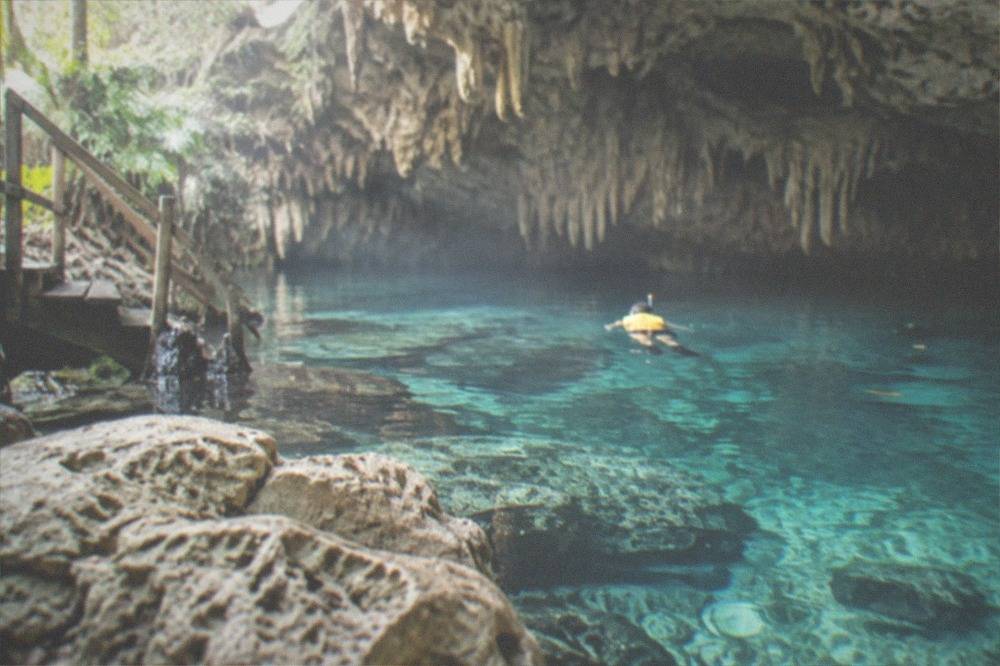
The budget end of the roster makes the same point. The Magical Cenote and Paradise Lagoon Snorkeling Adventure, from $79, 4.9 across 886 reviews, 3.5 hours, is the cheapest standalone snorkel product on this site and still includes gear and guiding at both its water stops. Cost does not track safety here; format does, and a guided swim at $79 is structurally safer than an unguided $0 swim. For a full comparison of the category, the cenote snorkeling guide for Tulum ranks the options.
When Is The Safest Time To Swim?
The safest water is the same all year, since temperature and clarity barely move, so the safety variable is crowds: arrive at opening, typically 8 to 9 AM, when the sites are quiet, or come after 2:30 PM when the midday tour-bus wave has passed. Weekdays beat weekends, and May, late September and early October are the low-crowd sweet spots.
Every cenote on the corridor opens in the morning, generally 8 or 9 AM, and the pattern after that is predictable. Tour buses land between mid-morning and early afternoon, wait times at popular sites can run past 20 minutes, and the water gets busier, which is the one crowd effect that has a genuine safety dimension: more bodies on the same slippery ledges. Swimming early or late is not just nicer, it is the version of the day with the fewest people standing on wet rock.
Season matters less for safety than people expect, because the water does not change. The rainy season, June through October, brings afternoon showers, and hurricane season formally runs June 1 to November 30 with the highest statistical risk in September and October, but rain does not close cenotes the way it can disrupt a beach day. The genuine weather risk at a cenote is electrical storms, which will empty the water, and sites clear it promptly when they hit. The one seasonal note worth keeping is the visibility dip after heavy rain at open cenotes, mentioned earlier, which clears within days.
For anyone still weighing the whole question of value, the tour that answers both safety and "is it worth it" in one package is the Tulum Guided Tour, Magical Cenote, Lagoon Snorkeling and Beachside Lunch: 4.9 from 1,975 reviews, from $119, 6.5 hours, with pickup available from Cancun and Riviera Maya hotels, a guided ruins walk, cenote and lagoon snorkeling, and a beachside lunch, with only the roughly $15 ruins entrance extra. It is the most-reviewed product on the entire Tulum cenote roster, which means the most-examined safety record too. If you are planning a wider trip around this, the piece on Tulum Cenote Tours and the local corridor gives the full lay of the land.
Common Questions About Cenote Swimming Safety
Is It Safe To Swim In Cenotes In Mexico?
Yes. Mexico's cenotes, and the Tulum corridor in particular, are generally safe to swim in: fresh, clear, temperature-stable water with no currents or dangerous wildlife at closed freshwater sites. The real risks are slipping on wet limestone, deep water without lifeguards, and unsupervised jumping, all of which are managed with sensible footwear, a life jacket and a guided tour.
Is It Safe To Swim In Cenotes?
Yes, with basic care. The water itself is benign, filtered fresh groundwater at 24 to 27 degrees C year round. The hazards are physical, not aquatic: slick rock edges, sudden depth, and jumping in unfamiliar spots. Wear grippy footwear, use a life jacket if you are not a confident swimmer, and let a guide pick the entry points on your first visit.
Do You Need To Know How To Swim To Visit A Cenote?
No, but you do need a life jacket. Most cenotes drop to 10 or 15 meters within a short distance of the edge, and there are no lifeguards. Non-swimmers wearing vests enjoy cenotes regularly, and tours routinely provide them. Children under 12 are required or strongly recommended to wear vests at most Tulum-area sites.
Why Do Cenotes Have Sunscreen Rules?
The rules protect the water, not the swimmer. A cenote is a closed freshwater system with slow circulation, so chemical sunscreen, lotion and repellent accumulate rather than flush away. Sites enforce mineral-only sunscreen and a mandatory pre-swim rinse, with fines up to 1,200 MXN at enforcing sites, and some ban all sunscreen entirely.
Are There Crocodiles In Cenotes?
Only at one specific type. Occasional crocodile sightings are part of Casa Cenote, a brackish, mangrove-linked cenote north of Tulum whose water connects toward the ocean. The closed freshwater sinkholes that make up most of the Tulum corridor, including Gran Cenote, Dos Ojos, Calavera and Zacil-Ha, have no crocodile habitat.
Does Sargassum Affect Cenotes?
Never. Sargassum is an ocean phenomenon carried by currents to beaches; cenotes are inland freshwater sinkholes with no connection to the sea. When Tulum's beaches are covered in seaweed, the cenotes stay completely clear, and locals recommend them precisely for that reason.